CAROLYN MURPHY IN SAINT-TROPEZ: RESTRAINT, LIGHT, AND THE END OF THE NINETIES

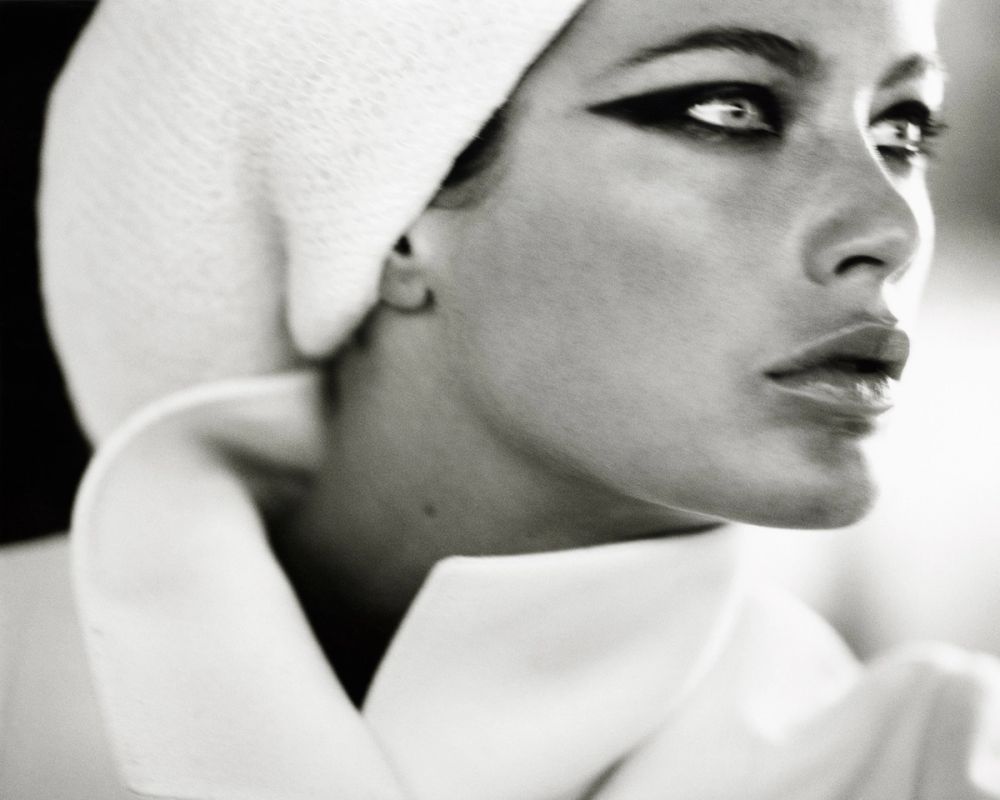
In 1999, Mario Testino photographed Carolyn Murphy in Saint-Tropez, producing an image that would come to stand quietly apart from the era’s prevailing visual noise. Shot over the course of a story rather than a single frame, the images resisted excess in favour of clarity and restraint. Among them, one black-and-white photograph has endured with particular force. Murphy is turned slightly to her left, her gaze directed away from the camera. She wears a white Gucci ensemble and a white beanie, her silhouette pared back, her presence composed. The photograph does not announce itself. It holds, precisely because it was never meant to explain itself.
At the end of the 1990s, fashion imagery often oscillated between high-gloss provocation and overt sensuality. This editorial occupied a different register. Testino removed surplus gesture, allowing posture, light, and atmosphere to carry the narrative. Across the sequence, Murphy appears attentive without being performative, present without insistence. The images resist storyline in favour of mood. They feel suspended, caught between movement and stillness.

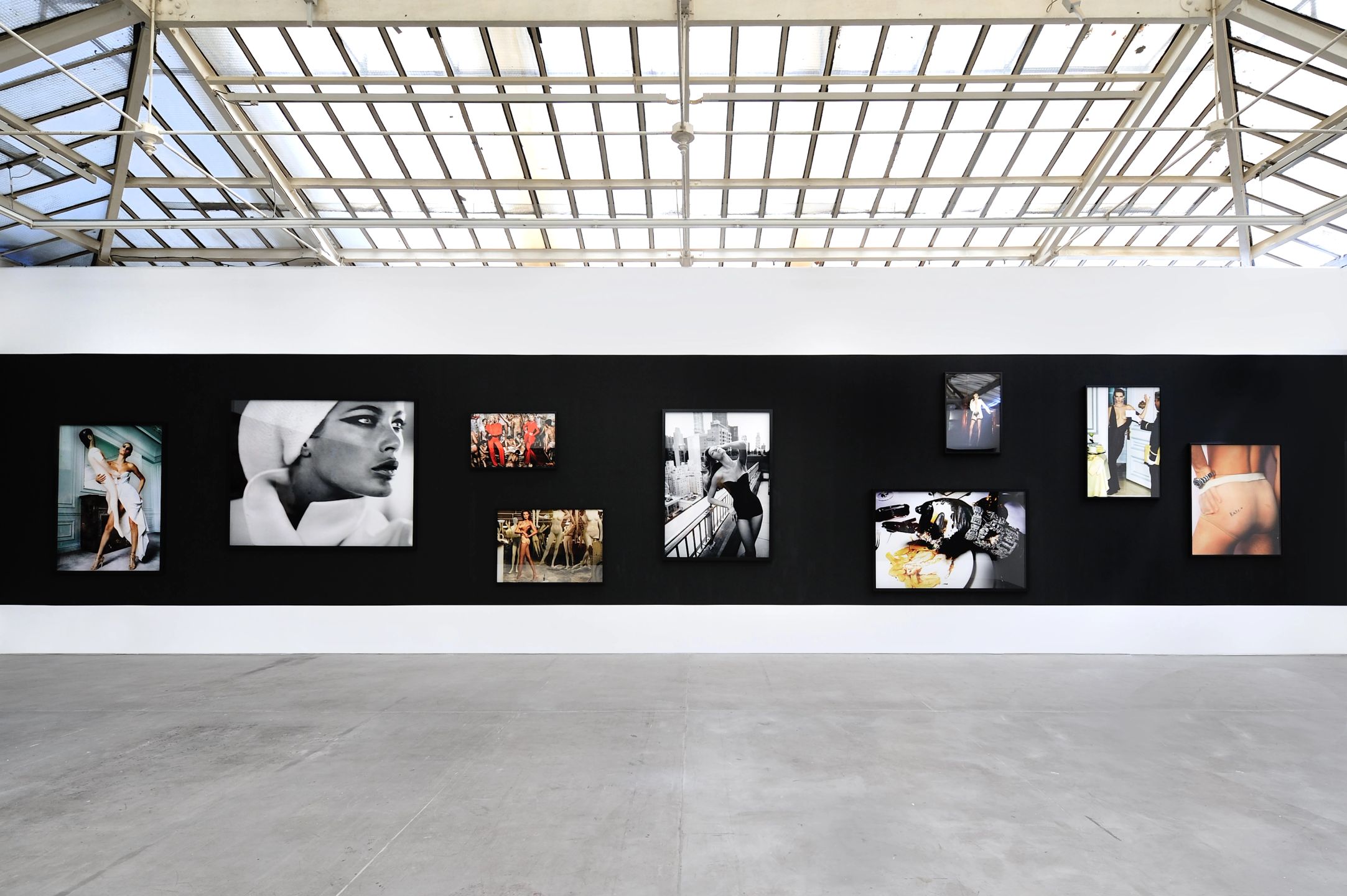
Extremes, Yvon Lambert Gallery, Paris, France, 2014
Although the photograph appeared in Harper’s Bazaar, it was not part of a conventional editorial commission. By 1999, Testino was no longer working regularly with the magazine. The image was made as a singular gesture, conceived as a homage to Liz Tilberis, Harper’s Bazaar’s late Editor-in-Chief, whose influence on fashion imagery throughout the 1990s was profound. Testino had been shooting with Carine Roitfeld in Saint-Tropez for French Vogue when, at the close of the day, he made this one additional frame.
The photograph was later contributed as a standalone image for Harper’s Bazaar, accompanied by a quotation from Tom Ford reflecting on Tilberis’ ability to make those around her feel entirely seen. In this context, the image reads not as part of a broader narrative, but as a self-contained act of remembrance. Its restraint, scale and silence take on new meaning. What appears effortless is, in fact, deliberate. The photograph stands alone because it was always intended to.
Murphy herself occupied a distinctive position within fashion at the time. More than a model, she embodied a particular kind of American poise that resonated internationally. Testino had a long-standing sensitivity to this quality. He photographs Murphy not as an icon but as a presence, attentive to the way she occupies space rather than how she performs for the lens. Under Ford’s direction, the white Gucci look becomes less a fashion statement than a tonal field, amplifying the editorial’s clarity.


Carolyn Murphy, Saint-Tropez, Harper's Bazaar, July 1999
Saint-Tropez functions here as suggestion rather than spectacle. There is no overt Riviera glamour, no reliance on location as shorthand. Instead, the environment recedes. Light does the work. What remains is the relationship between subject and photographer. Testino’s camera does not insist. It observes.
Over time, the editorial’s images have taken on a second life beyond the magazine page. The black-and-white photograph has moved into institutional and gallery contexts, appearing in Portraits at the National Portrait Gallery in London and its subsequent international tour, before being revisited in Extremes at Yvon Lambert Gallery in Paris and HEAT at de Pury de Pury in Dubai. In each setting, the image shifts in emphasis. What reads as restraint in print becomes composure on the wall. What feels intimate in a magazine becomes sculptural when scaled and framed.
Seen today, Carolyn Murphy, Saint-Tropez, Harper’s Bazaar, 1999 feels emblematic of Testino’s ability to articulate mood without instruction. It was never intended as a defining statement, yet it has come to represent a moment when fashion photography could afford to be quiet. The late 1990s were a period of transition in editorial leadership and image-making. This photograph holds that moment in balance, poised between confidence and uncertainty.
What endures is the image’s refusal to overstate itself. Testino allows silence to operate as content. Murphy’s turned gaze does not invite pursuit. It invites pause. In doing so, the photograph affirms one of Testino’s most consistent instincts: that presence, when observed carefully, carries more weight than performance.