THE DISCIPLINE OF ATTENTION: MARIO TESTINO AND THE AUTHORITY OF ANIMALS

Mario Testino has photographed animals for most of his career, though for a long time he did not think of it as a subject in itself. In fashion images, an animal would occasionally enter the frame, not as a prop, but as an interruption, emotional or visual. They brought something unstyled into a world built on control. At the time, those moments were instinctive rather than examined. Fashion was fast, and the human body carried the story.
When you look back now, the animal appearances feel less like styling decisions and more like signals. Early on, in editorial work for Vogue and Manner Vogue in the late 1980s, a pug appeared alongside a male model. The image had wit, but it was not casual. The dog was not there to be cute. It anchored the scene in something living, a counterweight to pose. The same instinct ran through later brand work. Dogs and horses appeared in early campaigns for Loewe, not as decorative additions but as expressions of character and ease, a kind of emotional shorthand that could not be achieved through clothing alone.

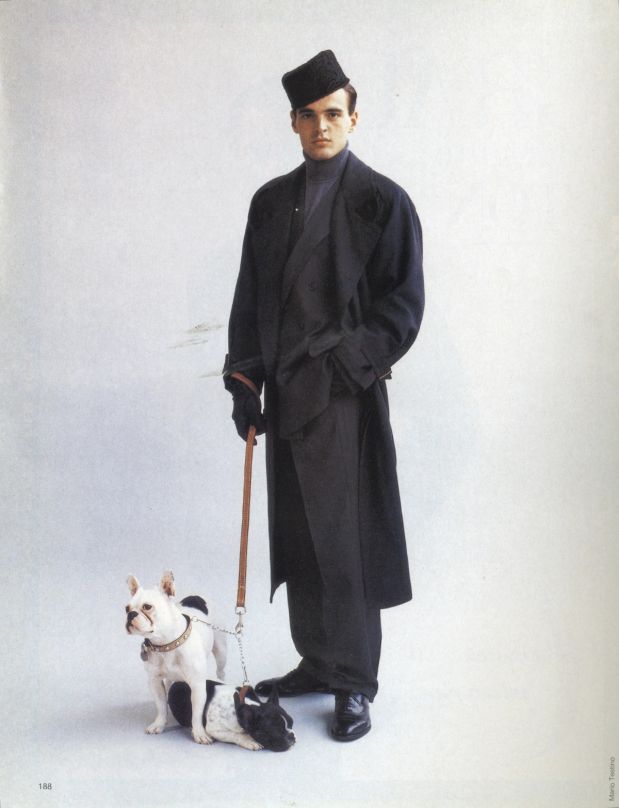
Archival page from Manner Vogue Magazine, 1986. Photograph by Mario Testino.

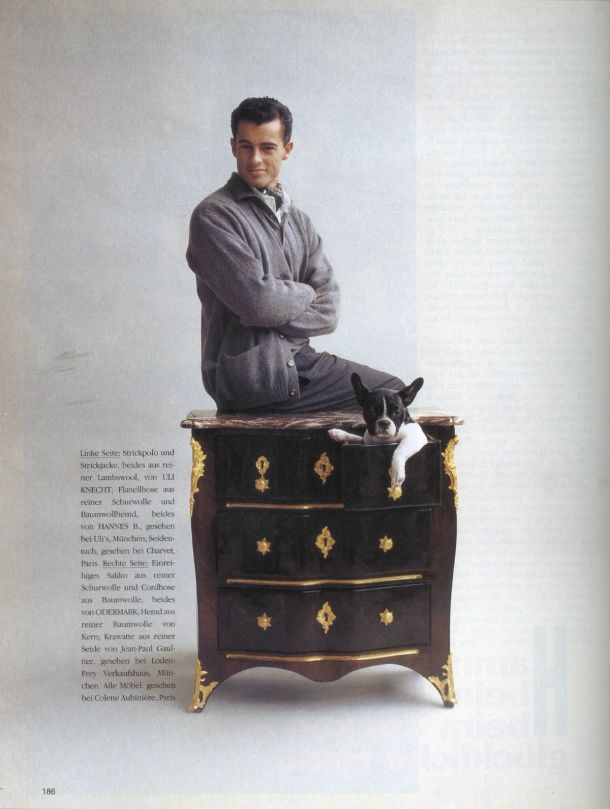
Archival page from Manner Vogue Magazine, 1986. Photograph by Mario Testino.

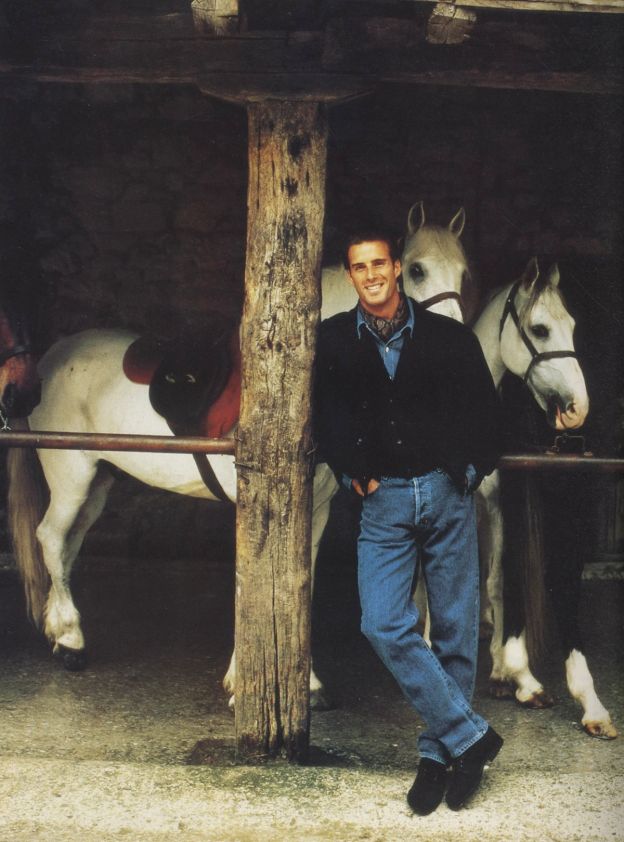
San Sebastian, Loewe, 1989. Photographed by Mario Testino.

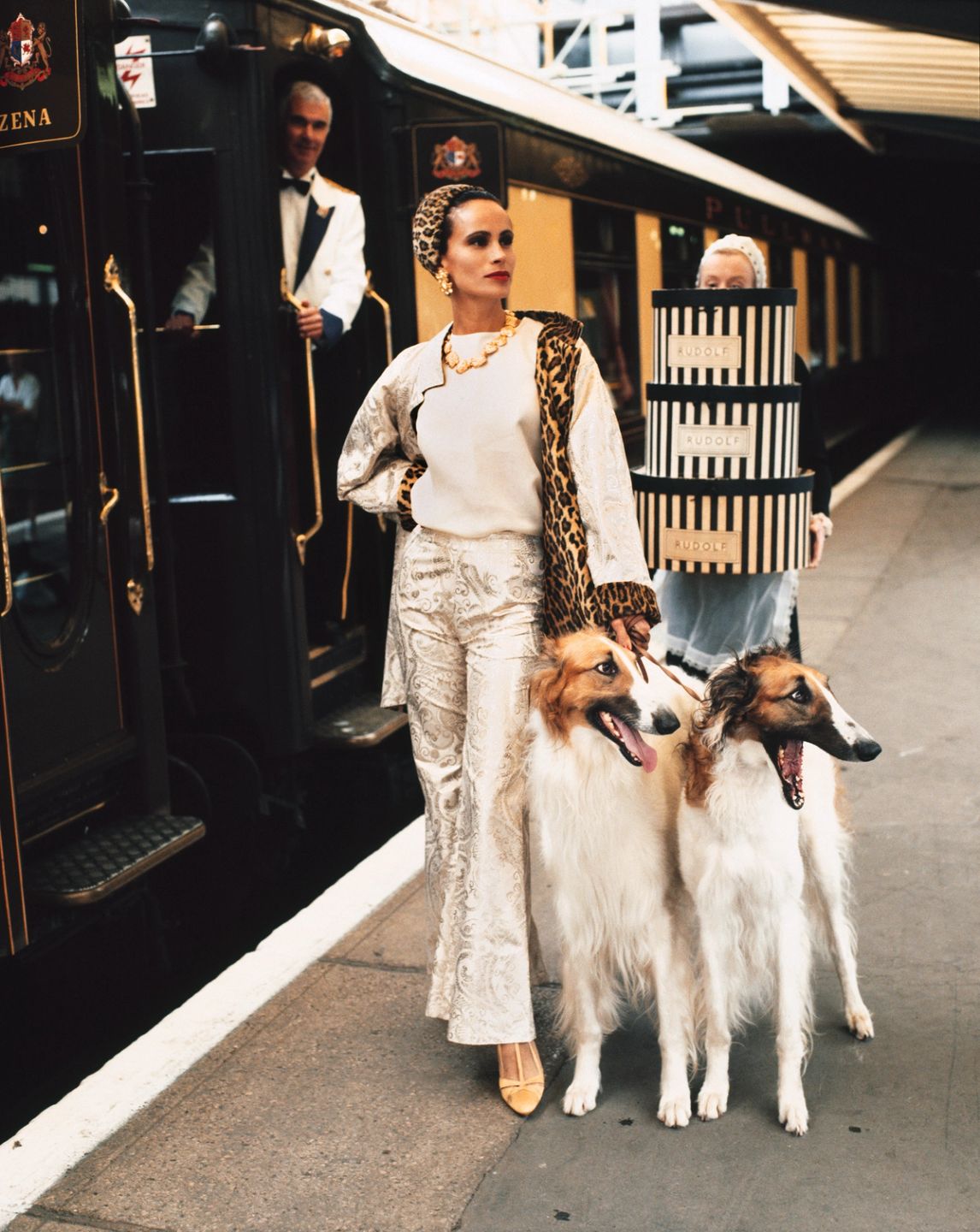
Andrea Dellal, Harpers & Queen, 1989. Photographed by Mario Testino.
Over time, these animals became a quiet language in the work. In 2003, a kitten entered the frame in Tiffany imagery, softening luxury with intimacy. In Givenchy AW2002, a dog appeared with Carmen Kass, bringing warmth and friction against the coolness of the image. Dolce and Gabbana’s AW2008 campaign introduced chickens, a gesture that played with the pastoral and the surreal while still keeping the animal as a real presence rather than a concept. Burberry campaigns repeatedly returned to dogs, using them as something deeper than charm, anchoring heritage and familiarity within modern British identity. And in Valentino SS2005, Gisele Bündchen posed alongside zebras, not to dramatise contrast, but to share space, to create a scene where the model was not the only centre of gravity.

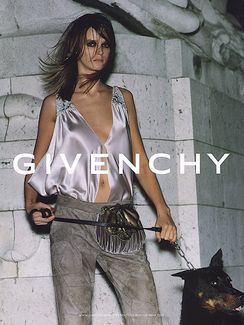
Carmen Kass, Paris, Givenchy, 2002. Photographed by Mario Testino.

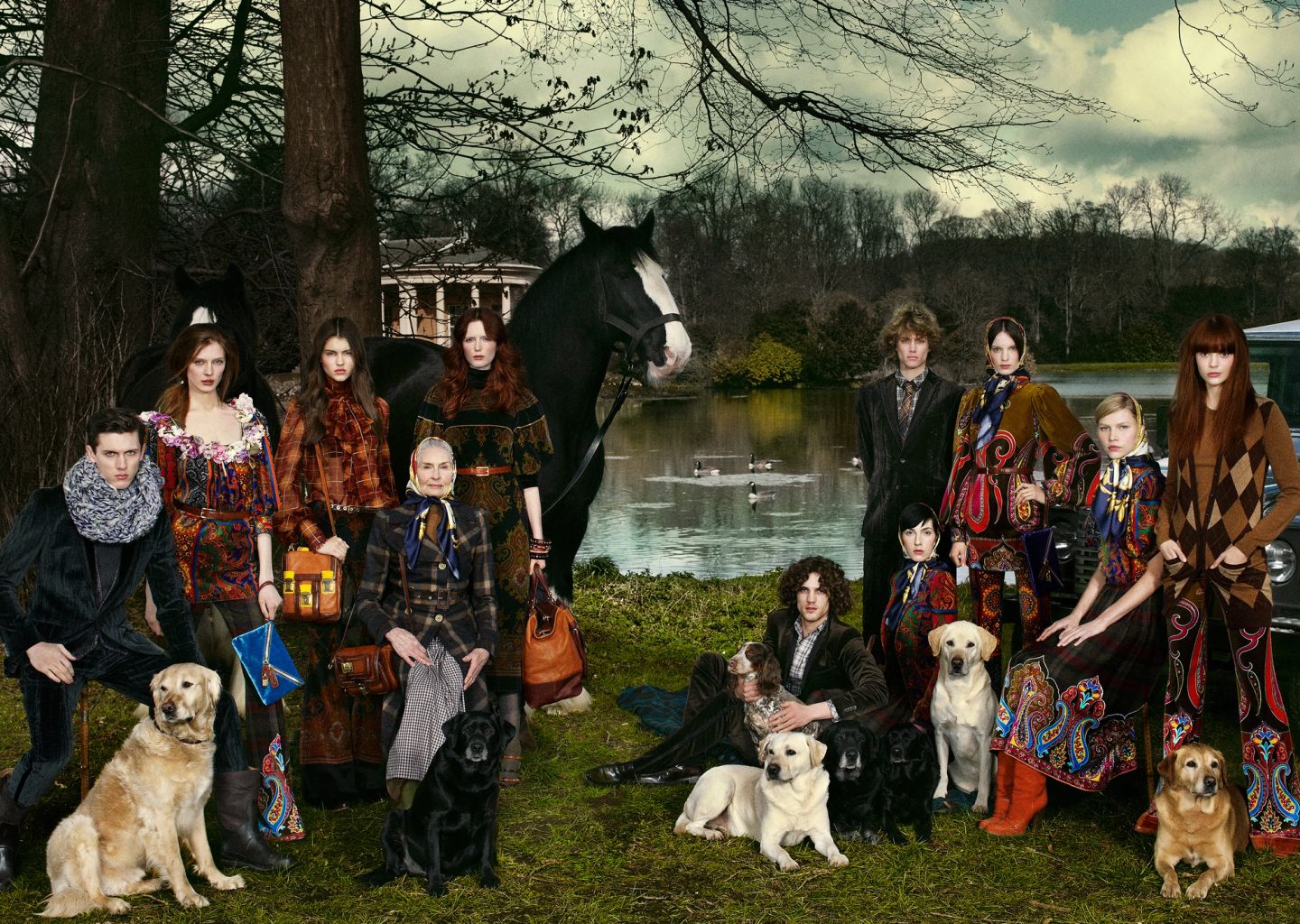
Buckinghamshire, Dolce and Gabanna, 2008. Photographed by Mario Testino

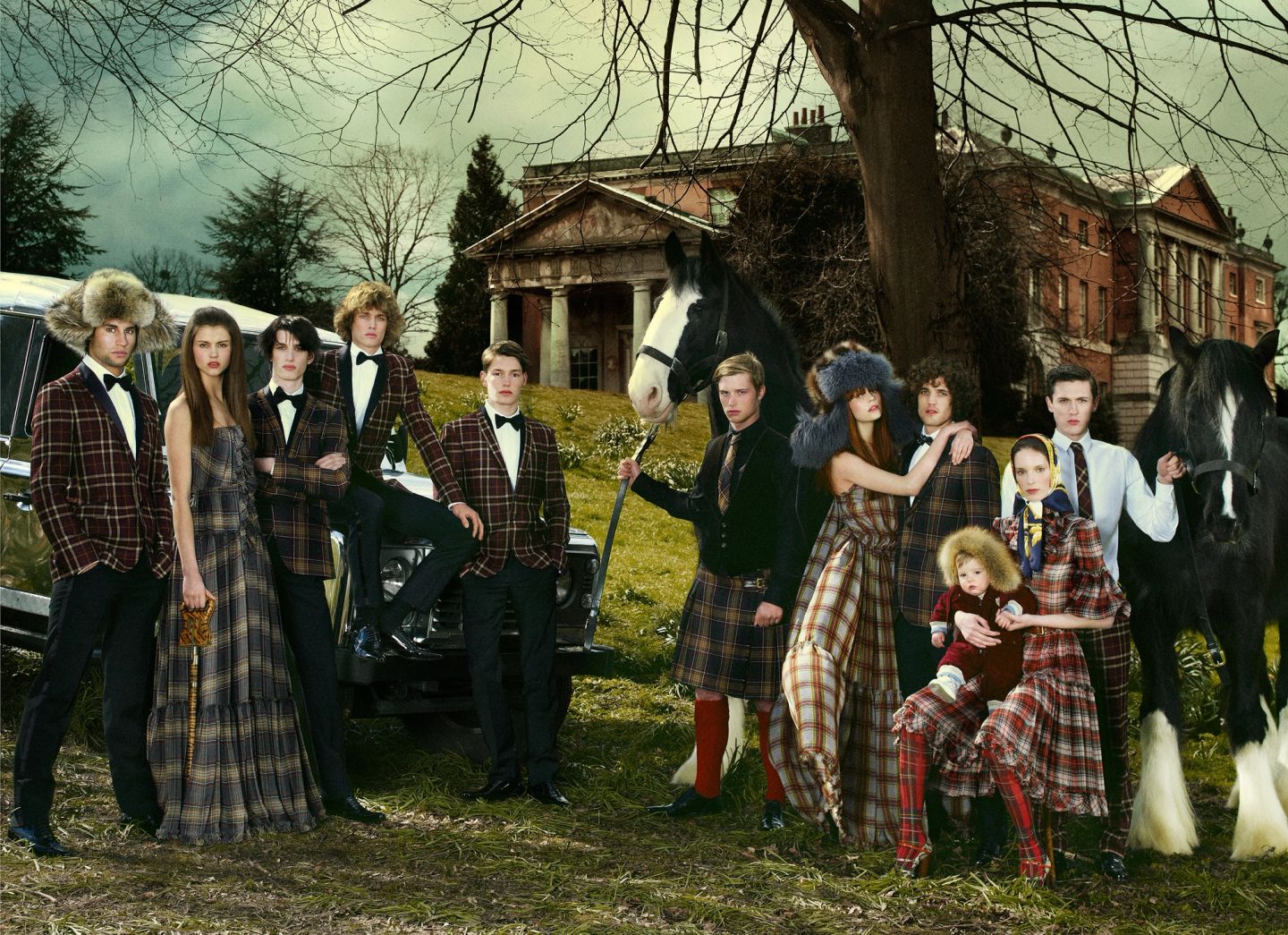
Buckinghamshire, Dolce and Gabanna, 2008. Photographed by Mario Testino.

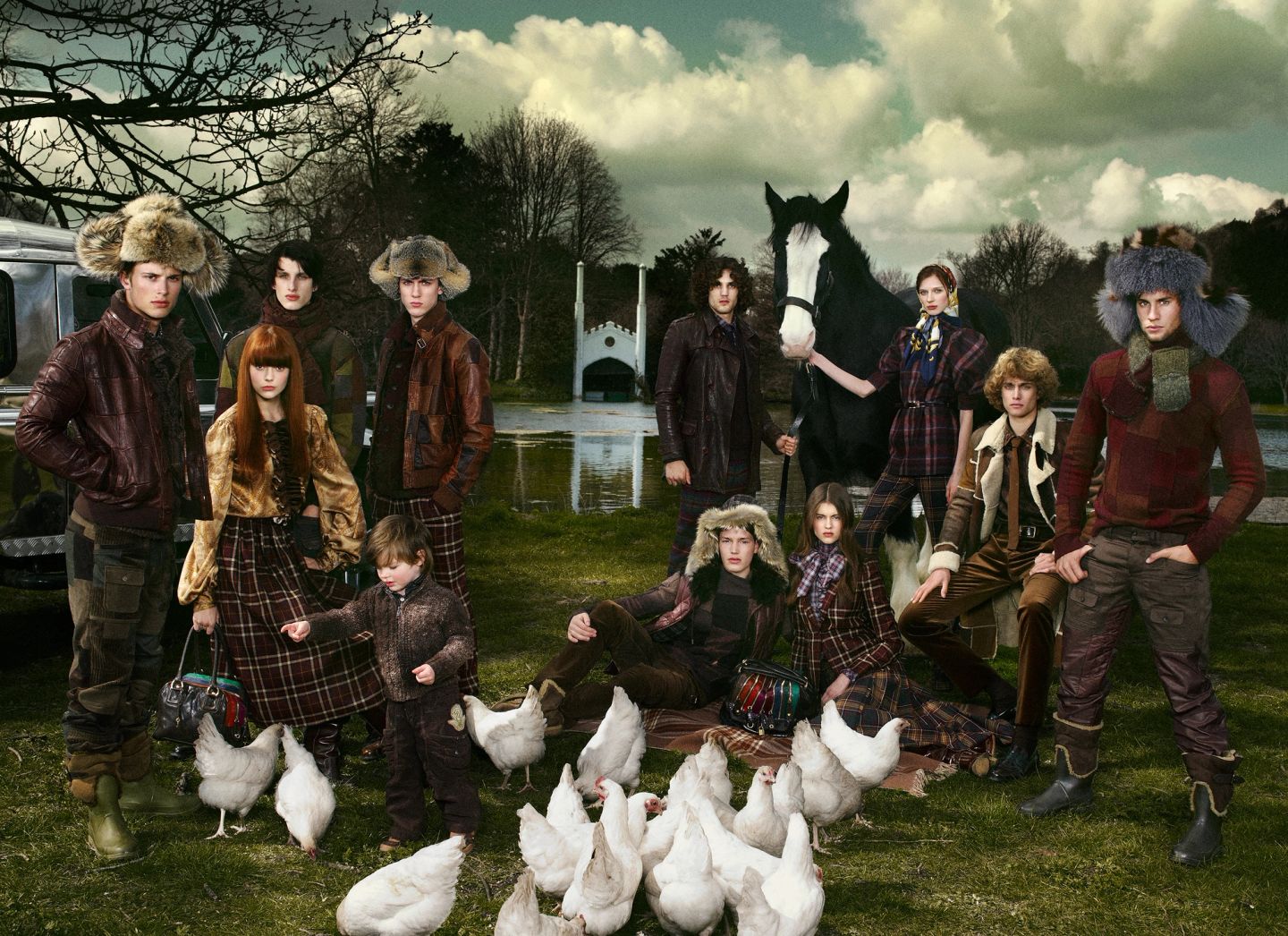
Buckinghamshire, Dolce and Gabanna, 2008. Photographed by Mario Testino.

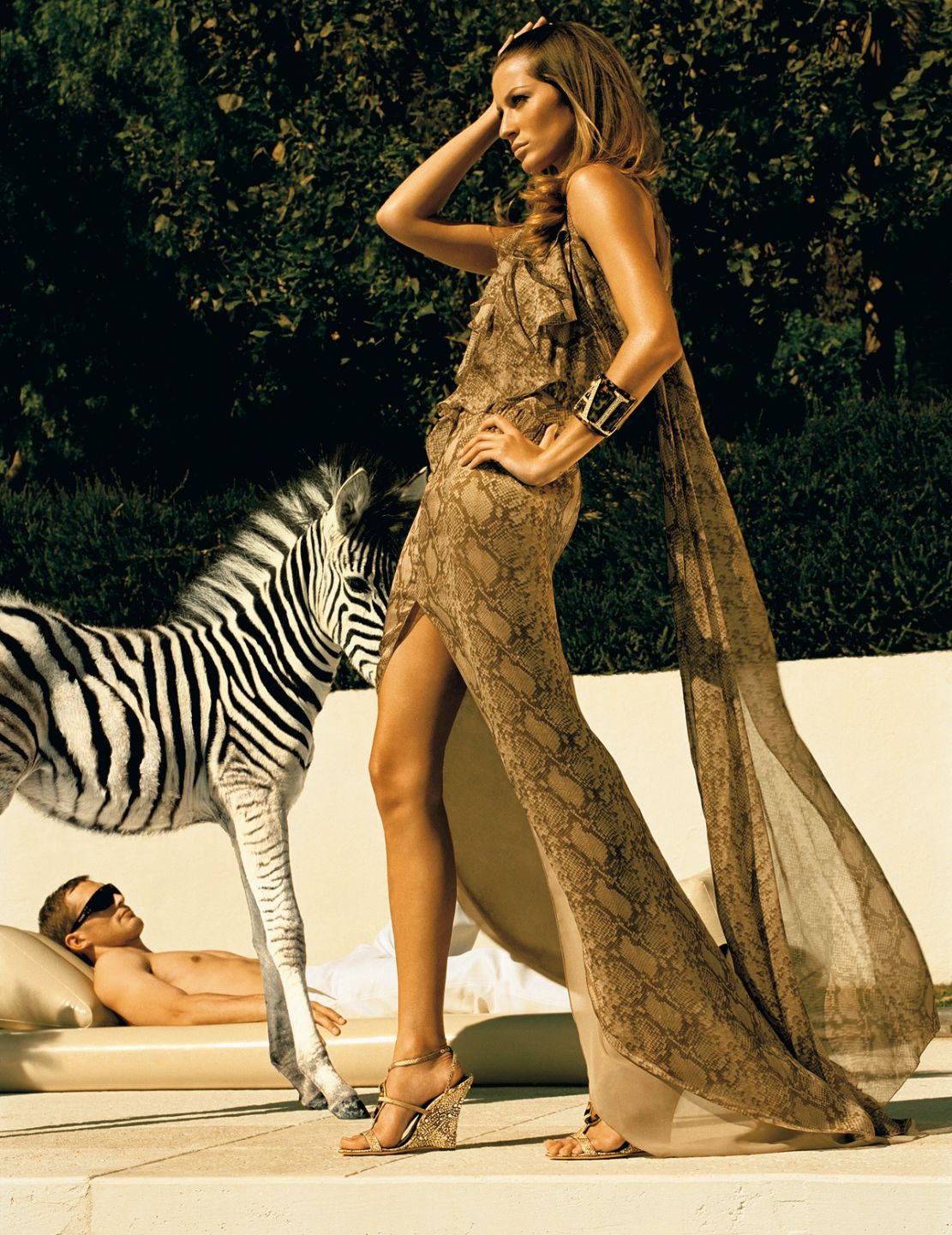
Gisele Bundchen, Los Angeles, Valentino, 2005. Photographed by Mario Testino.

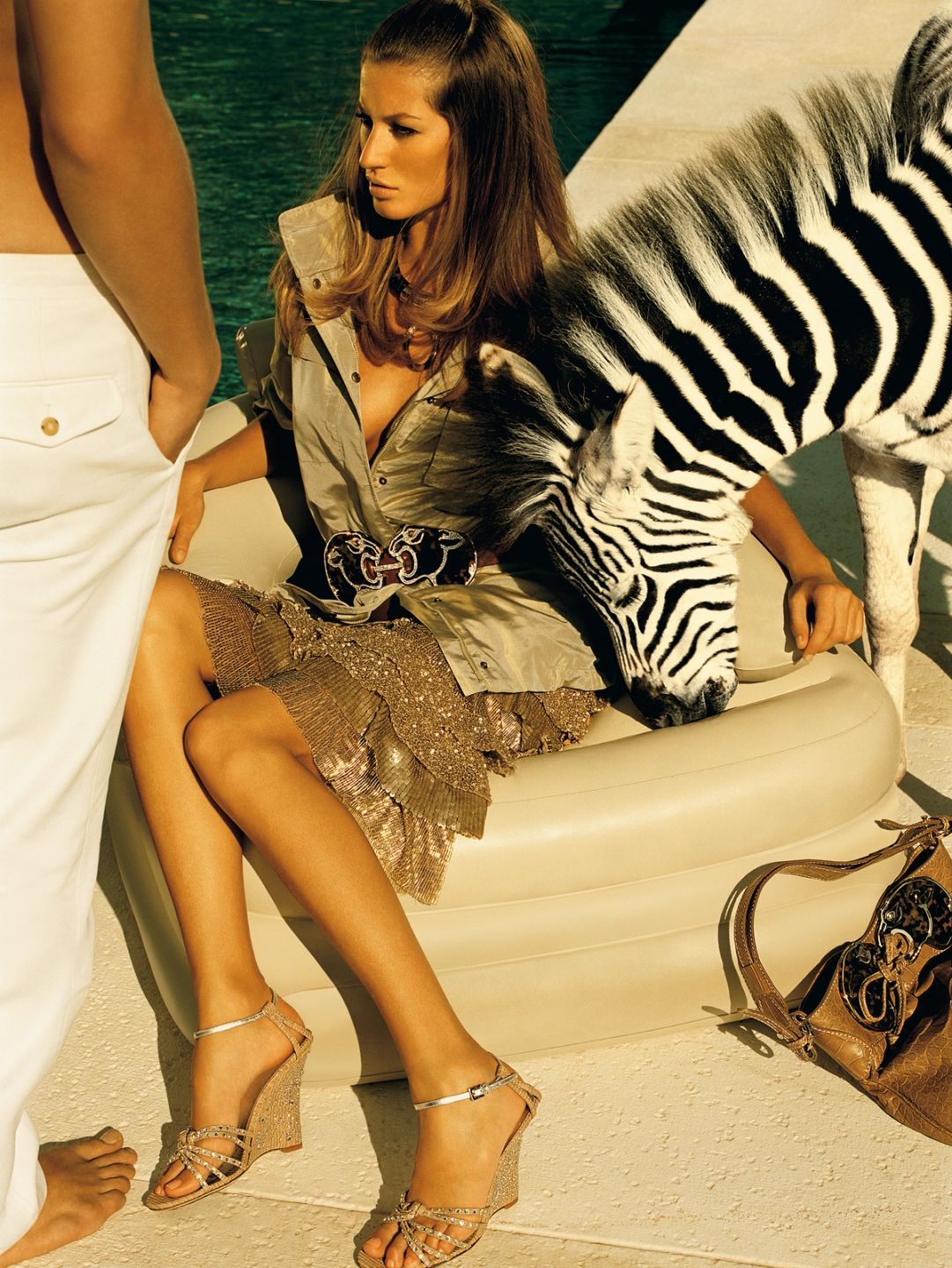
Gisele Bundchen, Los Angeles, Valentino, 2005. Photographed by Mario Testino.

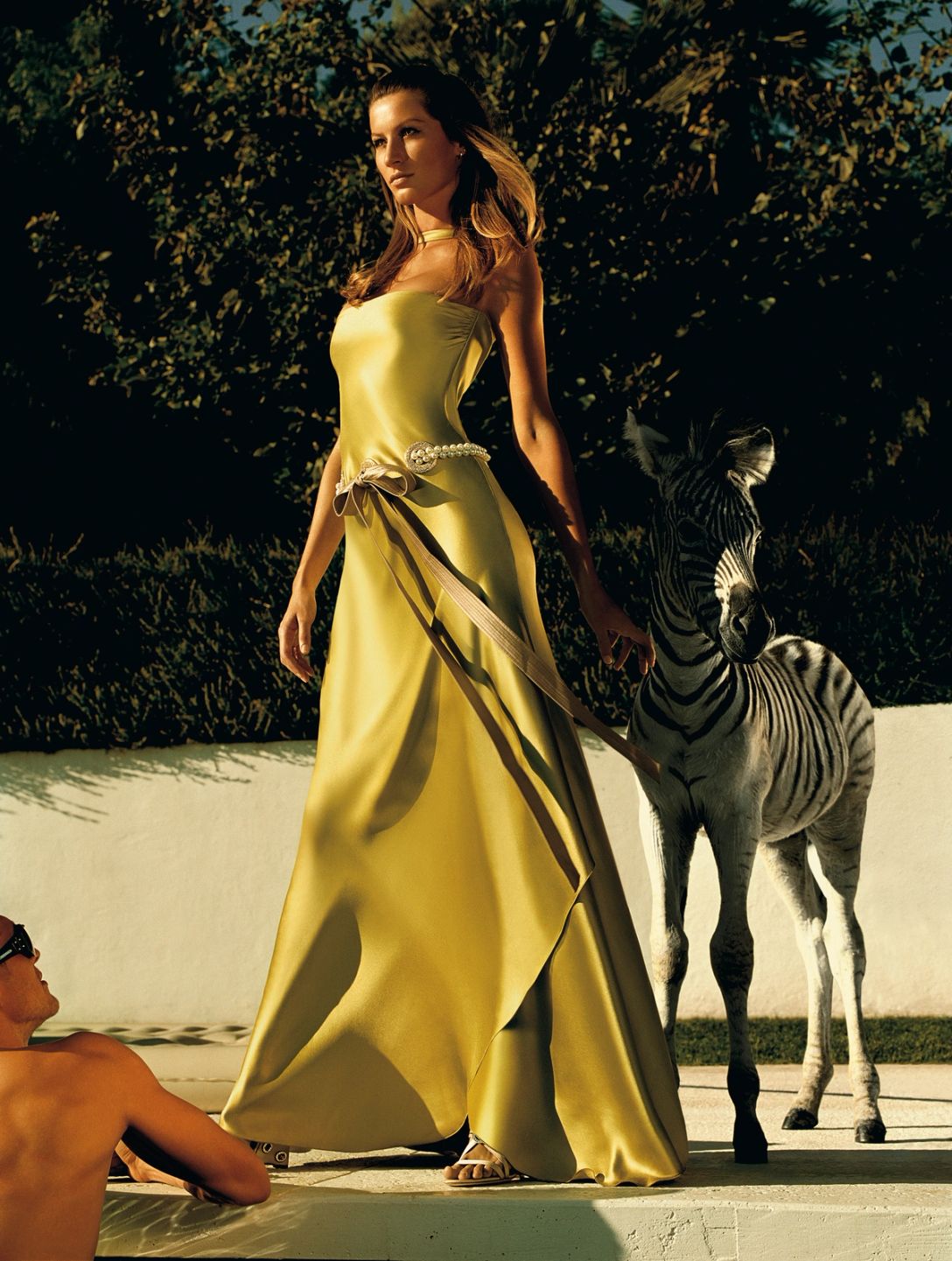
Gisele Bundchen, Los Angeles, Valentino, 2005. Photographed by Mario Testino.
These appearances mattered, but they were not yet the full story. The shift was not stylistic, but perceptual. Testino has put it plainly. “I have often featured animals in my fashion photographs, a horse or dog posing alongside a model,” he reflected. “With my series, A Beautiful World, I found myself drawn to their natural beauty in their own right, and realised how little attention I had given them before.”
That line does not read like a brand reinvention. It reads like a shift in attention, and attention changes everything. When Testino dedicated his attention and eye to A Beautiful World, animals stopped behaving like punctuation marks in a human story and began to occupy the image on their own terms. The gaze slows. In A Beautiful World, animals are not there to support mood. They hold the frame, and the photograph adjusts around them.
This was especially visible in Switzerland, in the body of work shown at Patricia Low Contemporary in Gstaad, curated by Simon de Pury. The exhibition has now closed, but the images remain instructive because they show what Testino is doing when he looks at animals with full seriousness. In an image of a cow adorned for the Alpabzug, the animal is not photographed as rural charm. The flowers and bells do not sentimentalise it. They make visible a relationship. The Alpabzug marks the end of the alpine grazing season, when herders bring livestock down from high pastures to the valley. It is agriculture, yes, but it is also ceremony, and the animals are central to its meaning.

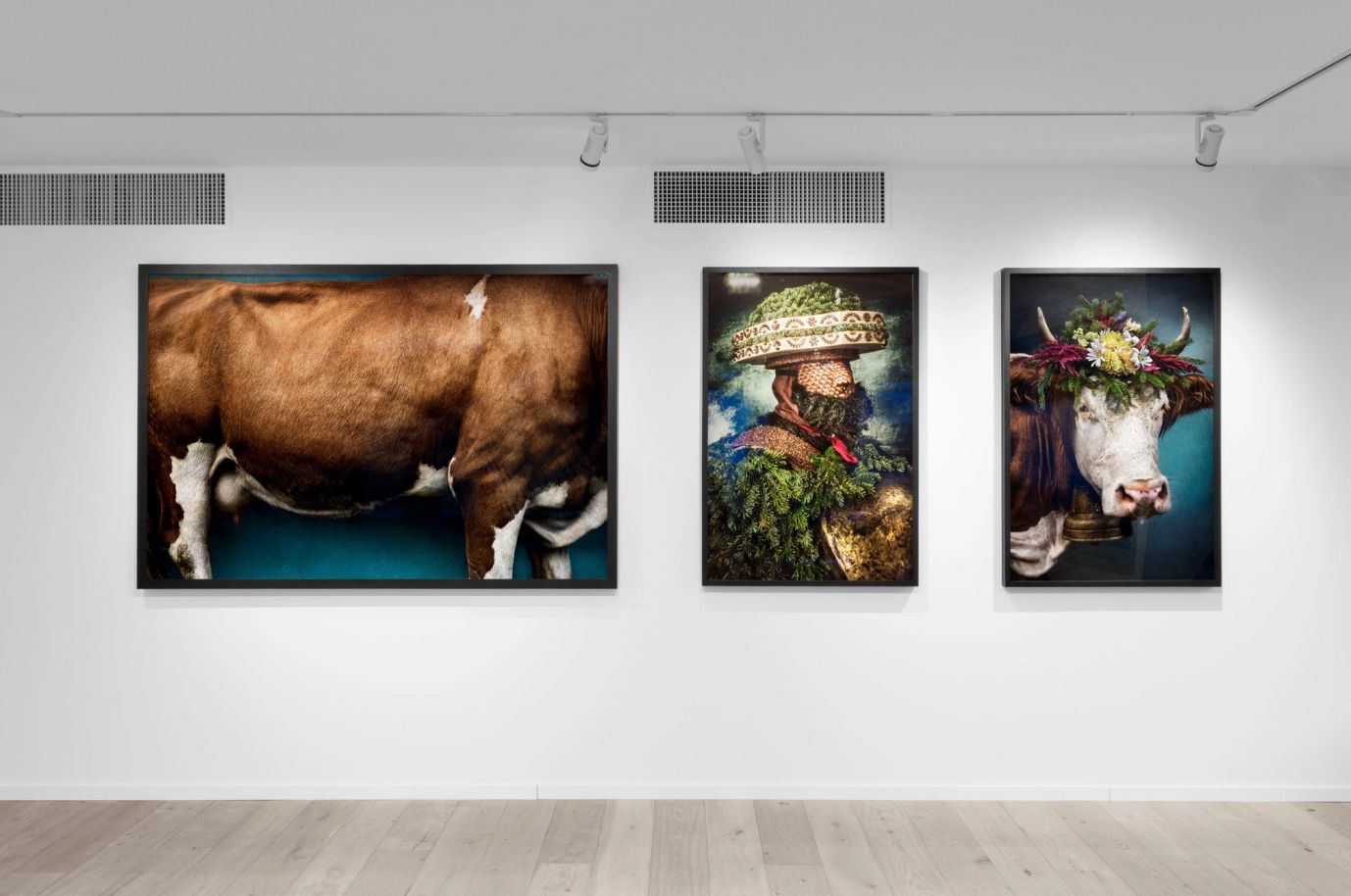
Install Image Of Nina, Saanenland, 2024, Deep in nature, Urnäsch, Appenzell Ausserrhoden, 2025 and Helga (II), Saanenland, 2024 by Mario Testino at Patricia Low Contemporary, Gstaad. Digitally produced C-type print. Photo: Théa Giglio / Instagram: @thea.giglio
What holds Testino’s interest is not colour or choreography. It is care. The cowbells are not simply decorative. Their sound marks passage and belonging, and in some regions they carry protective folklore. The animals are handled with patience. They are known by name. Their bodies are honoured through preparation, not costumed for spectacle. The camera registers the dignity of that practice. It does not romanticise it, and it does not reduce it to tourism. It observes the attention surrounding the animal and allows that attention to become the subject.
That is one of the strongest claims A Beautiful World makes at its best. Every place contains its own relationship with animals, shaped by climate, labour, belief, geography and survival. Some animals are companions. Some are working partners. Some are wild, held at the edge of human life but still deeply woven into cultural imagination. Through that lens, animals become a measure of how a society understands itself.
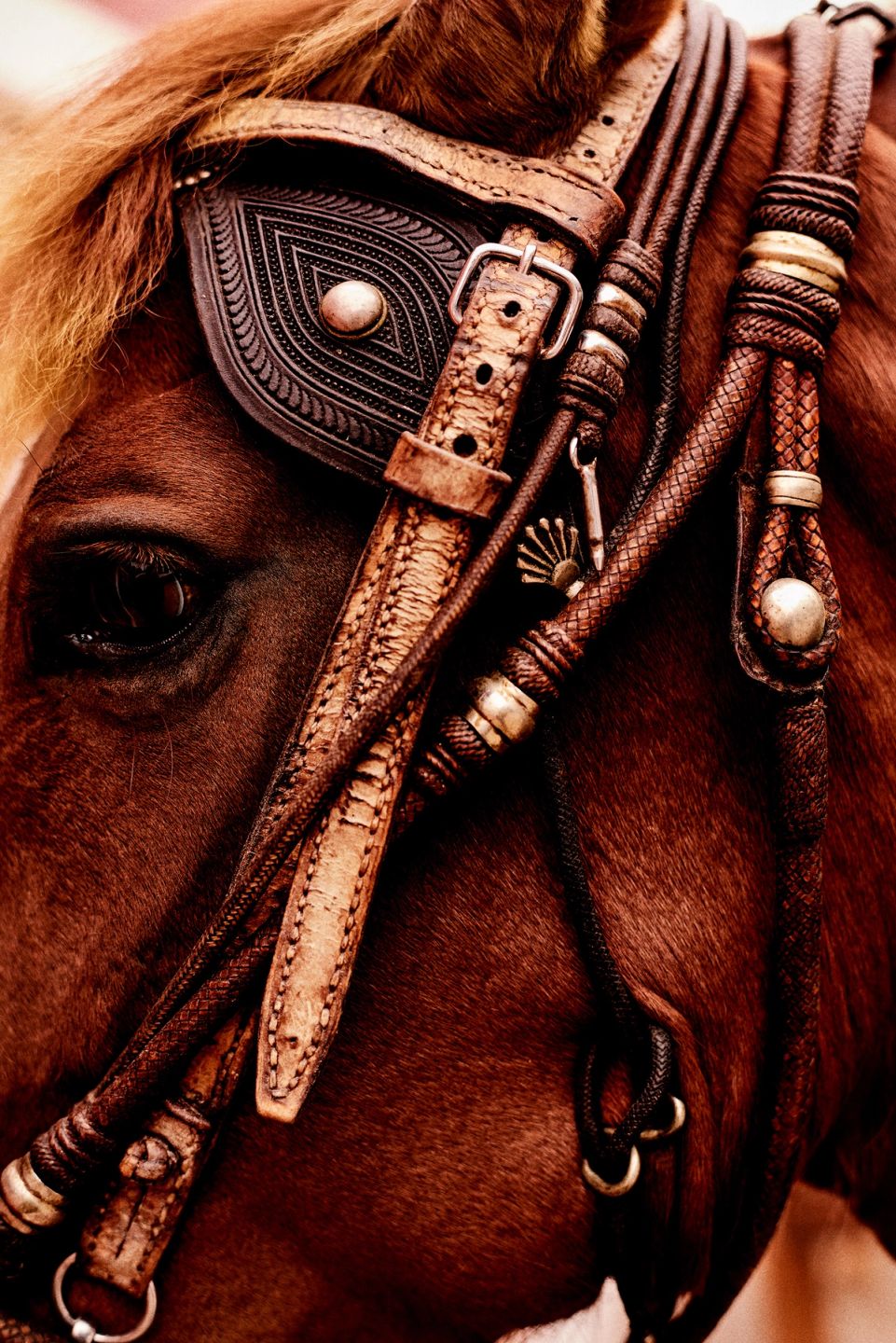
In his native Peru, this attention took a different form. In Fina Estampa, first published in 2018 as both a book and an exhibition project, Testino devoted sustained focus to the Peruvian Paso horse. The Paso is not a decorative national symbol. It is a living tradition, shaped through breeding, training and the transmission of knowledge. The horse’s gait is cultivated. Its posture is taught. Grace is not assumed, it is made. Photographing the Paso is therefore not only about beauty, but about lineage, about a country recognising itself in the discipline of a creature it has shaped over time. It stands as one of the clearest examples of Testino treating an animal not as atmosphere, but as a carrier of identity.
In Gone Wild, presented at Hamiltons Gallery in 2023, the work opened outward. Animals move fully into the foreground across remote landscapes, with a seriousness that refuses the familiar wildlife photography script. Dr Jenifer Allen captured it sharply when she wrote that Testino “expands the frontiers of wildlife photography”. The point is not location, though the locations are extraordinary. The point is approach. Testino pushes the genre beyond simple documentation. These animals do not feel photographed unawares. They meet the camera. They seem to participate. The images hold the tension between wildness and encounter, between distance and mutual recognition.

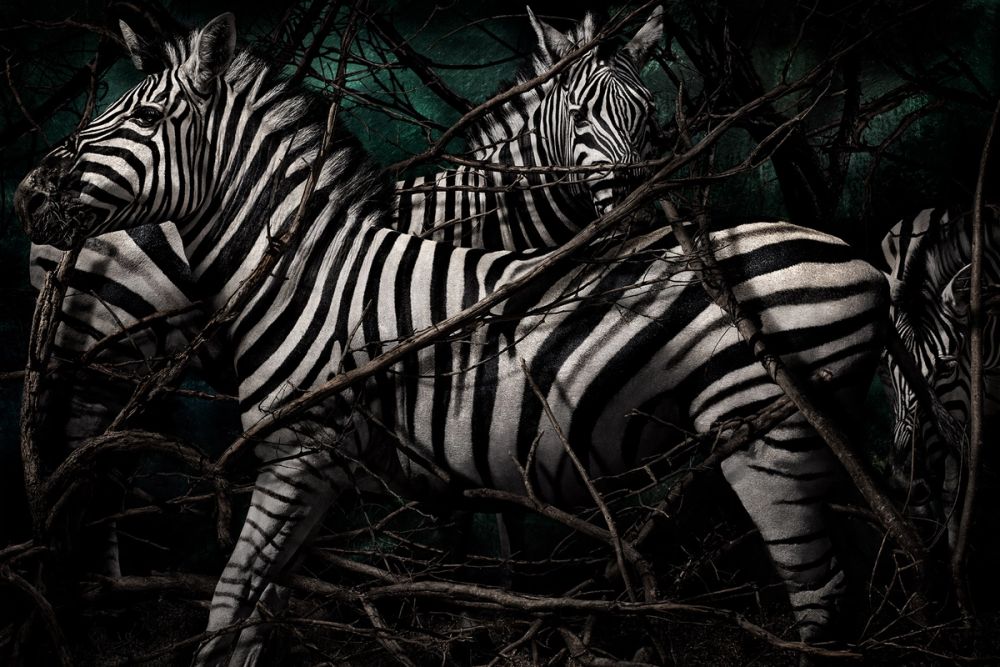
Equus quagga burchelli, Namibia, 2022. Photographed by Mario Testino.

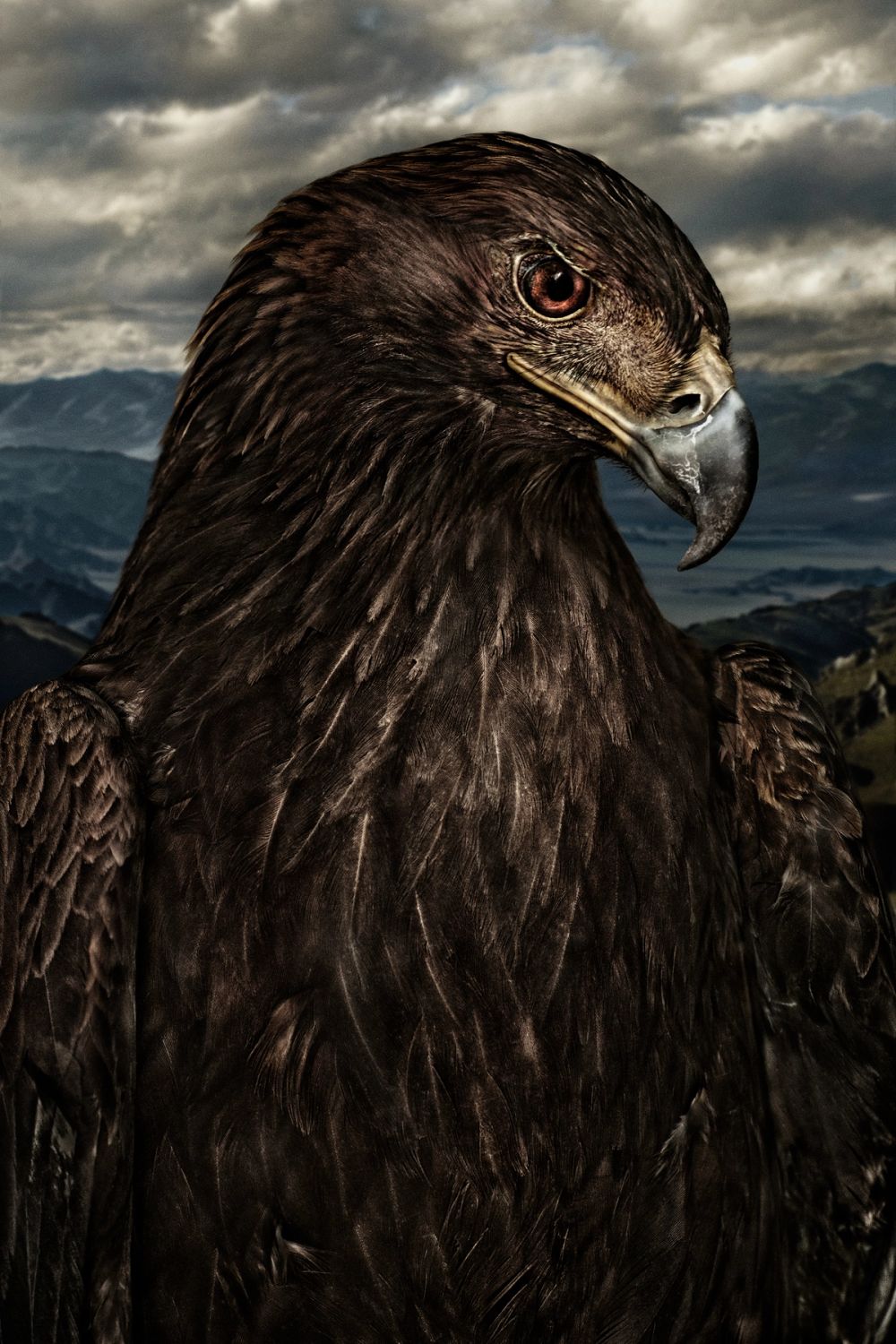
Aquila chrysaetos (I), Mongolia, 2019. Photographed by Mario Testino.

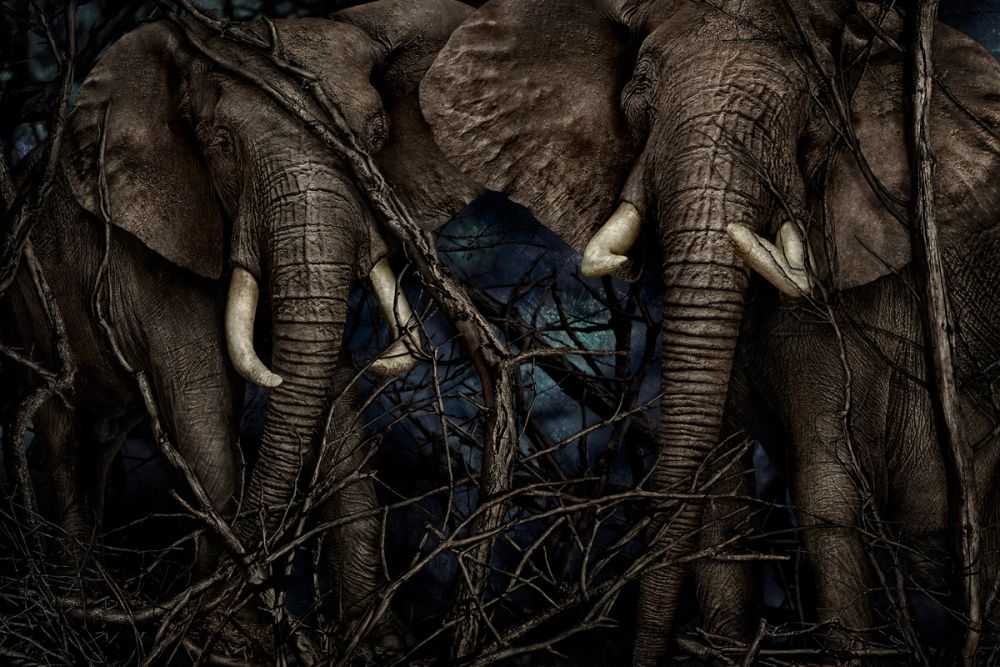
Loxodonta africana, Kenya, 2023. Photographed by Mario Testino.

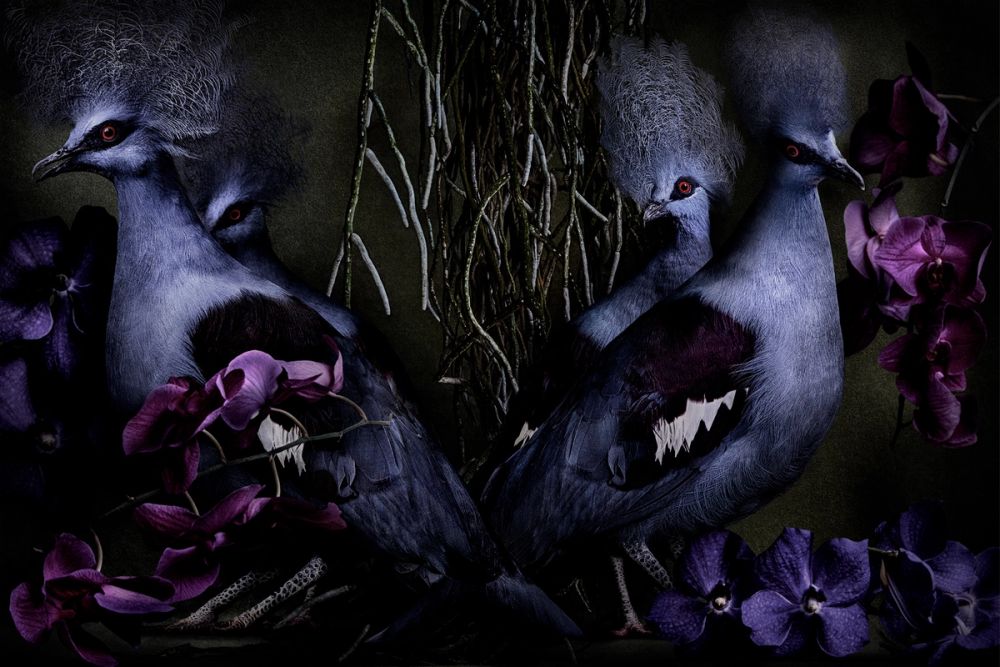
Goura cristata, Brazil, 2022. Photographed by Mario Testino.

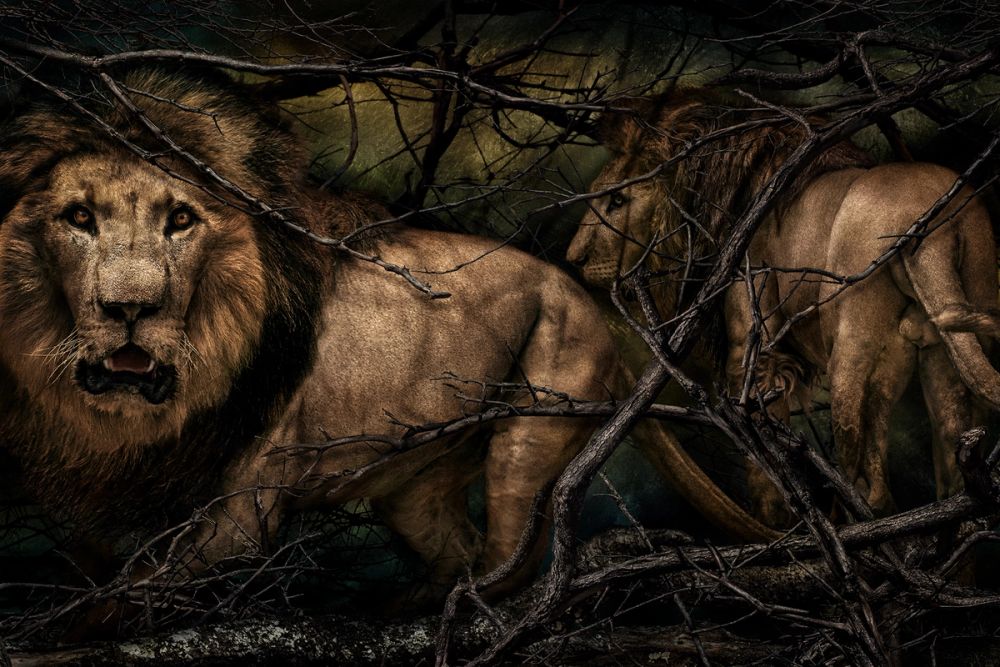
Panthera leo, Kenya, 2023. Photographed by Mario Testino.

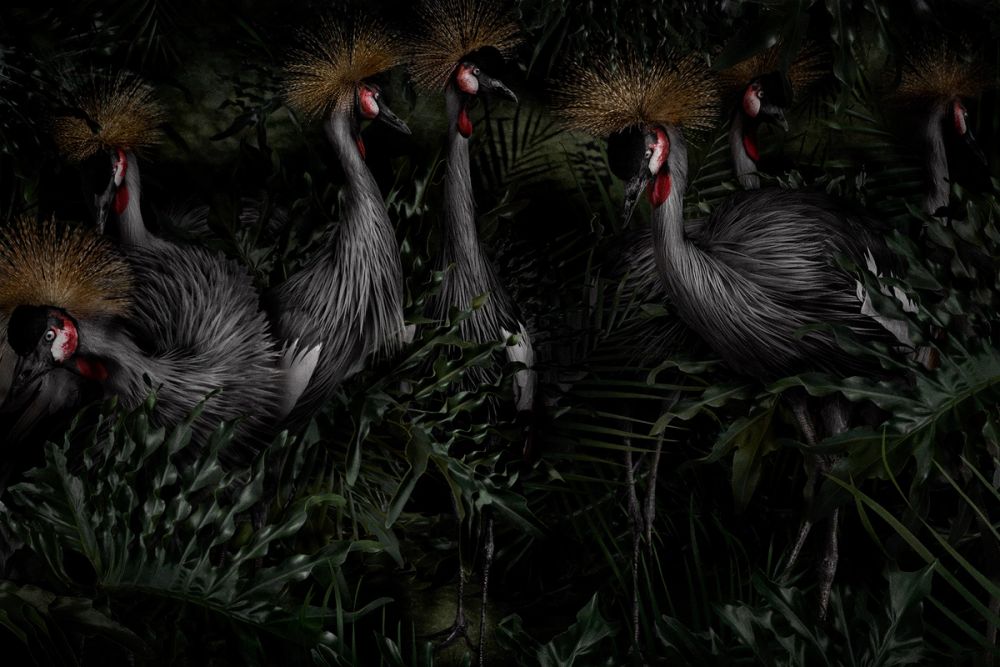
Balearica pavonina, Brazil, 2022. Photographed by Mario Testino.
This is also where the early fashion work becomes newly legible. The pug, the dogs, the horses, the kitten, the chickens, the zebras. They were not random. They were early evidence of a photographer drawn to presences that cannot be fully directed. Animals resist performance in the way models do not. They cannot be entirely controlled, and that resistance is part of what gives them authority in the frame.
In Rome, when A Beautiful World was presented at Palazzo Bonaparte in 2024, animals were not dispersed as background texture. They were given full resonance through a dedicated immersive audio-visual installation titled Mario Testino Flora and Fauna which placed Testino’s portraits in their natural context, positioning the natural world as a central force rather than a peripheral motif. Seen in that context, the animal images do something cumulative. They make a case that culture is not only what humans wear or say. It is also what humans live alongside, depend on, fear, protect, honour and inherit.
Testino has spoken about faith as a way of understanding the sacred in human behaviour. “Faith, and the desire to connect with something sacred which lies beyond us, are expressed in so many ways,” he has said, “even through dimensions of fear and sacrifice.” Animals sit inside that sentence more naturally than we admit. They exist at the intersection of devotion and utility, tenderness and control. They are part of ceremony in one context, part of survival in another, part of identity everywhere.
A definitive account of Testino and animals is not a sidebar to his career. It is a thread that runs through it, growing clearer as the years pass. In the fashion years, animals arrived as interruptions, anchors and witnesses. In A Beautiful World, they become subjects, and they bring with them a deeper question: what changes when we stop treating the living world as atmosphere and start treating it as presence.
That is what these photographs ultimately offer. Not sentiment. Not metaphor. Attention. The kind that holds long enough for the animal to remain fully itself, and for the viewer to recognise that this, too, is part of how culture is made.