THE UNION JACK COVER: BRITISH FASHION AT FULL VOLUME

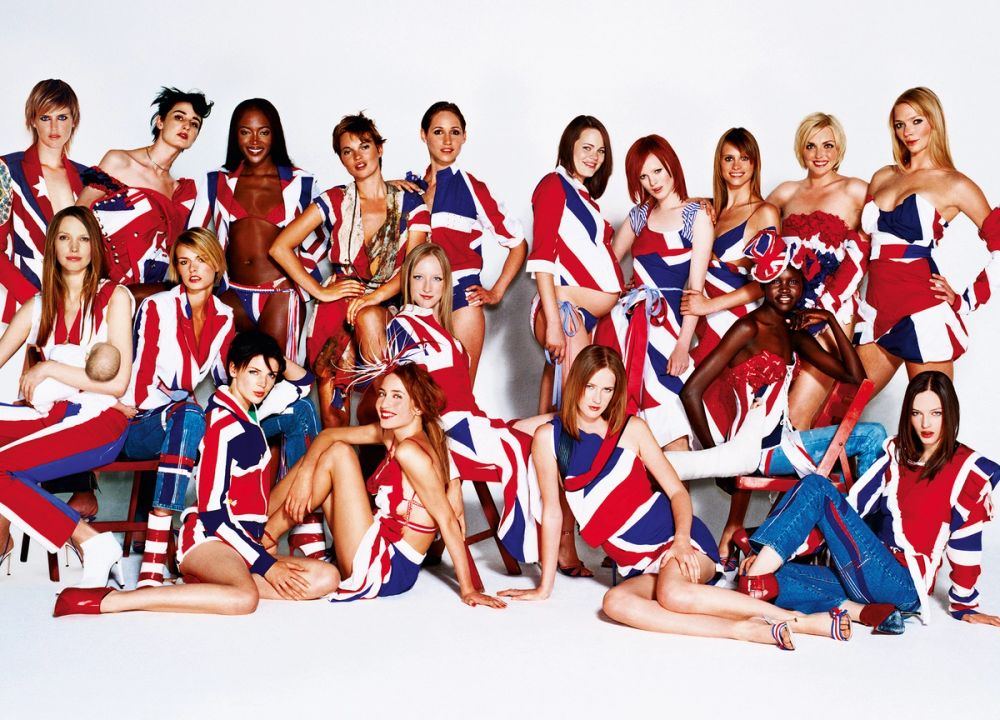
Late 2001. A cold morning in a West London studio. Mario Testino steps into a room already in motion. Cables on the floor. Light being dialled. Assistants running hot and cold. A BBC crew filming him for Omnibus. Catering for a small army. A baby named Lucas. A dog named Ollie. A hum that tells you this is not going to be a normal day.
He is there to photograph the cover of British Vogue. Nothing more. Nothing less.
But the idea is ambitious enough to make a magazine nervous. Eighteen models, all British, all on the same day, all in the same room. British Vogue had doubts they could bring everyone together. Jasmine Guinness was pregnant. Cecilia Chancellor had just had a child. Stella Tennant was out of town. Schedules, pregnancies, travel, fatigue, life.
“They were worried they couldn’t bring everyone together,” Testino said later. “But everyone showed up.”
That is the beginning of the story, not the ending. Because what happened next was not simply a cast arriving on set. It was a country’s fashion identity walking into a studio and recognising itself in real time.
The January 2002 issue would be titled Fashion’s Force. The group would be called the “Brit Pack”. The image would become the Union Jack cover. The labels came later. On the day, it was just eighteen women, each carrying her own era, her own energy, her own private momentum, gathered into a single frame.
Naomi Campbell and Kate Moss. Stella Tennant. Erin O’Connor. Alek Wek. Karen Elson. Sophie Dahl. Jodie Kidd. Cecilia Chancellor. Elizabeth Jagger. Jacquetta Wheeler. Jade Parfitt. Liberty Ross. Vivien Solari. Rosemary Ferguson. Jasmine Guinness. Lisa Ratcliffe. Georgina Cooper.
Not a line-up of identical beauty. A map of differences. When you look at the final photograph, you feel that. The image does not flatten them into one look. It lets the contrasts live. It lets the room breathe as a room.
One detail sits quietly inside the image. Jade Parfitt was photographed with a broken leg. As Mario Testino has said, “Life is not perfect, and it is often the imperfection that makes the image.” For him, it is never only about the photograph, but about life itself. What appears to work against you can become the very thing that creates something unique.


London, British Vogue, 2001
The symbol is obvious, but the treatment is not. A single Union Jack flag was sent out in advance to British designers, with one instruction. Interpret it. Make something that can be worn. Return it. No sanitising. No single house style. The result was not costume patriotism. It was design thinking in public.
Lucinda Chambers, then Fashion Director of British Vogue, commissioned the designers whose work shaped the image, drawing their individual languages into a single, shared frame. Vivienne Westwood. John Galliano. Stella McCartney. Alexander McQueen. Hussein Chalayan. Paul Smith. Matthew Williamson. Philip Treacy and others.
Each designer cut the flag through their own language, then handed it back for the same photograph. The flag becomes a rhythm rather than a statement, repeating in different accents across bodies.Some of the details are now part of fashion folklore because they carry the maker’s hand so clearly.
Galliano’s corsetry. Clements Ribeiro’s towelling cut into hot pants. Stephen Jones shaping a Union Jack top hat. Philip Treacy turning headwear into punctuation. Kate Moss wearing a Chalayan dress that had been buried in dirt weeks earlier so it could be unearthed with the marks of time. Not because it was theatrical, but because it was precise. Chalayan was building an idea of Britain as memory and material, not just colour.
If you want to understand why the cover still holds, start there. It is not just a photograph of models. It is a photograph of British authorship, visible in the cut and construction.
The set itself was a portrait of the period.
There is a sense of bustle without hysteria, a feeling that the culture was moving quickly but still together. Fashion, music, art and photography were colliding with a kind of shared momentum. It was an era when magazine covers could still feel like cultural headlines, not content units. When a shoot could be a gathering point, not a deliverable.
Inside the issue, a line ran beside the story: “What better way for patriotism to run wild?” It reads differently now. Not as provocation. More like a timestamp. A record of a moment when confidence in British culture was expressed through creativity. Not through rhetoric. Not through defensiveness. Through making.

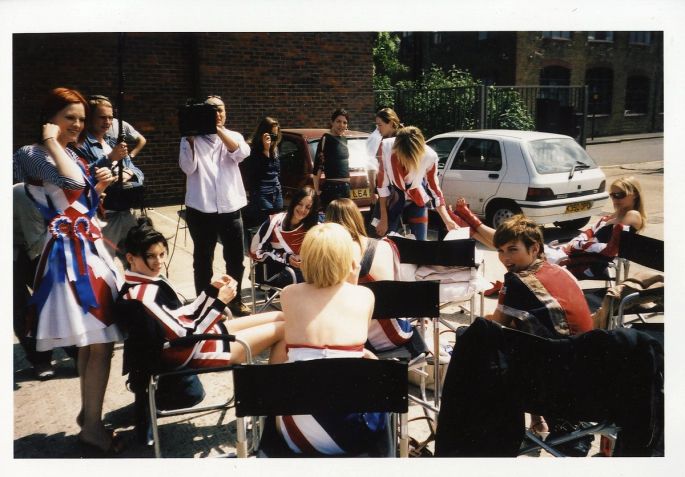
Behind the scenes of Mario Testino’s Union Jack cover shoot for British Vogue, January 2002, capturing the moment British fashion came together in a single frame. Photograph by Thomas Nutzl.

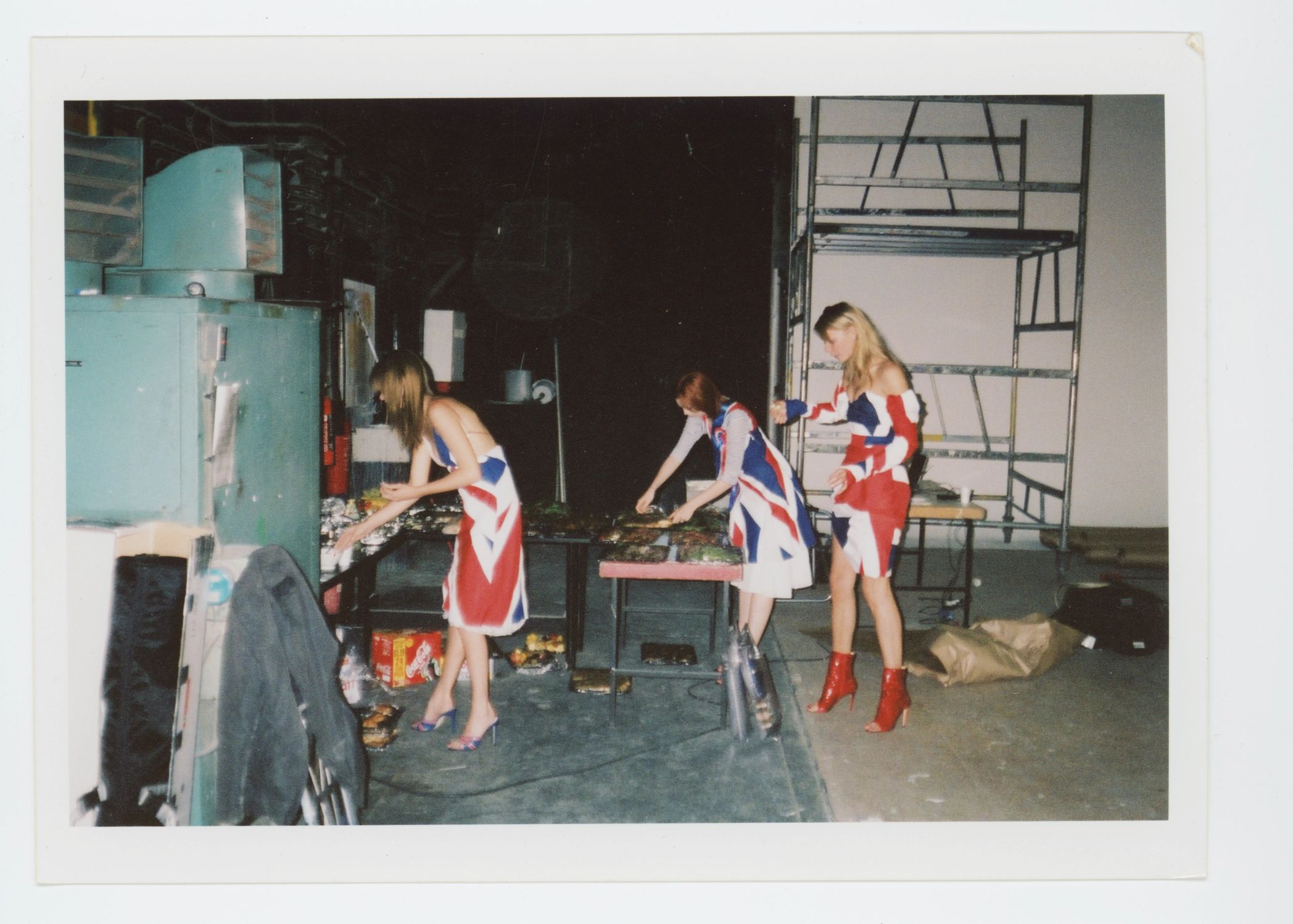
Behind the scenes of Mario Testino’s Union Jack cover shoot for British Vogue, January 2002. Photograph by Thomas Nutzl.


Behind the scenes of Mario Testino’s Union Jack cover shoot for British Vogue, January 2002. Photograph by Thomas Nutzl.

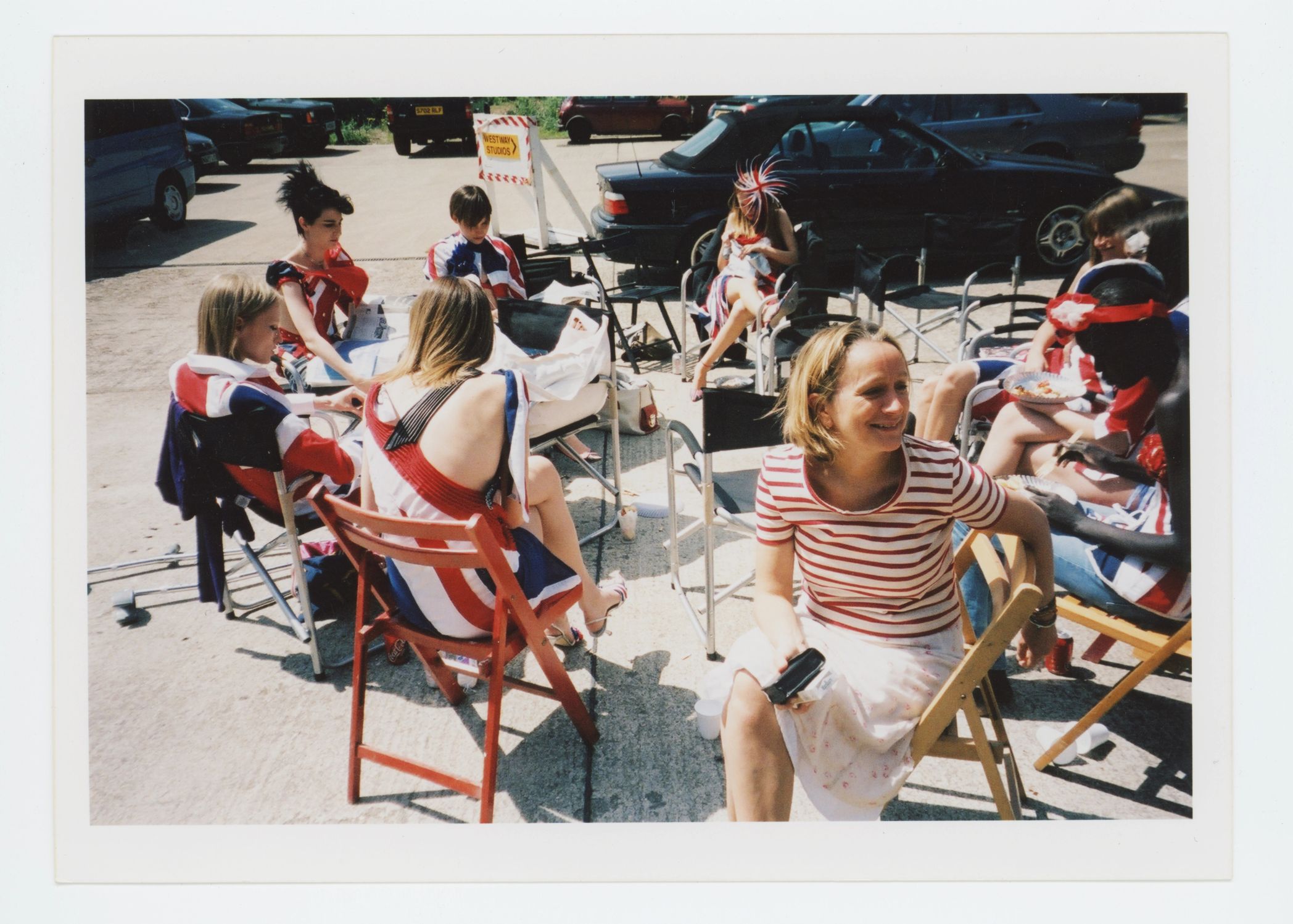
Behind the scenes of Mario Testino’s Union Jack cover shoot for British Vogue, January 2002. Photograph by Thomas Nutzl.

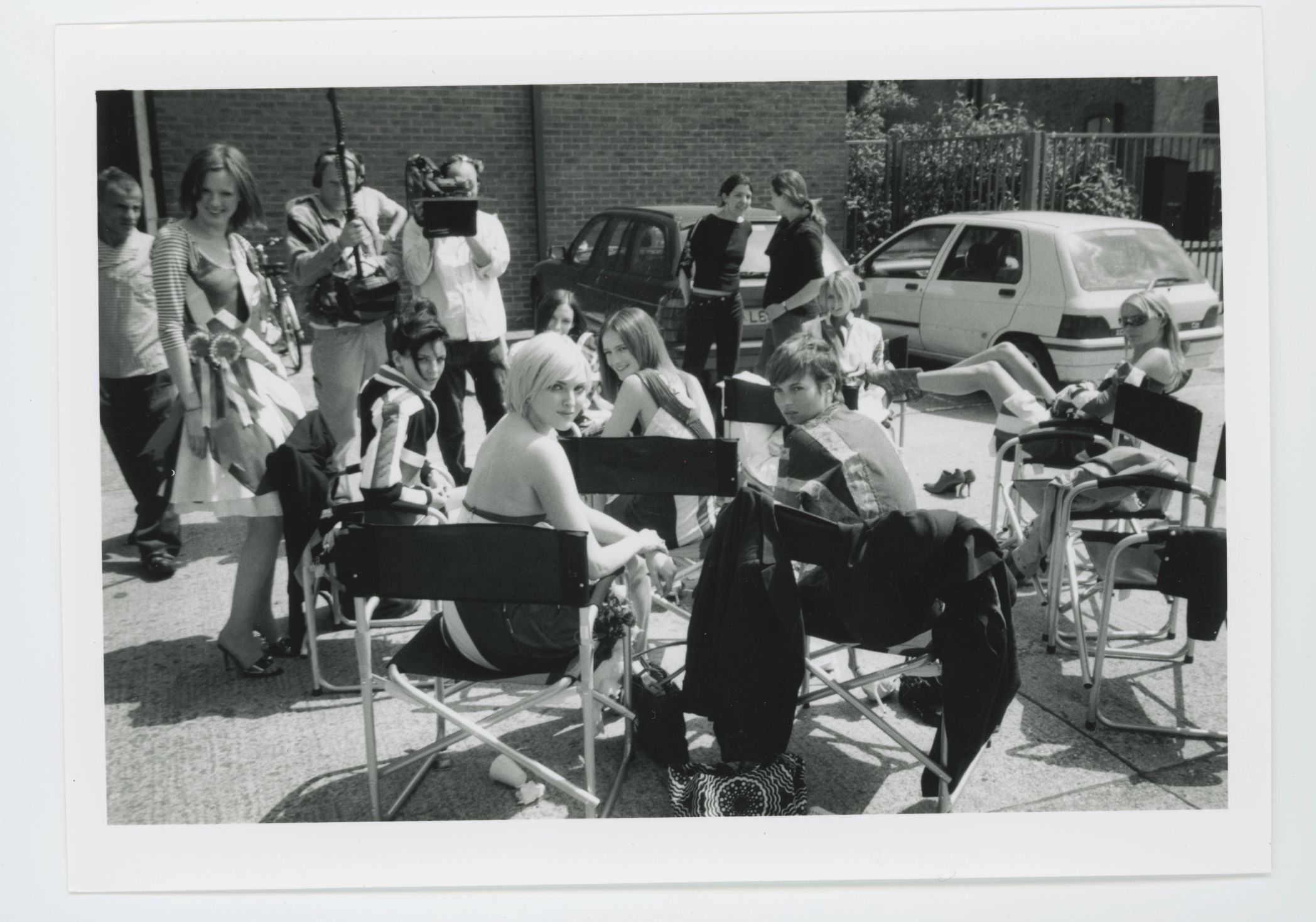
Behind the scenes of Mario Testino’s Union Jack cover shoot for British Vogue, January 2002. Photograph by Thomas Nutzl.

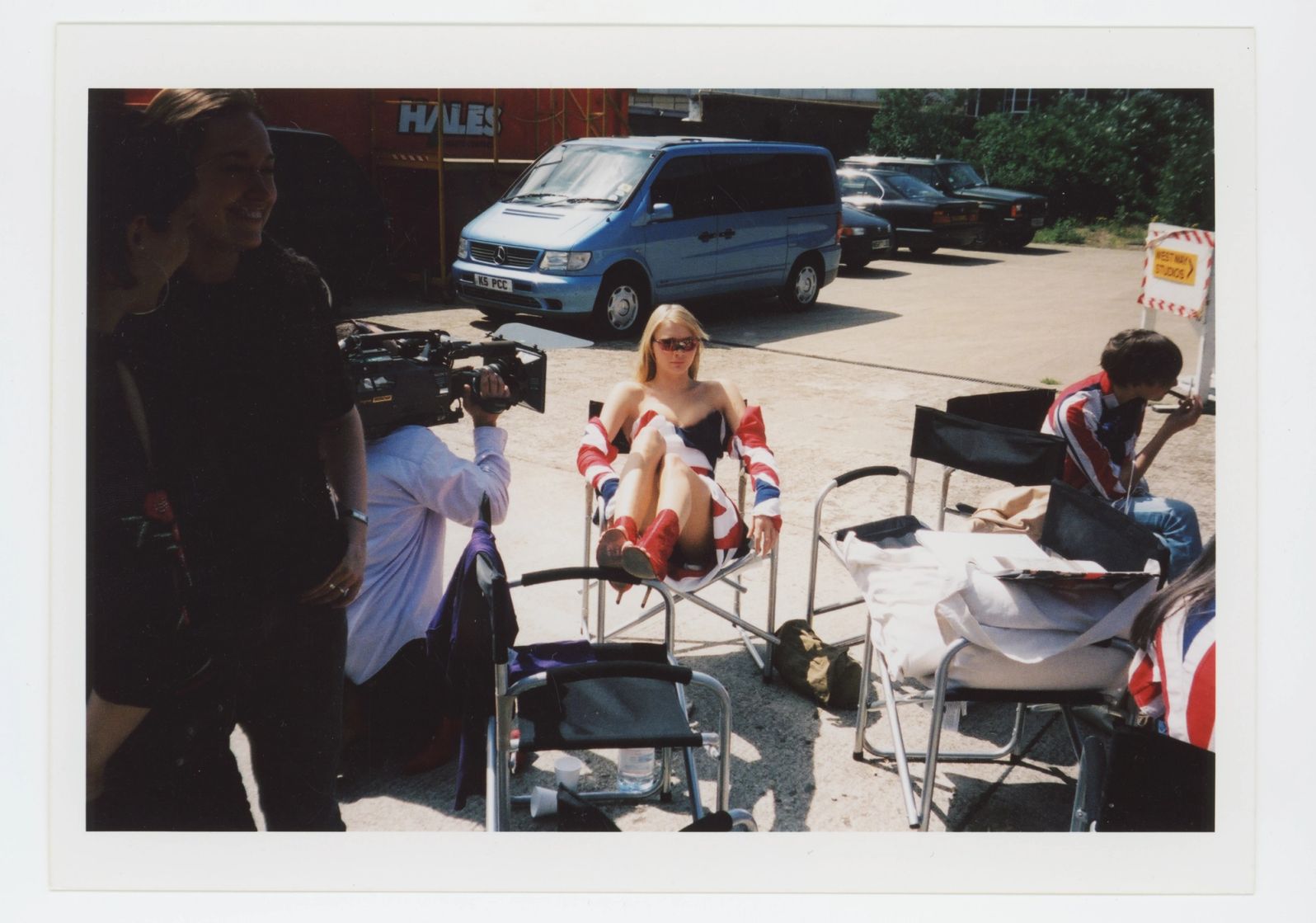
Behind the scenes of Mario Testino’s Union Jack cover shoot for British Vogue, January 2002. Photograph by Thomas Nutzl.
Testino’s contribution is in the way he choreographs togetherness. He has always understood groups. Not as clutter, but as structure. In the Union Jack cover, the bodies are pressed close enough to create a single surface, then allowed enough difference to keep that surface alive. Patterns repeat. The flag fragments. Meaning comes from accumulation. The photograph becomes architectural. The subject is not one person’s aura. The subject is proximity.
That instinct, the ability to make a group look like a force rather than a crowd, is what caught the attention of Andreas Gursky. At the time, Gursky was reshaping contemporary photography with scale and repetition. He asked to come and photograph Testino working on the cover. He joined the day and observed it from within. The exchange matters because it says something about the moment. Fashion photography and contemporary art were watching each other closely, recognising shared concerns: scale, mass, pattern, the choreography of people.
This was not fashion borrowing prestige from art. It was fashion operating at a level of ambition that art could recognise. And then, almost without anyone noticing in the moment, the conditions that made this possible began to fade.
The industry learned to fragment. Casting became more dispersed. Celebrity replaced collectivity. The culture shifted from choruses to singles. Even the way we consume images changed, from ceremony to scroll. The Union Jack cover sits right on that edge. It still belongs to the era when a magazine could stage a gathering and the world would agree it mattered.
That is why it travels. The image toured internationally, showing Britain to other countries not through stereotype, but through the fact of its talent, assembled. It carried British fashion outward as a unified field, not a set of isolated names. It made a case without making a speech.
Its afterlife confirms the point. The January 2002 cover has become a collector’s object, often framed as a standalone print. People buy the cover alone. They keep it. They hang it. Not because it is rare, but because it feels like an occasion that cannot be repeated in the same way.
When people say they miss the old fashion system, they rarely mean the clothes. They mean the sense of collective movement. The sense that the culture could arrive in a room and be captured as itself.
Testino’s Union Jack cover does not ask for a return to that time. It does something more disciplined. It records the moment British fashion spoke at full volume, as a chorus, and the room listened.
CREDITS: STYLIST LUCINDA CHAMBERS | MAKEUP TOM PECHEUX | HAIR MARC LOPEZ