BEYOND THE BRASS: MARIO TESTINO AND THE WOMEN OF THE KAYAN

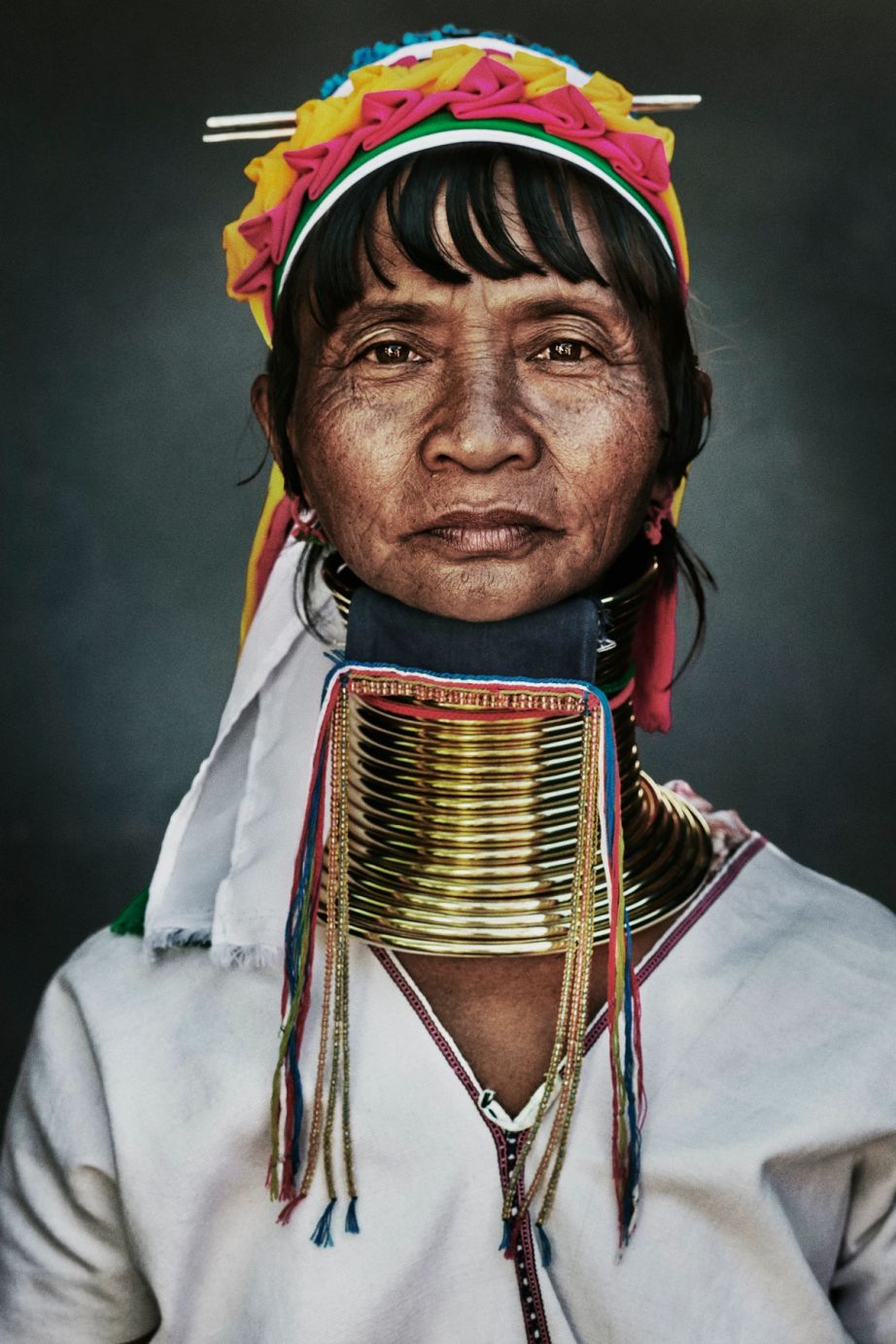
Mario Testino travelled to Myanmar in 2018 for A Beautiful World, his ongoing exploration of cultural traditions, dress and identity around the world. The journey took him across the country by van, sometimes for nine hours at a time, through a landscape of mountains and temples, with the golden spires of pagodas appearing between the greenery.
“There were so many different communities,” he remembers. “Of course, I wanted to photograph them all.”
His first stop was with the Kayan women, and the first thing he noticed was the brass: gleaming, sculptural neck coils that transformed the silhouette of the women who wore them.
Testino was fascinated by the tradition and kept asking what happened when the coils were removed. But curiosity has a way of changing the longer one looks. Once his eye adjusted to what had initially seemed extraordinary, he began noticing something else.
“I began looking beyond the coils and studying the details of how each woman presented herself,” he says.
The scarves around their heads. Their earrings. Haircuts and fringes. The particular arrangement of one colour against another. Pink with green. Orange against yellow. Purple falling over white cloth and polished brass.
What appeared at first to be a shared way of dressing gradually revealed something far more individual.

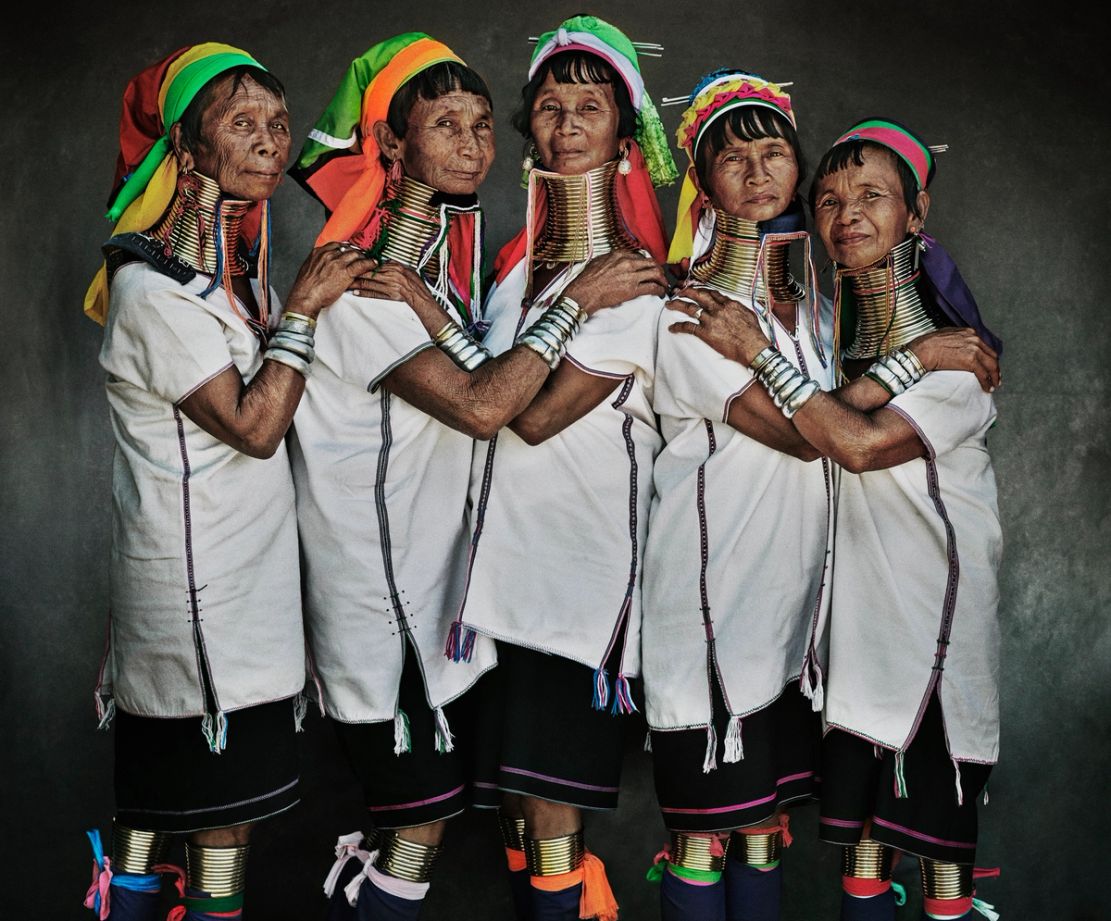
Kayan Women, Myanmar, 2018. Photograph by Mario Testino.
This is where the thinking behind A Beautiful World comes into focus.
Coming from fashion, he had spent much of his career inside an industry propelled by the idea of the new. Seasons change, silhouettes shift, yesterday's image gives way to tomorrow's. Travelling for A Beautiful World brought him into contact with cultures where clothes and adornment could operate according to another rhythm, connecting one generation to the next.
What fascinated him was that continuity did not mean sameness.
“Even where at first everything appears similar, individuality always finds a way through,” he says.
Among the Kayan, the brass neck coils are one of the most recognisable elements of women's adornment, part of a cultural tradition associated with identity and ideals of beauty. Their stacked form creates the appearance of an elongated neck and has become an enduring visual marker of the community.
Testino's portraits ask the eye to stay a little longer.
One woman faces his camera beneath an elaborate headdress of yellow and pink, her black fringe falling in precise curves across her forehead. Another turns into profile, wrapped in saturated pink, green and purple. Two women stand back to back beneath cascades of orange, green and yellow cloth. In the group portrait, polished brass and white garments establish a visual harmony before the distinctions begin to reveal themselves: jewellery, colour, gesture, expression, the particular way each woman has chosen to put herself together.

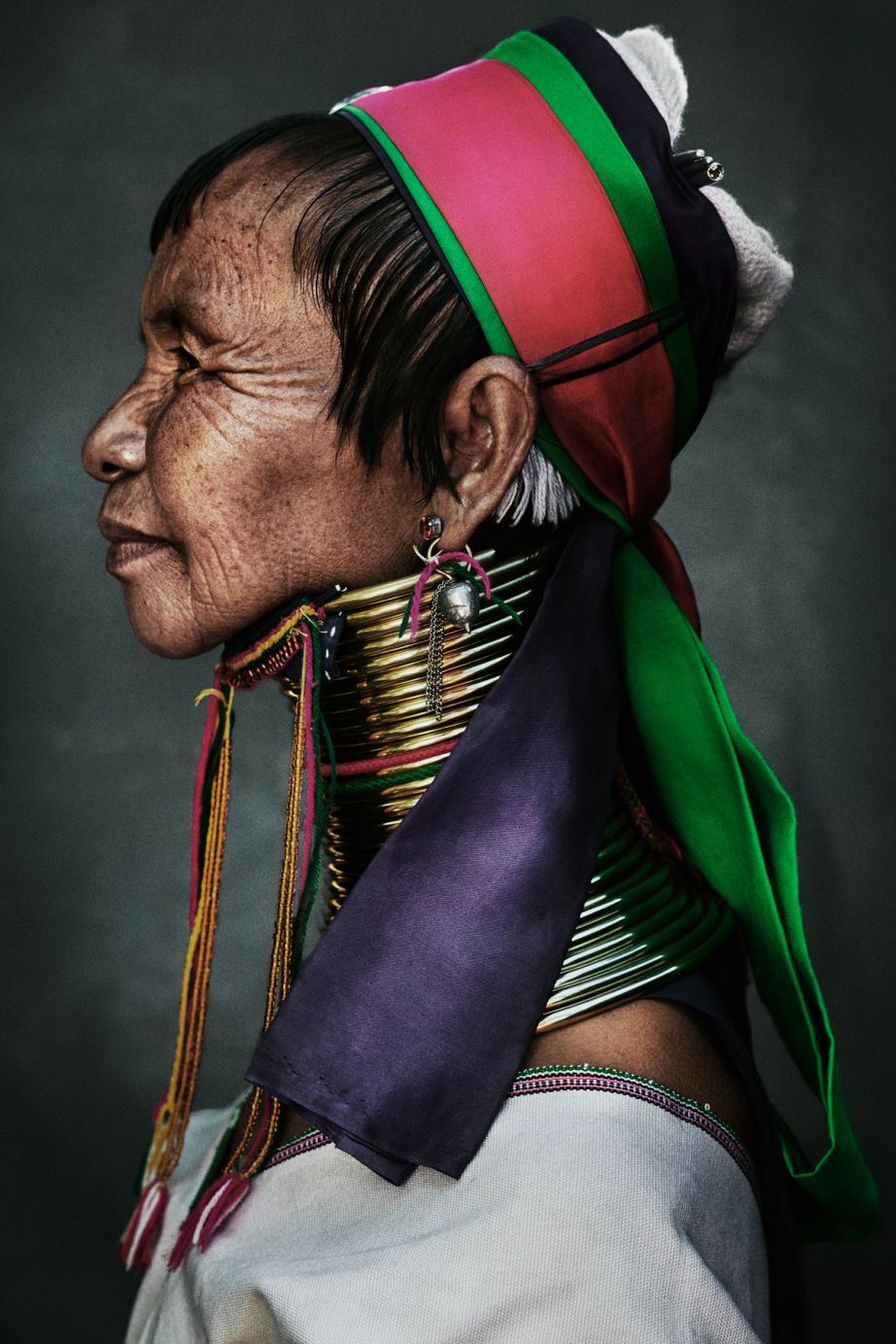
Kayan Woman, Myanmar, 2018. Photograph by Mario Testino.

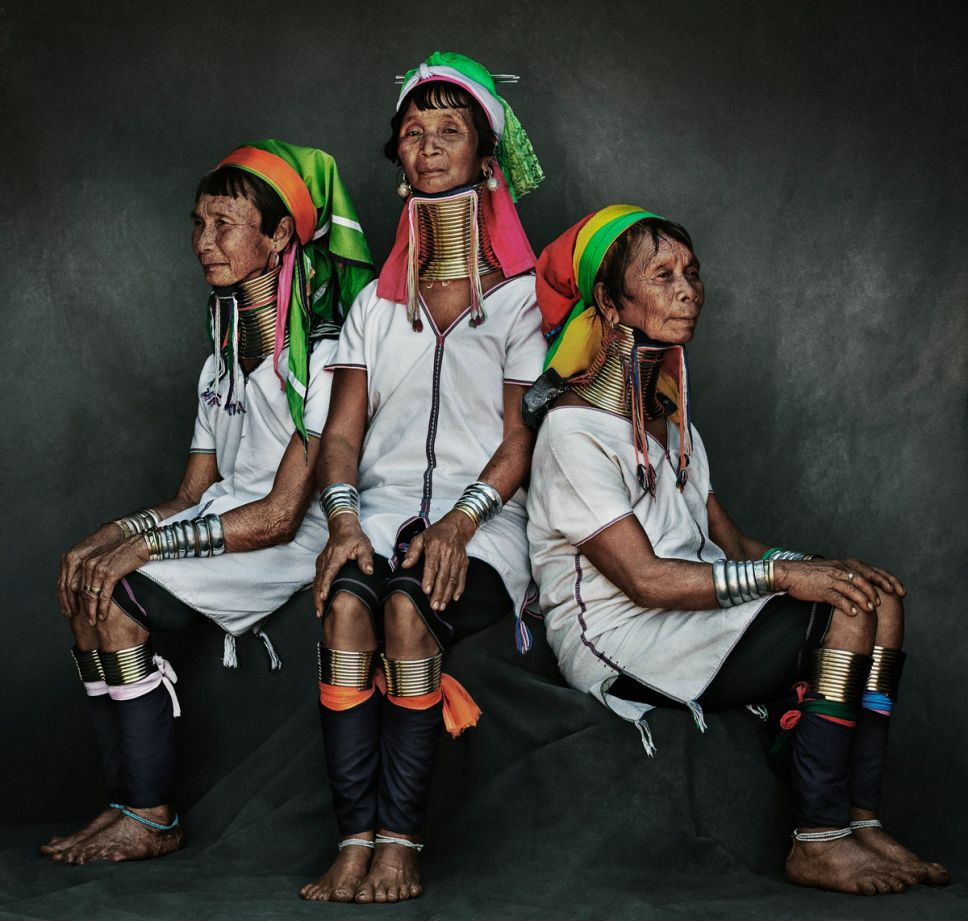
Kayan Women, Myanmar, 2018. Photograph by Mario Testino.

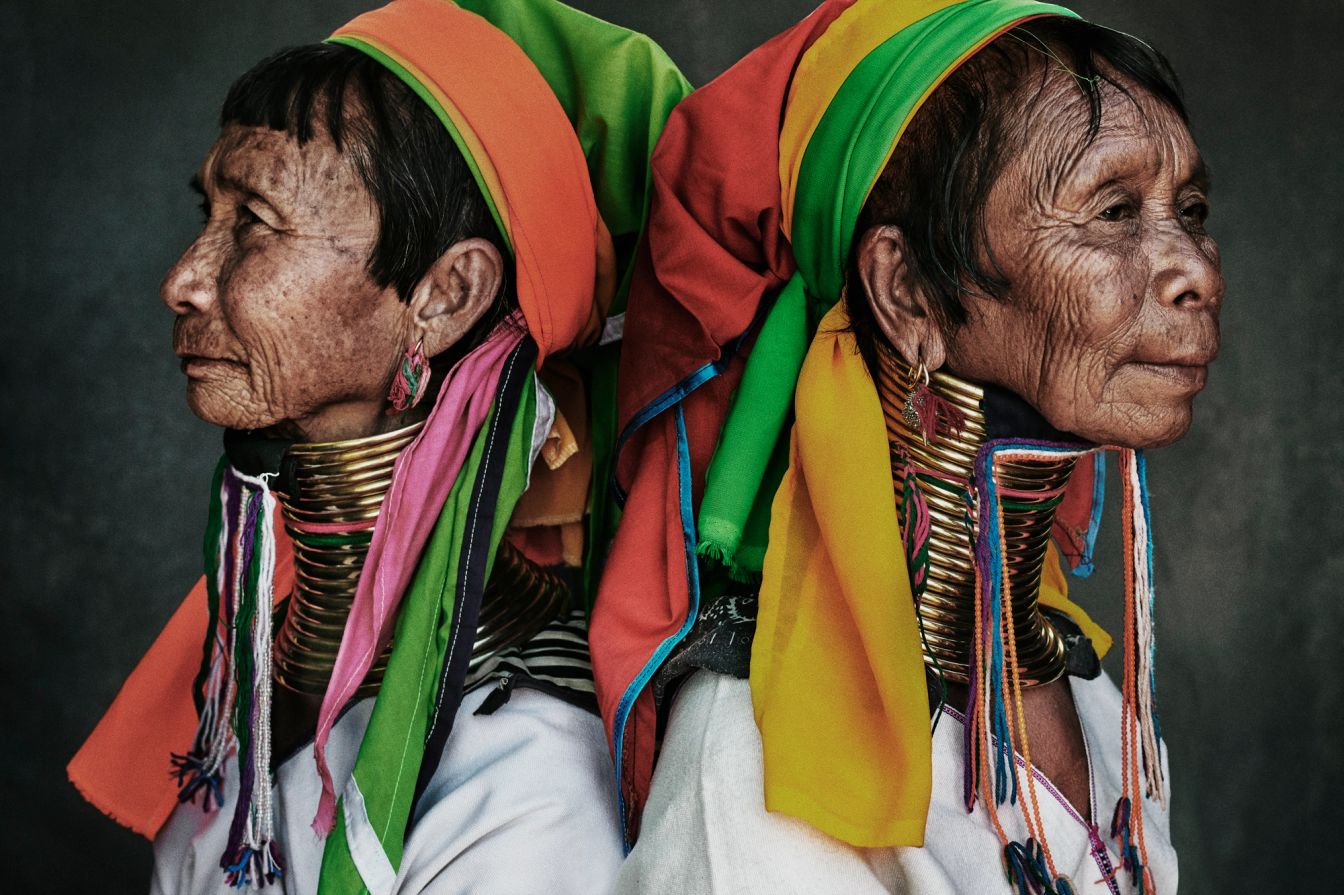
Kayan Women, Myanmar, 2018. Photograph by Mario Testino.
For Testino, whose career has been shaped by observing how people present themselves, these details mattered.
“What interested me was this balance between belonging and individuality,” Testino says, “a group of women proud to be part of a community with its own traditions and its own ideas of how beauty is expressed.”
Elsewhere in Myanmar, that curiosity took different forms. During the same journey, Testino photographed communities across the country, observing silver jewellery among Akha women, the use of gemstones in Yangon, and other traditions of dress and adornment that had developed their own visual languages.
Across these encounters, Testino became increasingly interested in dress as a living inheritance: something received from the generations before us, but made personal in the wearing.
The portraits were made beside a lake. Testino remembers the extraordinary blues of the water and sky and the way the women's clothes appeared against them. After the long journeys by road and the intensity of discovering somewhere new, the atmosphere of the sitting was unexpectedly tranquil. “There was a wonderful sense of peace and calm,” he says.
It is easy, when looking at photographs of traditions unfamiliar to us, to allow the most extraordinary element to become the entire story. The coils can become the women. The symbol can eclipse the person.
“The world is full of surprises,” Testino says. “We meet people who, at first sight, may seem to have little in common with us, but kindness crosses those differences so easily.”
Testino's experience moved in the opposite direction. As the sitting unfolded, what had initially appeared unfamiliar gave way to the specificity of the women themselves. What remained was not simply an image of a tradition, but an encounter with women expressing themselves from within it.
“These women were incredibly generous towards us,” he remembers, “and what I remember most is the feeling that we were celebrating together what we were creating.”
Perhaps that is why the portraits resist becoming studies of dress alone. They are about adornment, certainly, but also about the human impulse beneath it: to inherit, to belong, and still to make something unmistakably one's own.
The brass caught Testino's attention. The women held it.