DRESSED TO KILT: MARIO TESTINO'S 2003 EXPLORATION OF THE KILT, MENSWEAR AND IDENTITY

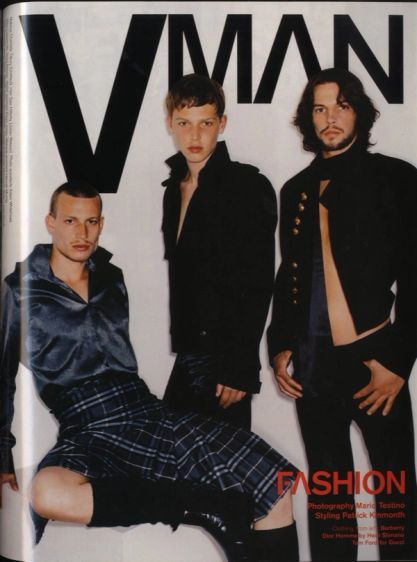
Mario Testino has long been fascinated by kilts.Years after photographing Dressed to Kilt for VMAN in 2003, he would wear one himself to the opening of his Portraits exhibition at the National Gallery in Edinburgh. Through his Irish family heritage, he discovered a tartan connected to his ancestry and decided to embrace the tradition fully.

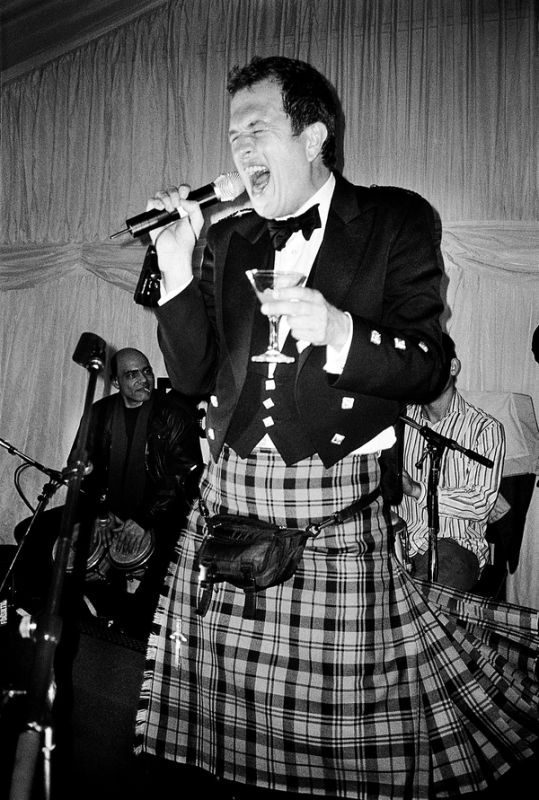
From the opening celebrations for Portraits at the National Galleries of Scotland in Edinburgh, Mario Testino performs wearing his ancestral tartan kilt.
That meant embracing the tradition in full. Not simply wearing the kilt, but respecting the customs that have accompanied it for generations. One of those customs proved more memorable than the rest.
"Tradition dictates that a kilt should be worn without underwear," he recalls. "I found that commitment rather challenging, as life involves a lot more than simply standing still, and certain movements can create moments of uncertainty. Regardless, I managed to uphold the tradition the entire evening."
The story is amusing, but it also reveals something important. Kilts are rarely just garments. They carry history, ritual, identity and belonging. They connect the person wearing them to something larger than themselves.
Perhaps that is why they continue to fascinate fashion. More than twenty years ago, Testino and stylist Patrick Kinmonth explored that idea in Dressed to Kilt, an editorial for VMAN that brought together a cast of young men wearing kilts across the streets, parks and landmarks of London.
Cover of VMAN No. 4 (Autumn/Winter 2003), featuring Dressed to Kilt, photographed by Mario Testino and styled by Patrick Kinmonth.
"It was amazing having all these guys walking around Pall Mall in kilts as cars were stopping wondering who they were," Testino remembers. "Kilts are usually worn in the classic style, but interesting when they turn into an element of fashion."
Published in 2003, the story arrived before many of the conversations that now shape contemporary menswear. Long before discussions around fluid dressing, heritage craft and the reimagining of masculine codes became commonplace, Dressed to Kilt was already asking what happens when a garment rooted in tradition enters the language of modern fashion.
There are garments that enter fashion as clothing, and garments that carry something older with them.
The kilt belongs to the second category. Before it appeared on runways and in editorials, before it became a recurring point of reference for designers, it was already a cultural language. It spoke of clan, landscape, ceremony, resistance and belonging. It was not simply worn. It identified.
In Dressed to Kilt, that history is brought into the present through a distinctly urban lens. Shot in London and styled by Kinmonth, the story places the kilt within the rhythm of the city rather than the romance of the Highlands.
Across the images, kilts are paired with leather jackets, knitwear, boots, shirting, sportswear and tailoring. Tartan moves through the story not as nostalgia, but as structure. It changes the silhouette. It interrupts expectation. It shifts the way the body moves through space.
In one image, a group of men gather casually on the grass. In another, they move through central London as though part of a contemporary tribe. Elsewhere, black-and-white photographs strip everything back to gesture, posture and presence.

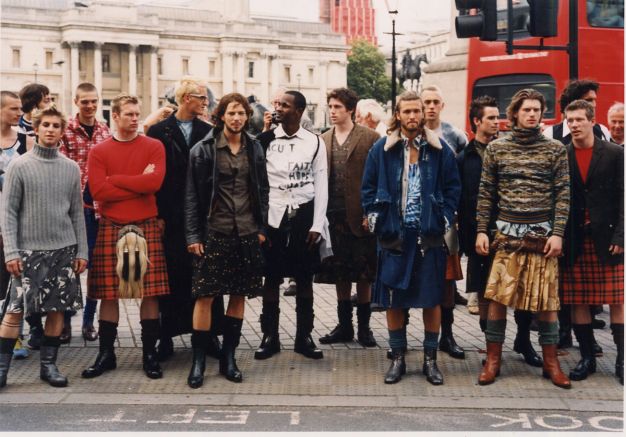
From Dressed to Kilt, Mario Testino's 2003 editorial for VMAN, styled by Patrick Kinmonth.

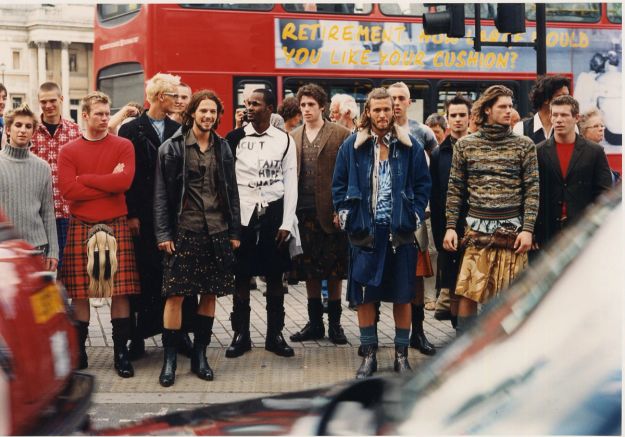
From Dressed to Kilt, Mario Testino's 2003 editorial for VMAN, styled by Patrick Kinmonth.

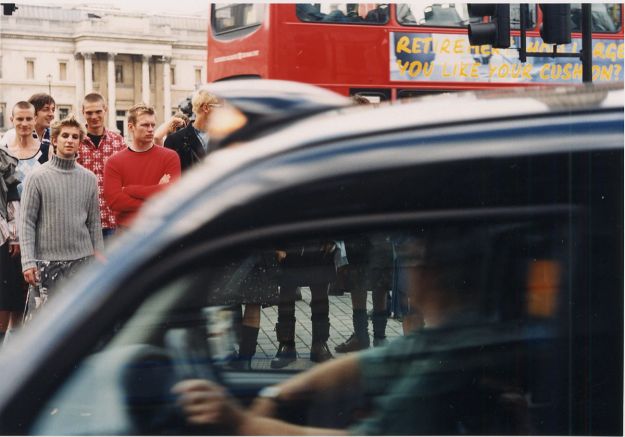
From Dressed to Kilt, Mario Testino's 2003 editorial for VMAN, styled by Patrick Kinmonth.

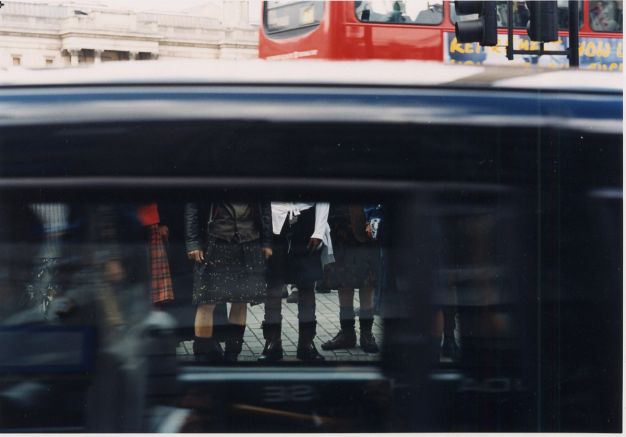
From Dressed to Kilt, Mario Testino's 2003 editorial for VMAN, styled by Patrick Kinmonth.

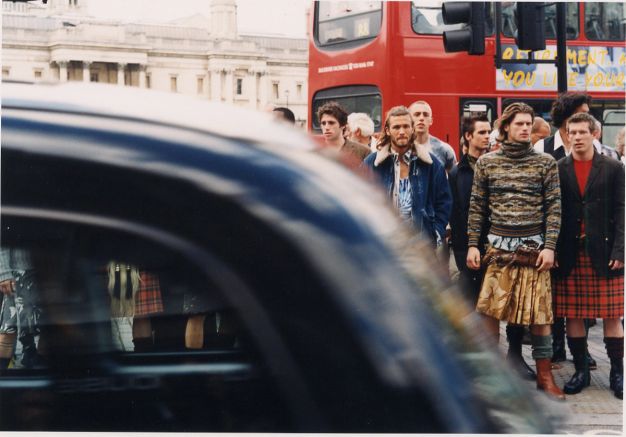
From Dressed to Kilt, Mario Testino's 2003 editorial for VMAN, styled by Patrick Kinmonth.
What emerges is not simply a fashion story, but a study of masculinity.
For much of the twentieth century, menswear was shaped by ideas of restraint and uniformity. The suit, the military jacket, the codes of formal dress. The kilt complicates that history. It introduces movement where menswear often seeks control. It allows volume where tailoring often seeks structure. It carries ceremony, but also rebellion.
That tension is what gives the garment its enduring power. Kinmonth's styling was central to the story's success. Rather than isolating the kilt as a heritage object, he placed it in conversation with the contemporary fashion landscape of the time. Designers including Vivienne Westwood, Burberry, Prada, Jil Sander, Paul Smith, Miu Miu, Helmut Lang, Ralph Lauren, Tommy Hilfiger, Adidas and Pringle appeared throughout the editorial alongside creations from 21st Century Kilts.
The mix was deliberate. It positioned the kilt not outside fashion, but firmly within it. Looking back from 2026, the story feels remarkably prescient.
Many of the questions that dominate contemporary menswear today were already present in these images. How do men express individuality through dress? How does clothing carry cultural memory? What happens when tradition is reinterpreted rather than preserved unchanged?
The kilt offers no single answer. That may be why it remains so compelling. It is formal and rebellious. Historic and contemporary. Ceremonial and practical. It belongs to specific traditions while remaining open to reinvention.
In Testino's photographs, the garment becomes a way of reading the men who wear it. Some stand alone. Others move through groups. Some meet the camera directly. Others seem caught in passing moments. The images do not attempt to explain the kilt. Instead, they observe what happens when people make it their own.

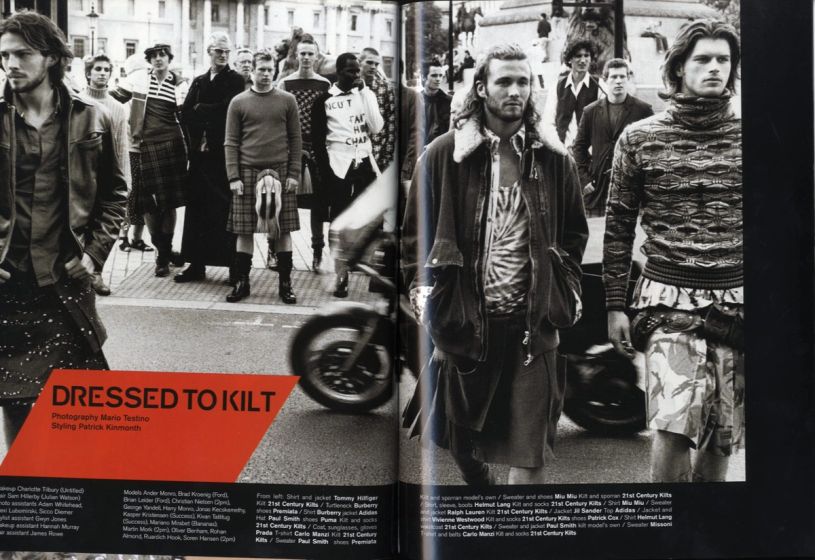
From Dressed to Kilt, Mario Testino's 2003 editorial for VMAN, styled by Patrick Kinmonth.

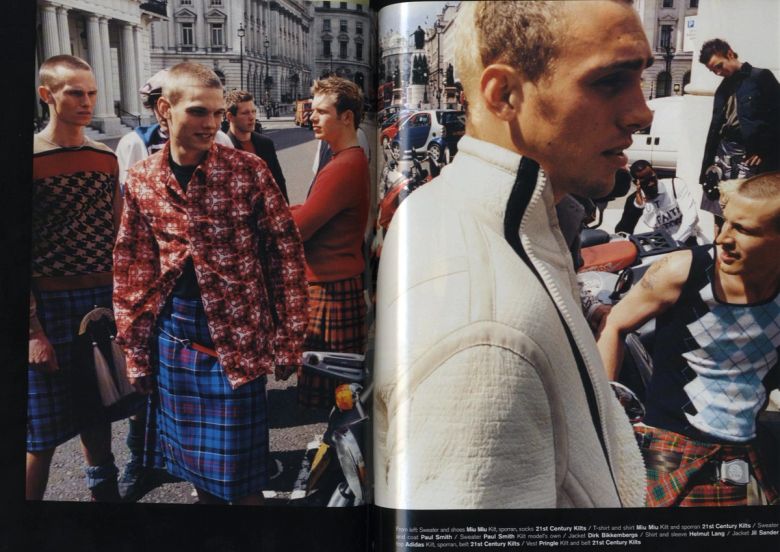
From Dressed to Kilt, Mario Testino's 2003 editorial for VMAN, styled by Patrick Kinmonth.

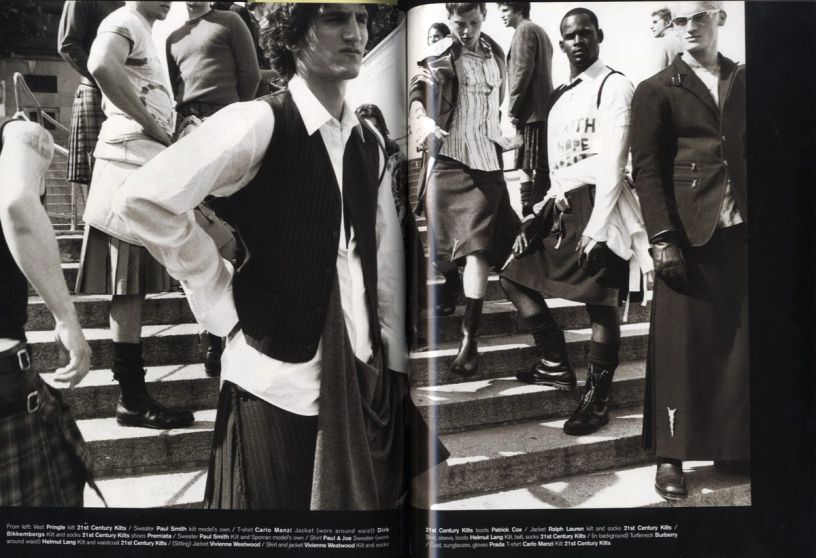
From Dressed to Kilt, Mario Testino's 2003 editorial for VMAN, styled by Patrick Kinmonth.

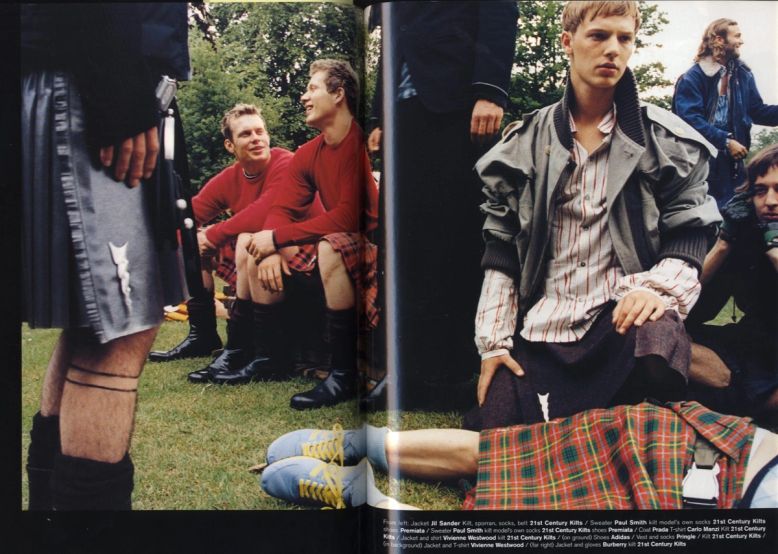
From Dressed to Kilt, Mario Testino's 2003 editorial for VMAN, styled by Patrick Kinmonth.

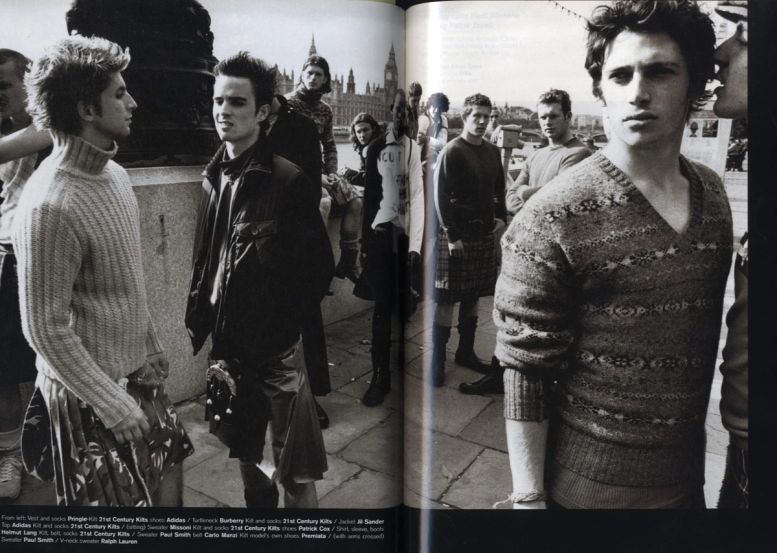
From Dressed to Kilt, Mario Testino's 2003 editorial for VMAN, styled by Patrick Kinmonth.
That observation feels particularly relevant today. Throughout his career, Testino has often been drawn to the ways people express identity through clothing, ritual and collective belonging. Whether photographing communities, cultural traditions or fashion itself, his work frequently returns to the relationship between dress and self-expression. Dressed to Kilt sits naturally within that broader interest.
More than two decades after it was published, the editorial continues to resonate because it was never really about a trend. It was about a garment that has survived centuries of change while remaining unmistakably itself.
The kilt has moved from battlefield to ceremony, from family history to fashion editorial, from national symbol to global wardrobe. Along the way, it has accumulated new meanings without losing the old ones.
Few garments manage that. Perhaps that is why the kilt continues to fascinate. It is heritage. It is fashion. It is identity. It is performance. It is tradition and reinvention at the same time.
And more than twenty years after Dressed to Kilt first appeared in the pages of VMAN, it remains a reminder that the most enduring garments are often the ones that carry the richest stories.