HAIR: STORIES OF POWER & PASSION - MARIO TESTINO AT KUNSTHALLE MÜNCHEN

From March 20 to October 4, 2026, Kunsthalle München presents Hair: Stories of Power and Passion, an exhibition that examines hair not as style, but as a marker of identity, belief and cultural meaning across time.
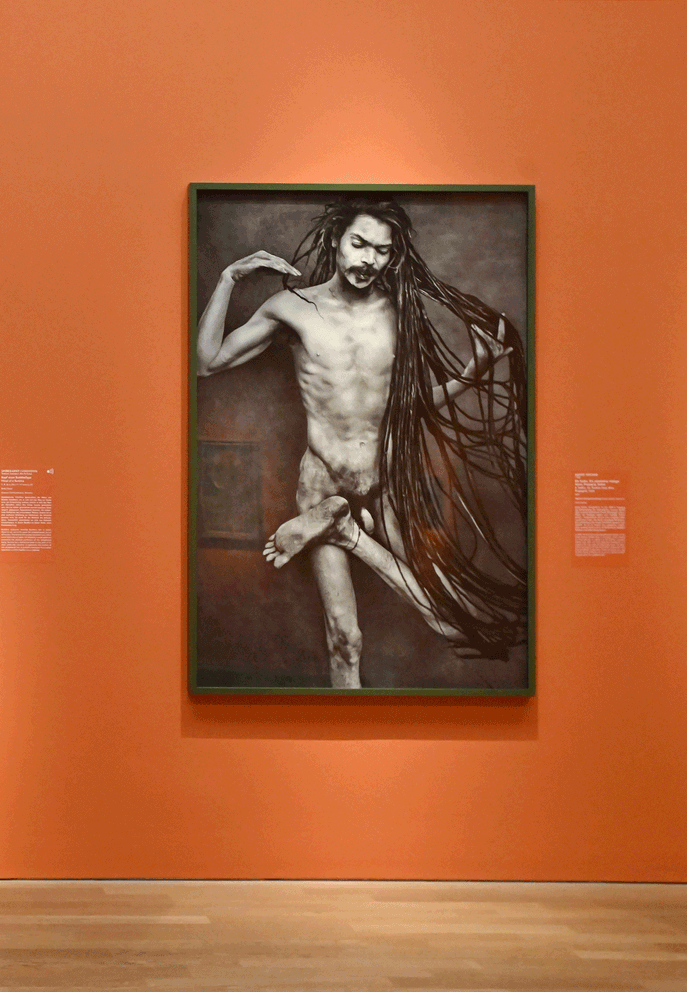
Among the works on view is a portrait by Mario Testino from his series Holy Men, photographed at the Kumbh Mela in Prayagraj (historically known as Allahabad), India, in 2019. The image, part of his ongoing project A Beautiful World, enters the exhibition not as a fashion photograph, but as a record of devotion carried through the body.
In this context, hair is no longer aesthetic. It becomes duration. It becomes discipline.
In Testino’s portrait, the Sadhu’s hair, matted and uncut, holds years of time within it. It is not styled, nor shaped for the camera. It is lived. A visible accumulation of belief, formed through refusal and sustained through practice. What might, in another context, be read as texture or surface, here carries weight. It is evidence.
The exhibition’s framing allows this shift to become legible. Across cultures and histories, hair has operated as a signifier of power, identity, transformation and belonging. It marks rites of passage, signals allegiance, records time and, in certain traditions, becomes inseparable from the sacred. Within that wider narrative, the Sadhu stands apart. Not because of spectacle, but because of the degree to which hair is allowed to exist without intervention, as a consequence of belief rather than an expression of style.

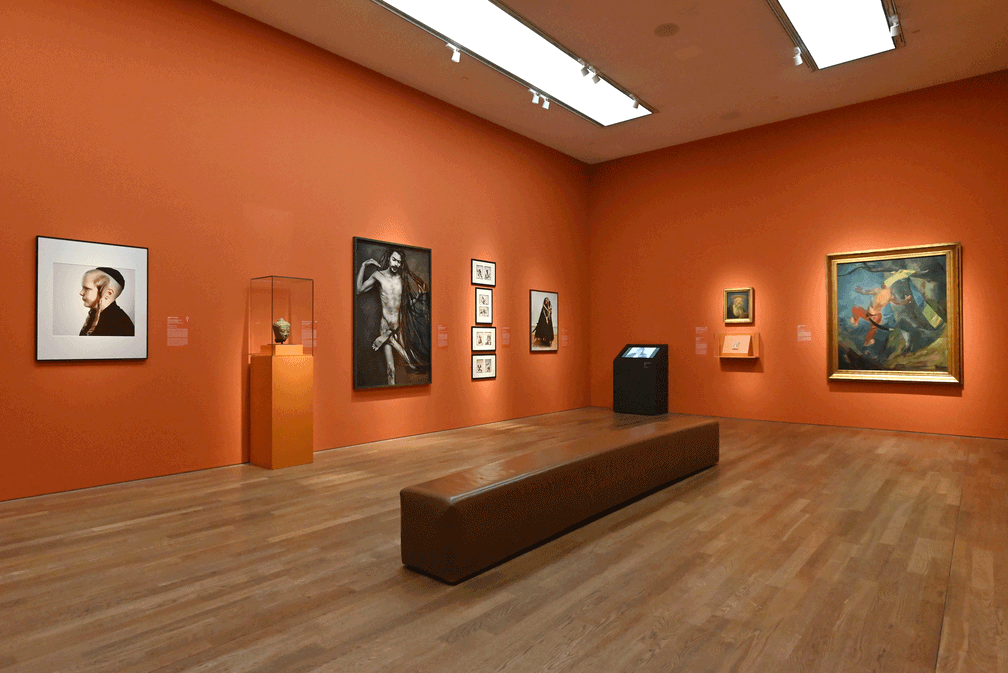
A Sadhu, An ascetic Holy Man, Prayagraj, India, 2019. Photograph by Mario Testino from Holy Men, part of A Beautiful World. Installed as part of Hair: Stories of Power and Passion, Kunsthalle München, 2026. Photo: Robert Haas.

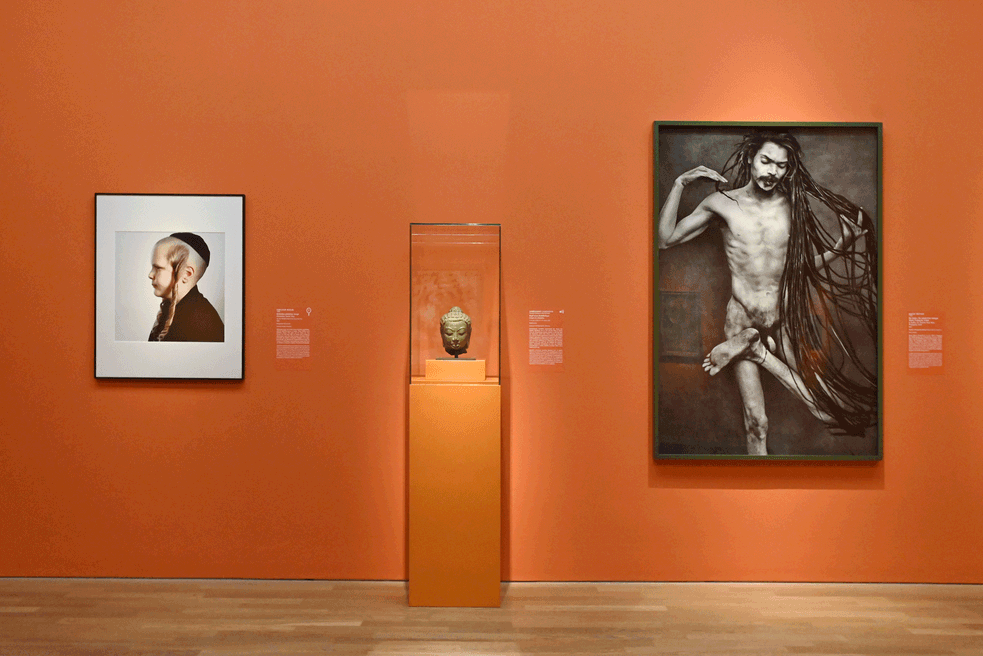
A Sadhu, An ascetic Holy Man, Prayagraj, India, 2019. Photograph by Mario Testino from Holy Men, part of A Beautiful World. Installed as part of Hair: Stories of Power and Passion, Kunsthalle München, 2026. Photo: Robert Haas.
Testino’s approach intensifies that reading. By removing the subject from the density of the Kumbh Mela and placing him against a neutral ground, the image refuses context that might otherwise dilute the encounter. What remains is the individual, and the physical trace of a life shaped by faith.
This is where the work departs from the visual language with which Testino is most widely associated. The image is not constructed. It is recognised. The camera does not direct. It attends.
That distinction aligns closely with the exhibition’s broader inquiry. Hair: Stories of Power and Passion does not treat hair as ornament, but as material culture, something that carries meaning beyond appearance. In this sense, Testino’s Sadhu operates as both portrait and document, situated within a lineage of practices where the body becomes the site through which belief is made visible.
Seen at Kunsthalle München, in Munich, Germany, the portrait extends beyond its origin. It enters an institutional framework that situates it within a broader cultural and historical discourse, reinforcing the shift in Testino’s work towards a sustained engagement with identity, tradition and the structures that shape human experience.
It is a quiet image, but it holds. Not as spectacle. But as evidence.
Photo Credit: Kunsthalle München 2026, Foto: Robert Haas.