MARIO TESTINO AT PATRICIA LOW CONTEMPORARY, VENICE

A photograph made for American Vogue in Los Angeles in 2004. Flowers photographed in Tokyo more than a decade later. A portrait created amid the colour and architecture of Jaipur, India. Horses encountered in Uzbekistan. Four still lifes inspired by historic Meissen porcelain.
They were made in different countries, for different reasons and at different moments in Mario Testino’s career. This September, they meet in Venice.
Opening on 5 September 2026, Mario Testino at Patricia Low Contemporary, Venice brings together works spanning more than two decades of the photographer’s practice, interweaving some of his most recognisable fashion images with recent still life and nature studies from his A Beautiful World series.
The exhibition offers an opportunity to encounter these photographs beyond the circumstances in which many were first seen. Images originally made for the pages of magazines are placed in conversation with independent works created through Testino’s travels and his longstanding fascination with art, nature and craftsmanship. Seen together, connections emerge between subjects that might initially appear to belong to entirely different worlds.
That freedom to move between worlds is central to the way Testino has approached the exhibition. Without the boundaries of a single commission, subject or moment in his career, works made years apart can be brought together through instinct, allowing ideas that have accumulated over a lifetime of looking to surface in new ways.
“Freedom is something that we give or we take away from ourselves,” Testino says. “This show in Venice is related a bit to that. What has been stored in my mind has been wanting to come out, and now that I have the time to look at things with more contemplation, it’s almost like a freedom to do something that is inside of me.”
Among the fashion works are Daria Werbowy, Los Angeles, American Vogue (2004), photographed in a scarlet Yves Saint Laurent Rive Gauche dress, beneath an extraordinary canopy of red flowers; Stella Tennant, New York, American Vogue (2006), wearing John Galliano’s 1998 couture; and Vittoria Ceretti, Jaipur, Vogue Paris (2017), an image in which fashion, gesture and place become inseparable.

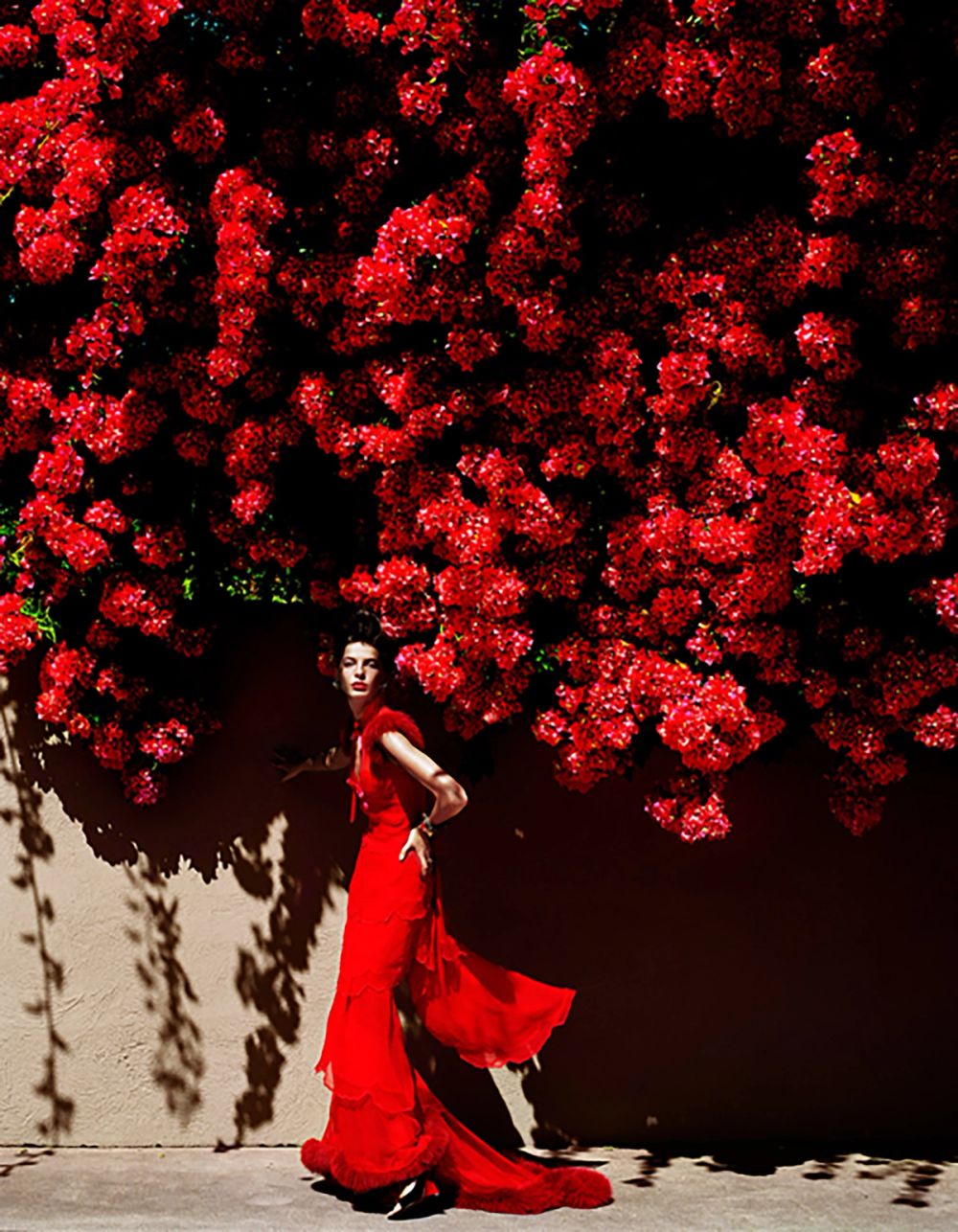
Mario Testino, Daria Werbowy, Los Angeles, American Vogue, 2004

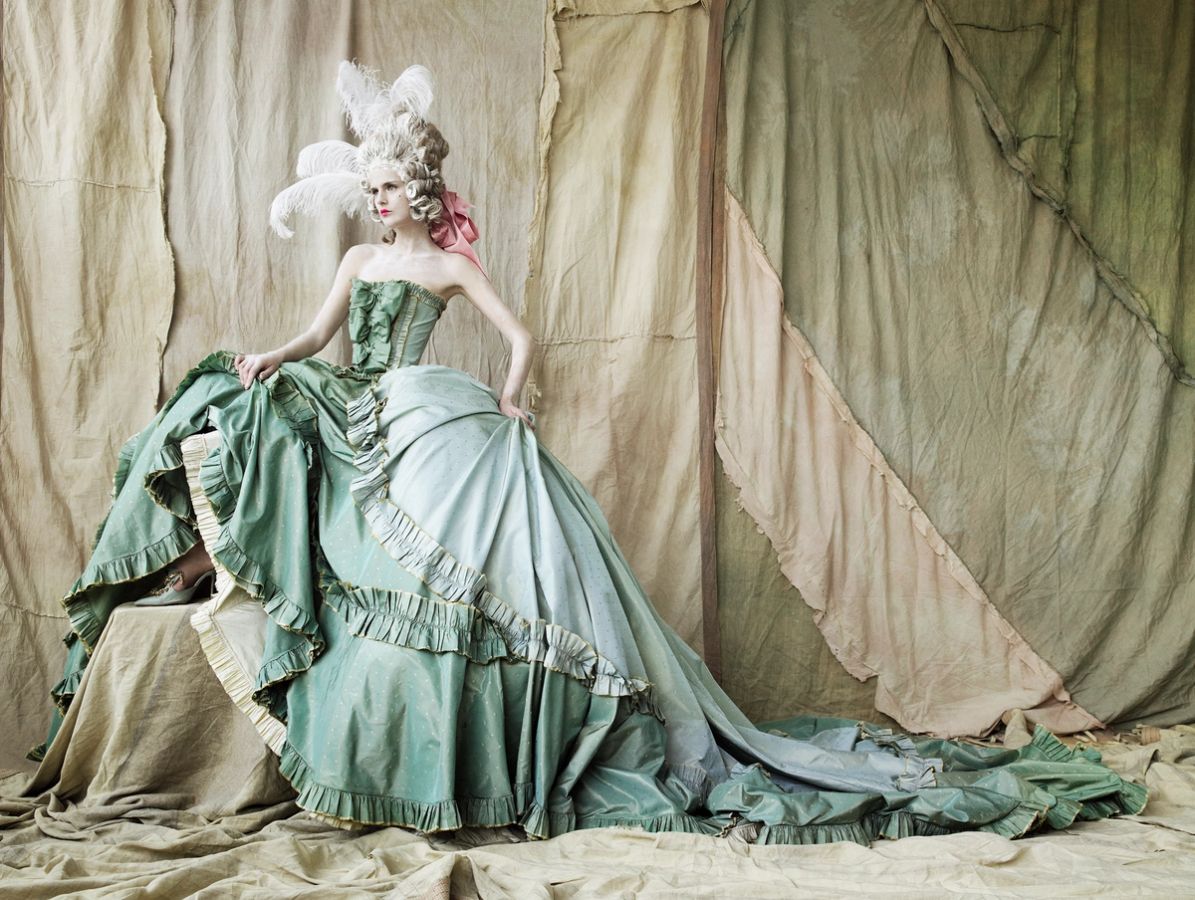
Mario Testino, Stella Tennant, New York, American Vogue, 2006

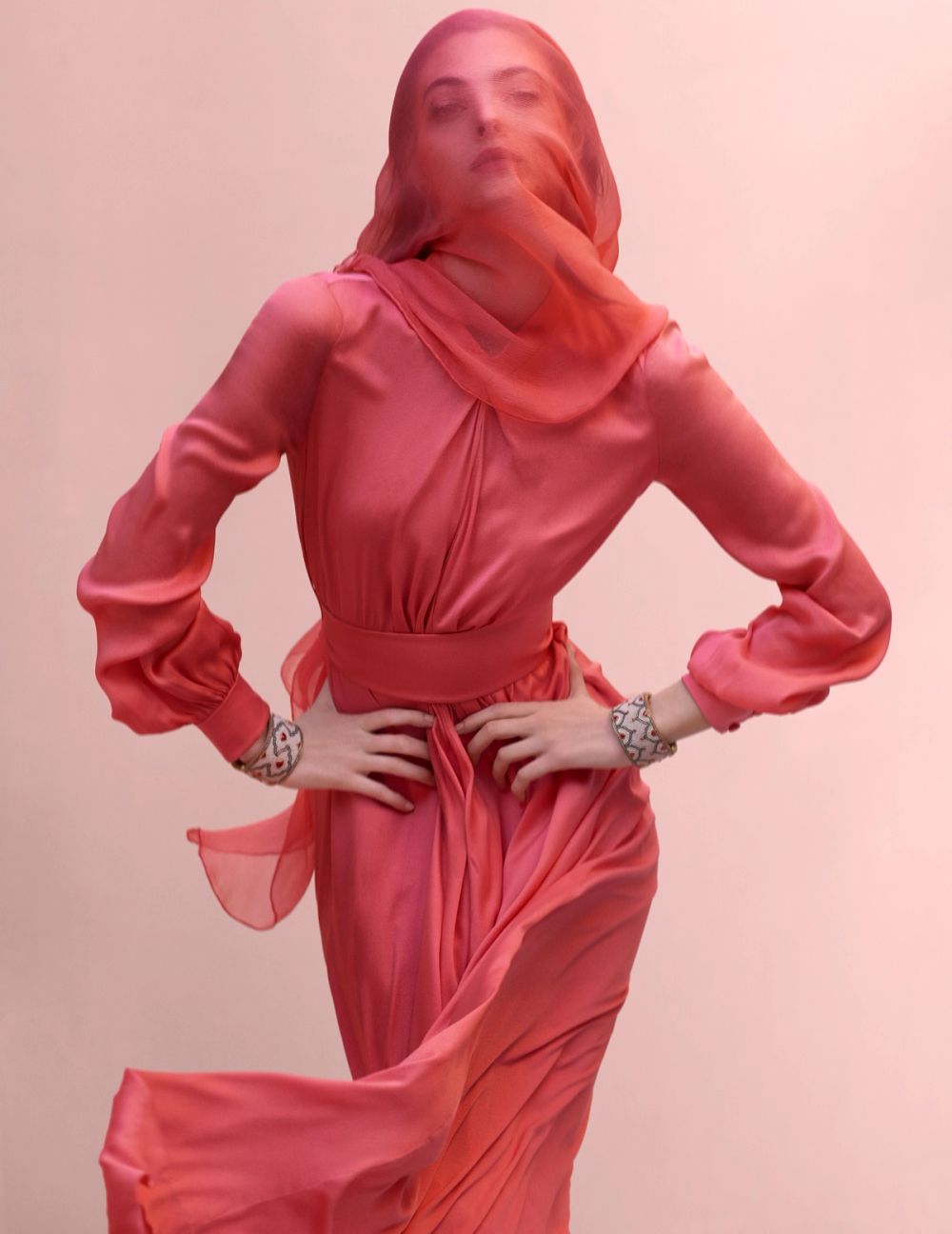
Mario Testino, Vittoria Ceretti, Jaipur, Vogue Paris, 2017
Each carries the visual force for which Testino’s editorial photography became known, but within the exhibition their original fashion context becomes only one part of the story.
Around them are works in which the human figure disappears altogether.
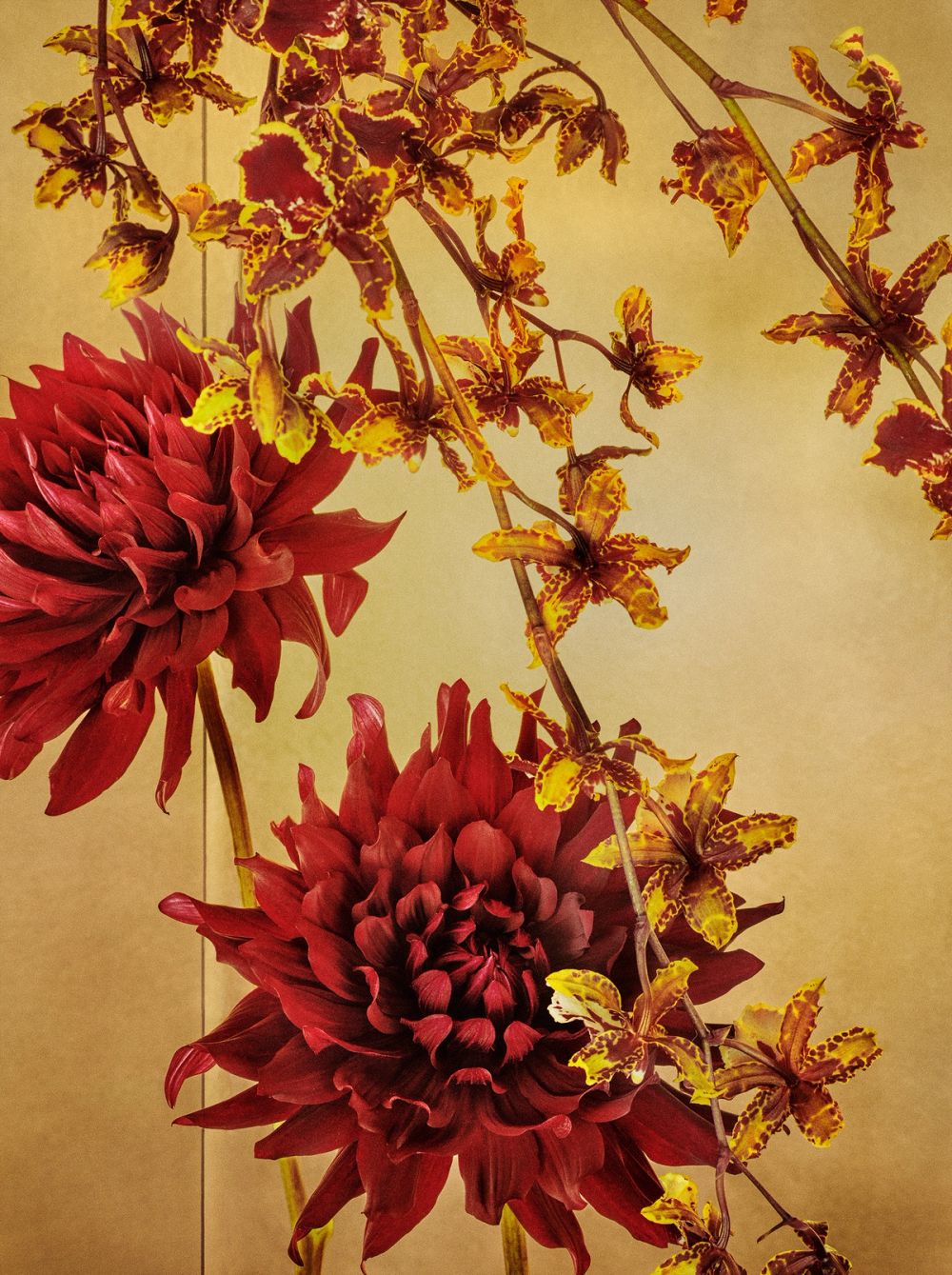
In the monumental five-part London (2019) and Tokyo (II) (2018–2019), Testino turns his attention directly towards the botanical world. Yet the two works approach it in markedly different ways. In London, flowers, leaves, berries and branches accumulate across a dark ground in a composition of abundance, texture and changing states of nature. Tokyo (II) offers a striking counterpoint: individual stems, blossoms and branches occupy a luminous gold field, creating a spare, graphic rhythm across its five panels. In both, something inherently ephemeral is fixed and made monumental through photography.

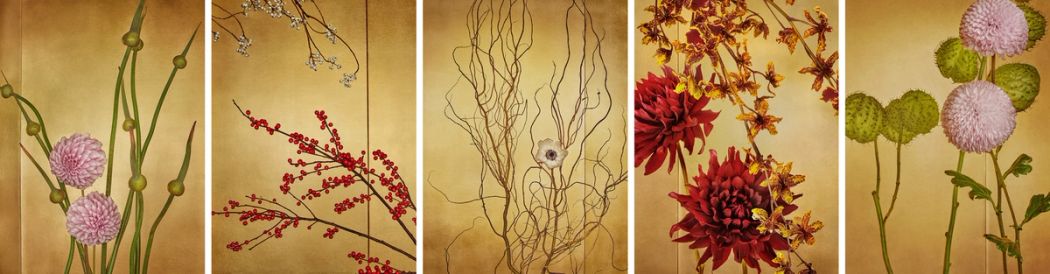
Mario Testino, Tokyo (II), 2018–2019. Mario Testino, Tokyo (II), 2018–2019. A single artwork composed of five photographic parts.

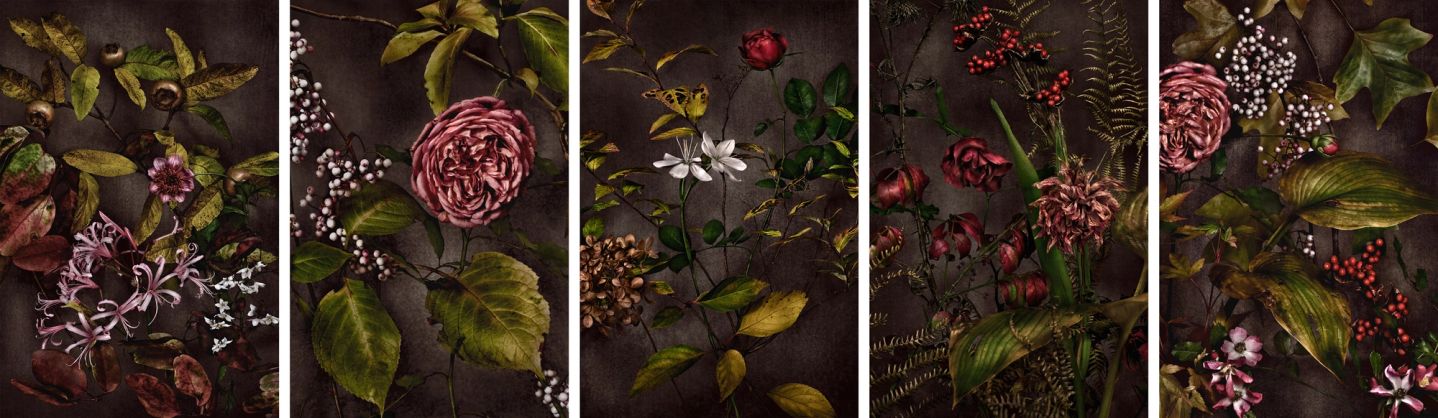
Mario Testino, London, 2019. Mario Testino, Tokyo (II), 2018–2019. A single artwork composed of five photographic parts.
Four works from Testino’s 2019 Meissen series explore another kind of beauty: objects shaped by centuries of craftsmanship.
Die Luft, Das Feuer, Das Wasser and Die Erde take their names from air, fire, water and earth. Using historic Meissen porcelain as their subject, the photographs reinterpret the four classical elements through colour, composition and the theatricality of the objects themselves. Against saturated fields of turquoise, green, lilac and pink, intricate figures, animals, flowers and mythological forms are brought into sharp focus. The result is not simply a record of porcelain, but a meeting between photography, decorative art and one of Europe’s great traditions of making.

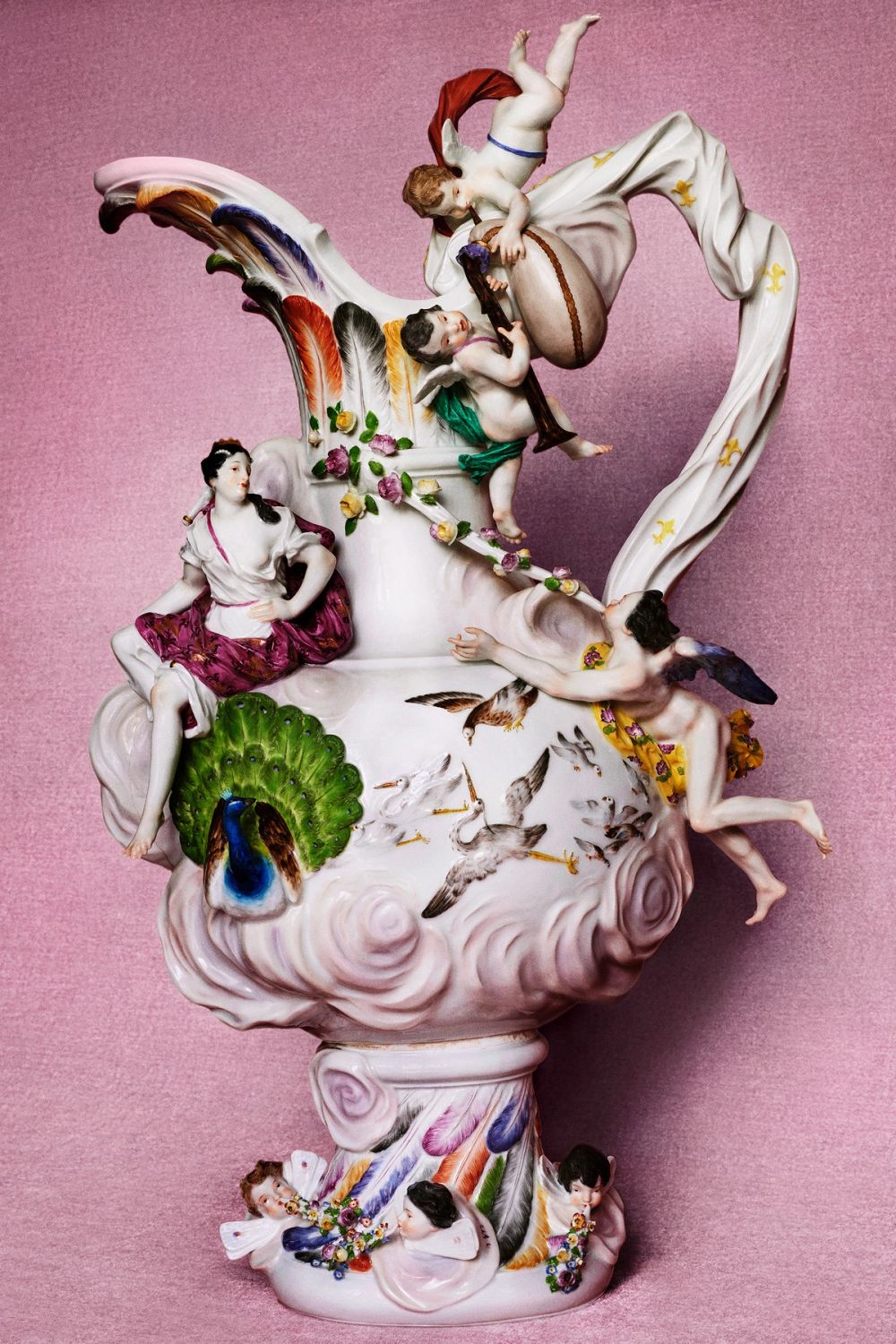
Mario Testino, Die Luft, Meissen, 2019

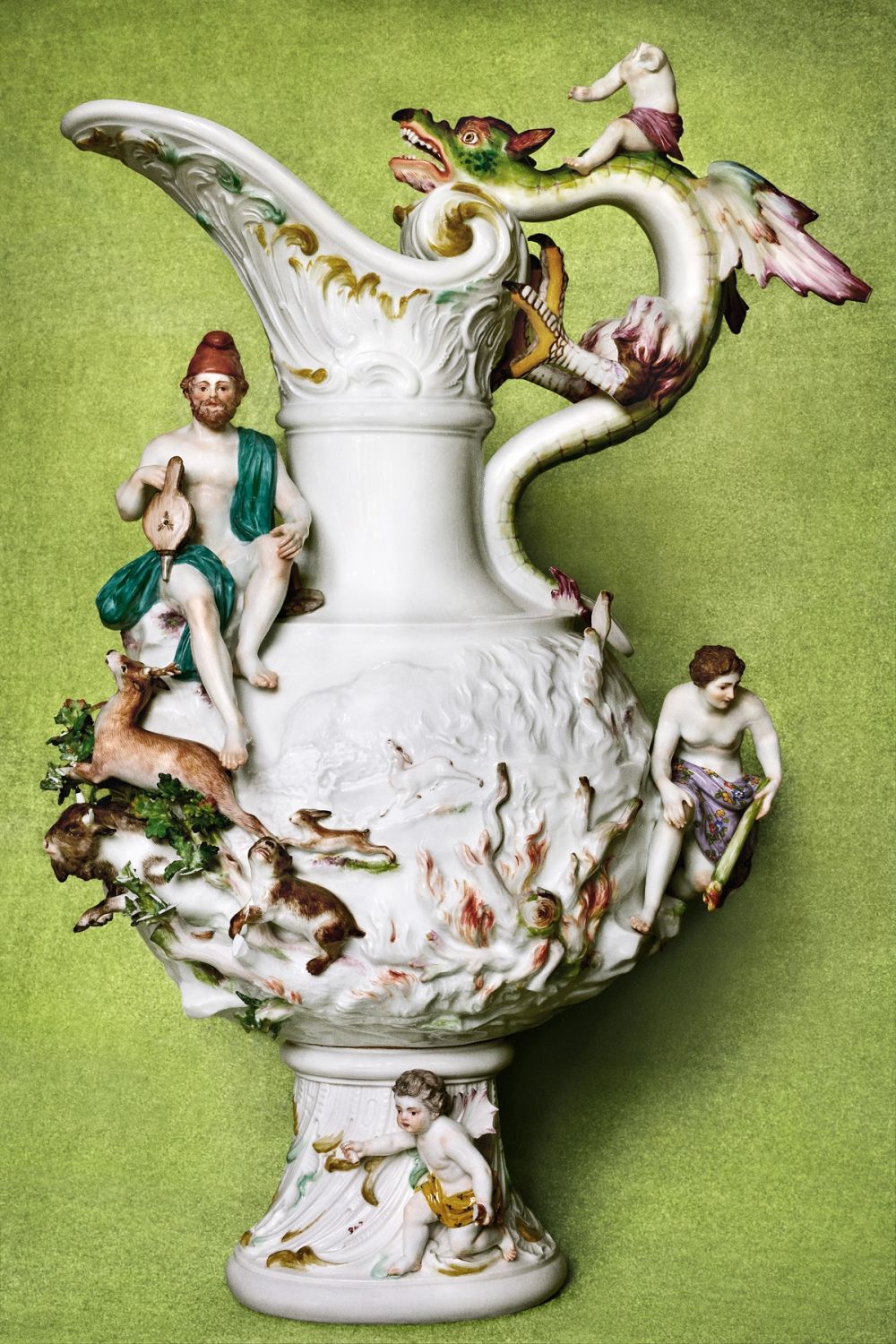
Mario Testino, Das Feuer, Meissen, 2019

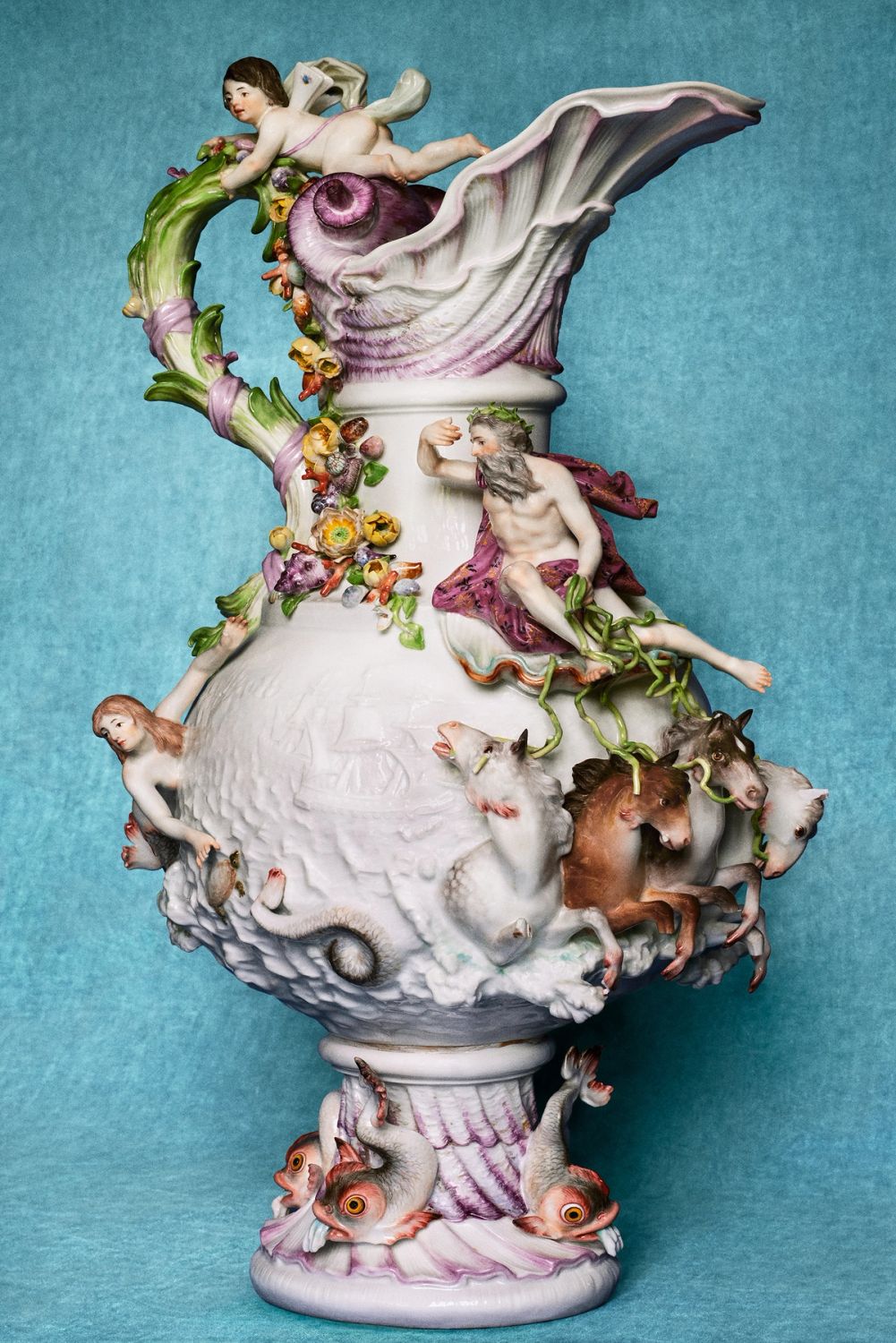
Mario Testino, Das Wasser, Meissen, 2019

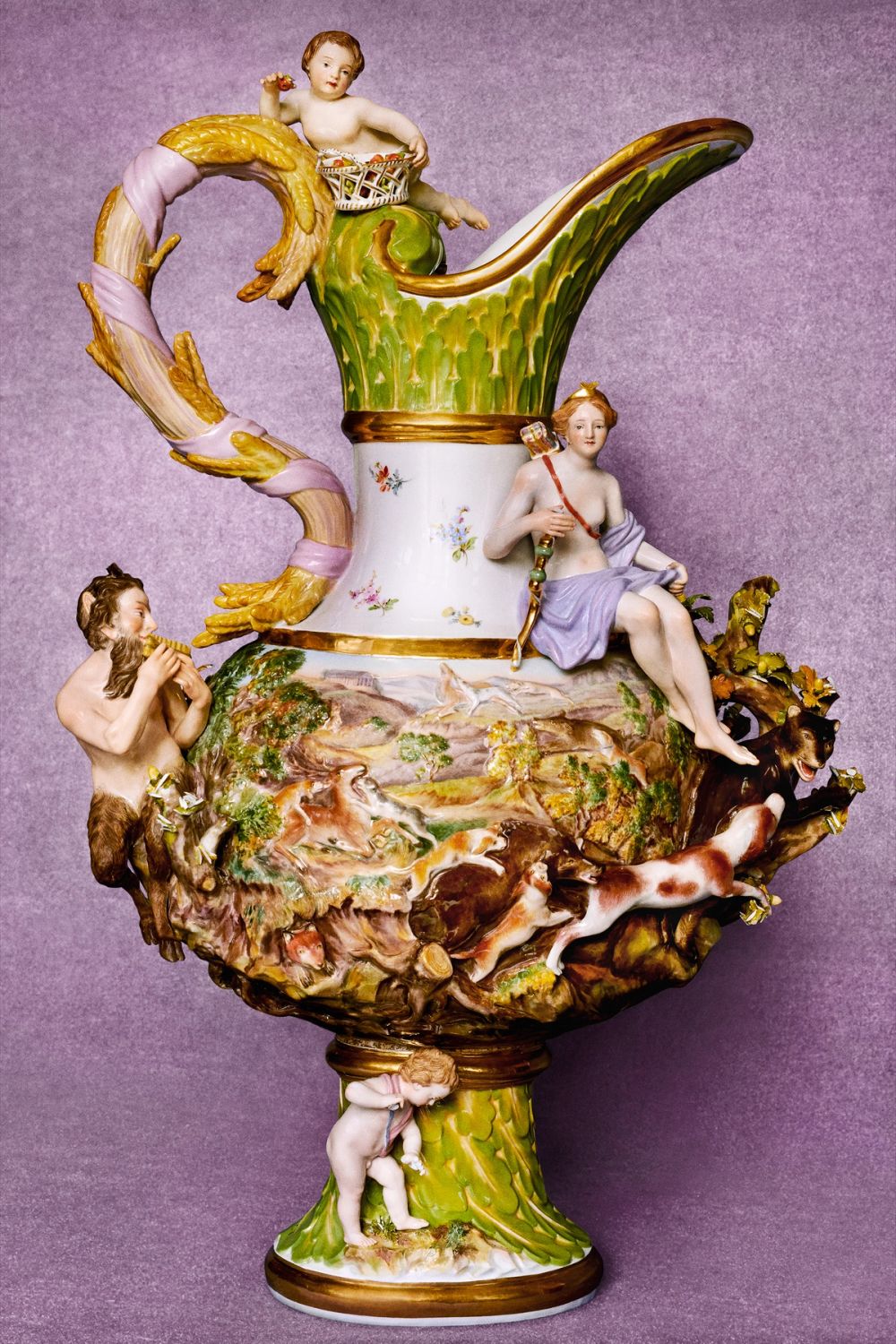
Mario Testino, Die Erde, Meissen, 2019
These shifts of subject are significant. Testino’s career is inseparable from fashion, but fashion has never existed in his photographs in isolation. Clothes lead towards craftsmanship. Portraits towards identity. Travel towards cultural observation. Objects towards the traditions and histories that produced them. Beauty becomes less a category than a way of looking.
Across works separated by years and continents, unexpected correspondences emerge. The theatricality of Stella Tennant’s portrait finds an echo in the extraordinary detail of Meissen porcelain. The flowers enveloping Daria Werbowy become subjects in their own right in London and Tokyo.
Then, in Horses (II), Urtasaray, Uzbekistan (2023), the subject changes again. Isolated against a dark, painterly background, the pale horse becomes almost sculptural, defined through proportion, surface and light. Human figure, flower, porcelain, animal: each is approached with the same intensity of observation.

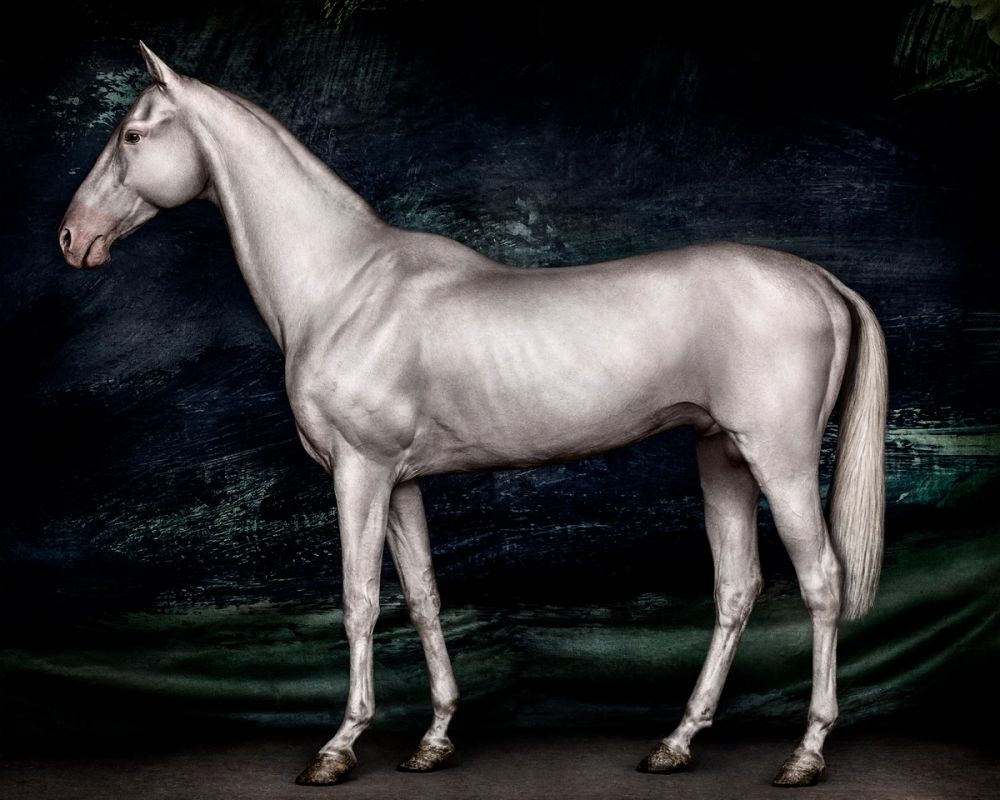
Mario Testino, Horses (II), Urtasaray, Uzbekistan, 2023
Venice feels made for such encounters. For centuries, the city has been shaped by the movement of cultures, objects, craftsmanship and ideas, absorbing influences arriving from elsewhere and transforming them into something unmistakably its own. Here, photographs made in London, Tokyo, Los Angeles, New York, Jaipur and Uzbekistan arrive carrying their own histories, only to find new relationships with one another.
What emerges is not a retrospective in miniature, nor an attempt to arrange a career chronologically. It is something more fluid: an exhibition about the connections that become visible when photographs are allowed to leave their original categories behind.
Fashion can sit beside porcelain. Portraiture beside flowers. A magazine commission beside a photograph born from travel. And across them, the same eye remains.
Mario Testino is on view at Patricia Low Contemporary, Venice from 5 September to 15 November 2026.