POSTO 9: MARIO TESTINO’S DEFINING IMAGE OF IPANEMA, 1997

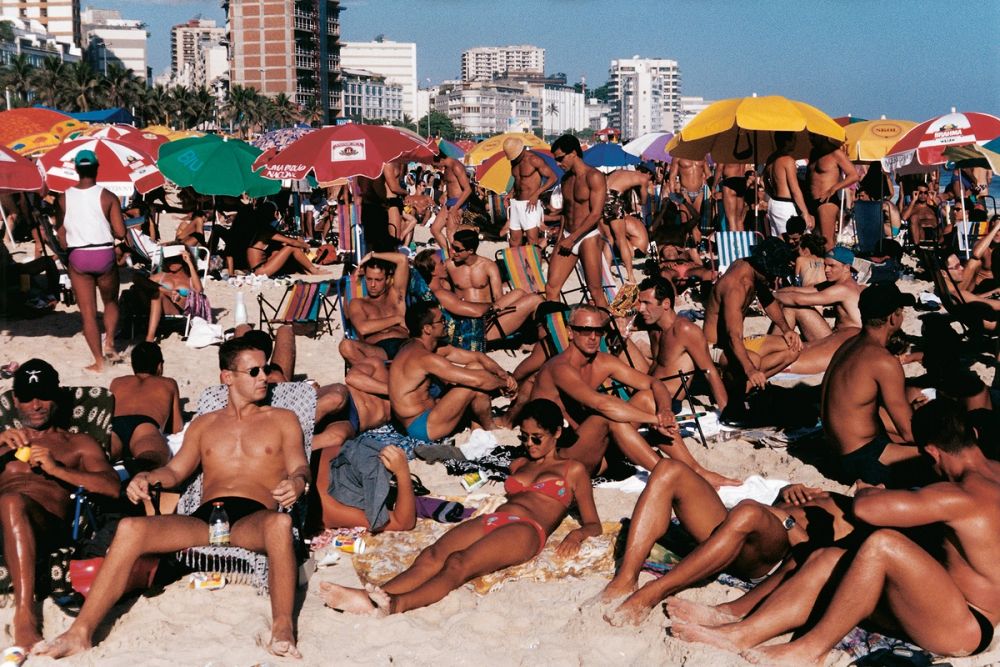
In 1997, Brazil stood at a turning point and so did Mario Testino. The photographer had first visited Brazil as a teenager, and the country left a lasting imprint on his imagination. Rio de Janeiro, in particular, opened a world of freedom, sensuality and human connection that would continue to shape his visual language for decades. Posto 9, photographed that year on Ipanema Beach, has since become one of the defining images of his career: a photograph that captures not only a place, but an atmosphere at a moment in transition.
To understand the power of Posto 9, one has to understand the beach itself. In the 1990s, Ipanema was informally divided into micro-worlds, invisible territories known instinctively by locals. Different stretches of sand attracted surfers, families, artists, youth tribes and the LGBTQ+ community, each with its own rhythm and social codes. These divisions were fluid, yet deeply understood by those who frequented the beach. Testino, always fascinated by people and the subtle sociology of public spaces, walked through this landscape as both observer and participant, absorbing the movement, energy and unspoken hierarchies that shaped daily life.
The image captures a spontaneous moment within the gay section of the beach, a scene filled with men in speedos, sun-tanned bodies and an effortless physical confidence that felt both intimate and public. Yet what gives the photograph its lasting impact is its naturalness. Nothing feels staged. Instead, it reflects Testino’s instinct for recognising when a scene has already composed itself.
The density of bodies in the foreground, the line of standing figures on the horizon, the repetition of umbrellas and gestures all create an architecture of proximity. The beach becomes a social choreography. Individuals remain distinct, but together they generate something larger, a collective presence. The image is not about one subject. It is about a shared condition of visibility.

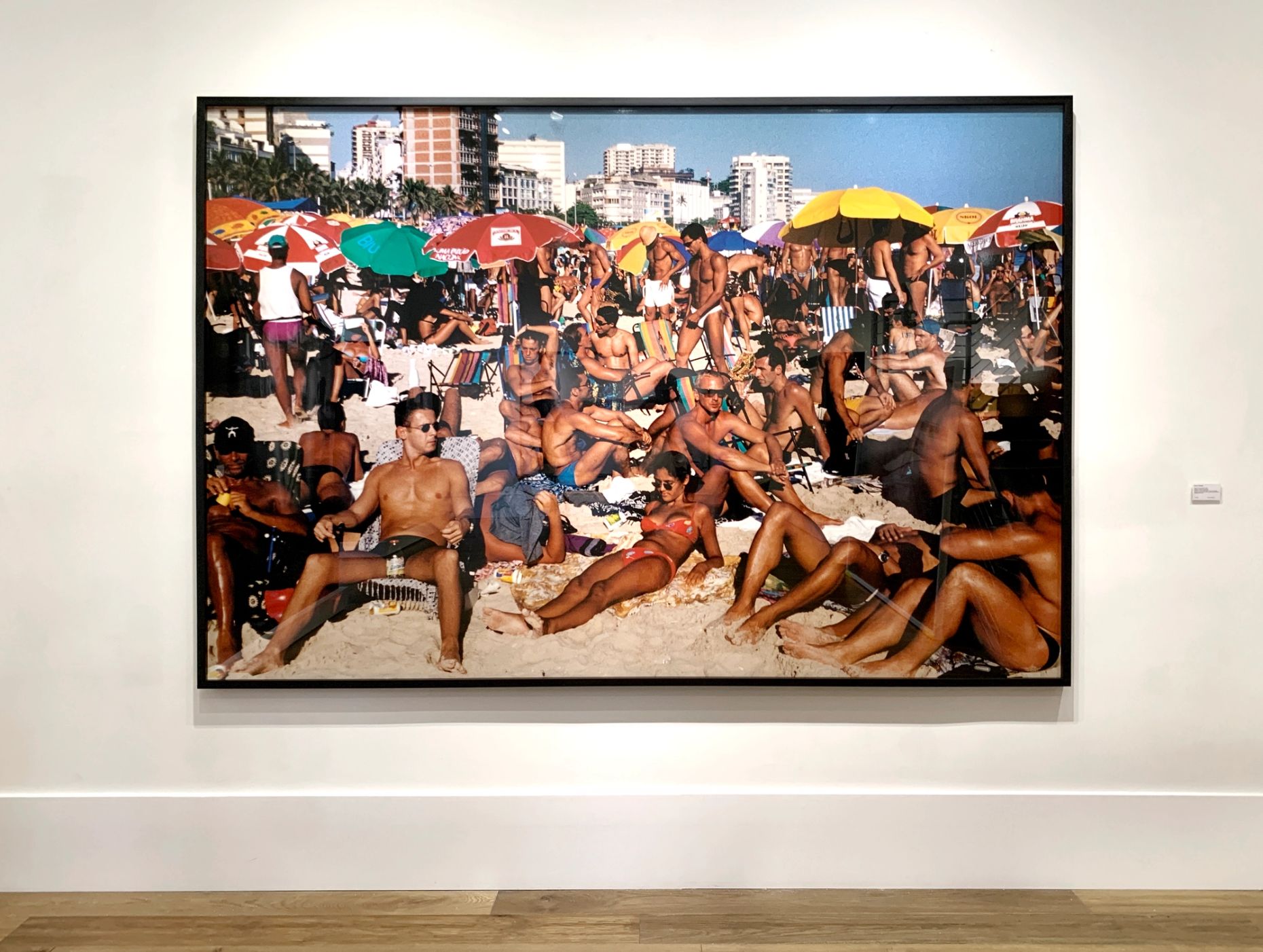
The Engaging Eye Of Mario Testino, Holden Luntz Gallery, December 13th, 2025 - January 10th, 2026

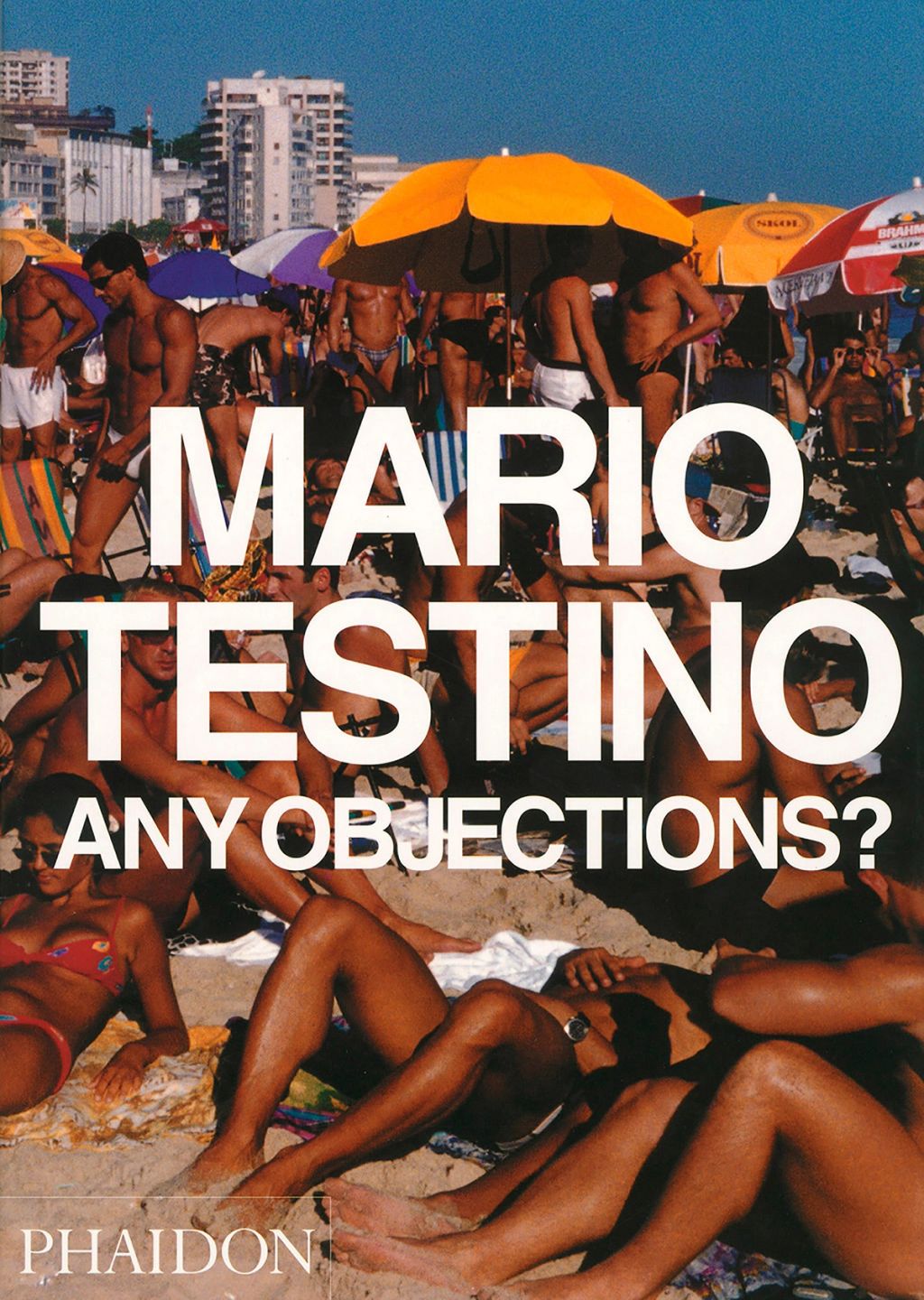
Any Objections? Phaidon, London, 1998.

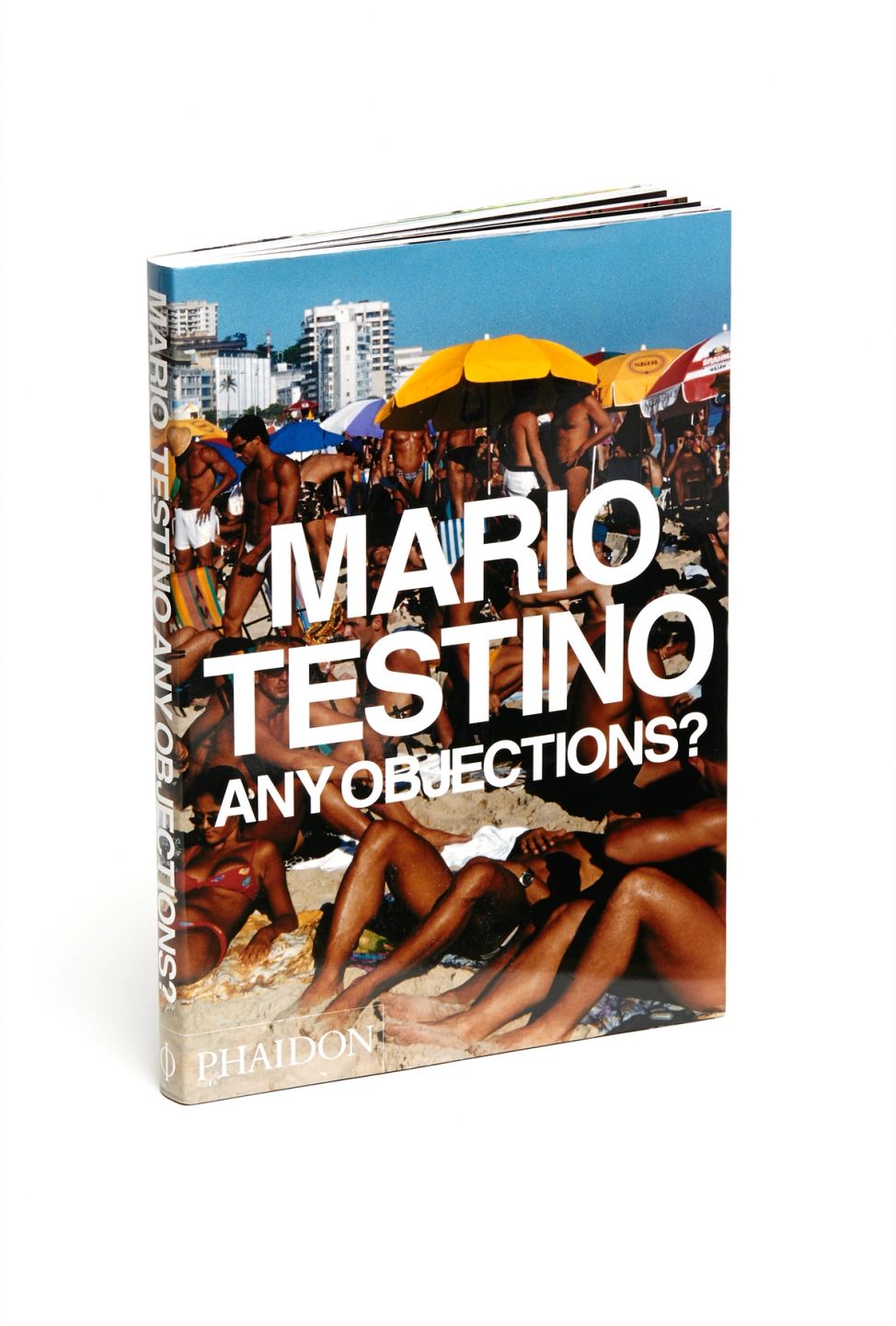
Any Objections? Phaidon, London, 1998.

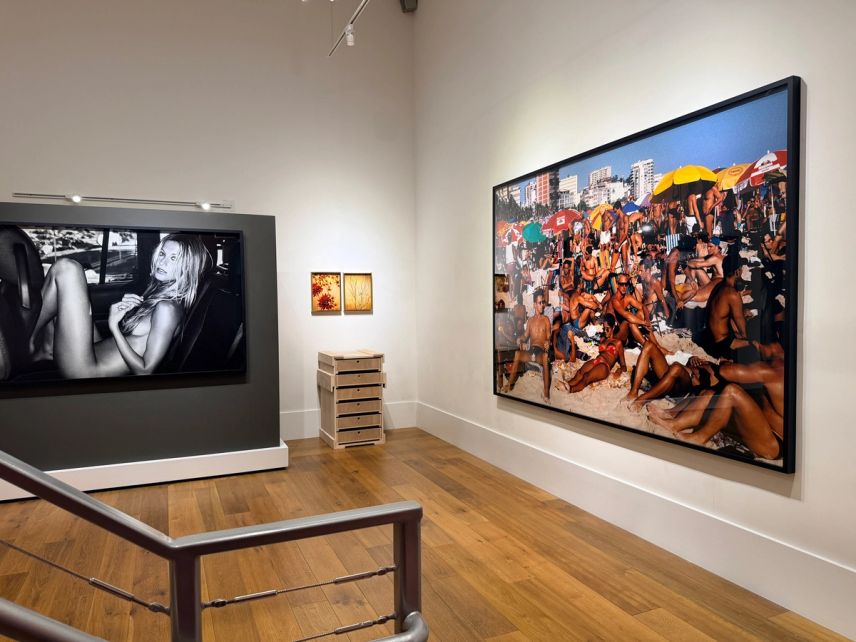
The Engaging Eye Of Mario Testino, Holden Luntz Gallery, December 13th, 2025 - January 10th, 2026

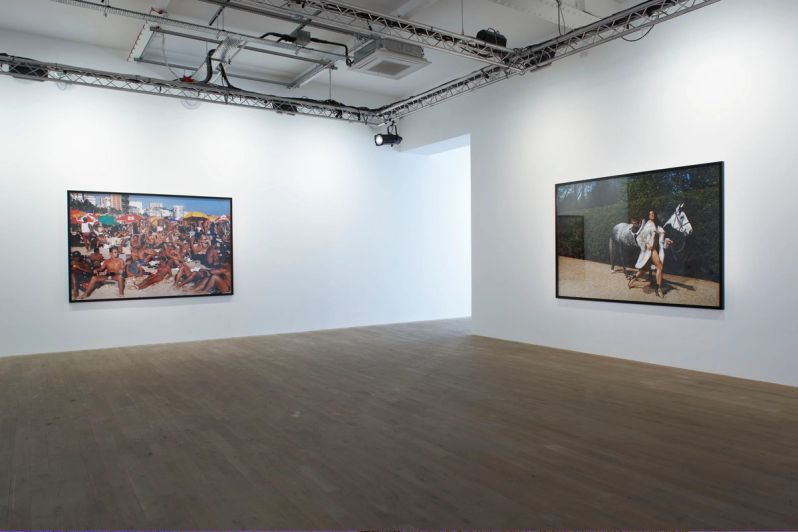
Obsessed by You, Phillips de Pury & Company, London, UK, 2008
Posto 9 gained iconic status when it became the cover of Testino’s first book, Any Objections? (1998). That publication marked a pivotal shift in his career. Until then, he had been widely recognised for his fashion photography, but the book revealed another side of his vision, more personal, observational and emotionally direct. Through it, Testino explored themes that could not fully exist within fashion’s editorial frame. The photograph signalled that his interest extended beyond garments and glamour. He was equally drawn to how people inhabit space, how identity is performed in public, and how atmosphere itself can become authorship.
The timing of the photograph also matters. Brazil in the late 1990s was emerging from economic instability and beginning to project a renewed cultural confidence. Rio, long framed internationally through narrow clichés, was reclaiming its image as a city of vitality and complexity. In that context, Posto 9 reads almost as a declaration. Not promotional. Not exoticised. Simply assured.
It also arrived just before Brazilian models and aesthetics would dominate global fashion, making the photograph feel quietly prophetic in hindsight. Testino was already sensing and documenting an energy that would soon travel far beyond Brazil’s shores.
Seen today, especially at large scale, Posto 9 feels immersive. The viewer enters not as spectator but as participant. The sunlight, the physical ease, the subtle exchange of glances, the temperature of the moment remains intact. What initially appears casual reveals itself as precise. The image holds because it understands something fundamental: culture is often most visible where it feels most relaxed.
In many ways, Posto 9 encapsulates what makes Testino’s work enduring. The ability to recognise when a fleeting instant carries historical weight. To see when a place, a body, a gathering of strangers is quietly announcing a shift.
It is not simply a beach photograph. It is a portrait of visibility before visibility became performance. A record of collective ease before it was mediated. An atmosphere caught at the exact moment it turned into history.
Artwork title and edition details:
Mario Testino
Posto 9, Rio de Janeiro, 1997,
Digitally produced C-Type print
180 x 270 cm
Edition of 2 plus 2 artist's proofs
Exhibitions:
Obsessed by You, Phillips de Pury & Company, London, UK, 2008
The Engaging Eye Of Mario Testino, Holden Luntz Gallery, December 13th, 2025 - January 10th, 2026
Literature:
Any Objections? Phaidon, London, 1998.Obsessed by You. Phillips de Pury, New York, 2008.