ROYALTY, RECAST: MARIO TESTINO FOR BURBERRY, SPRING/SUMMER 2000

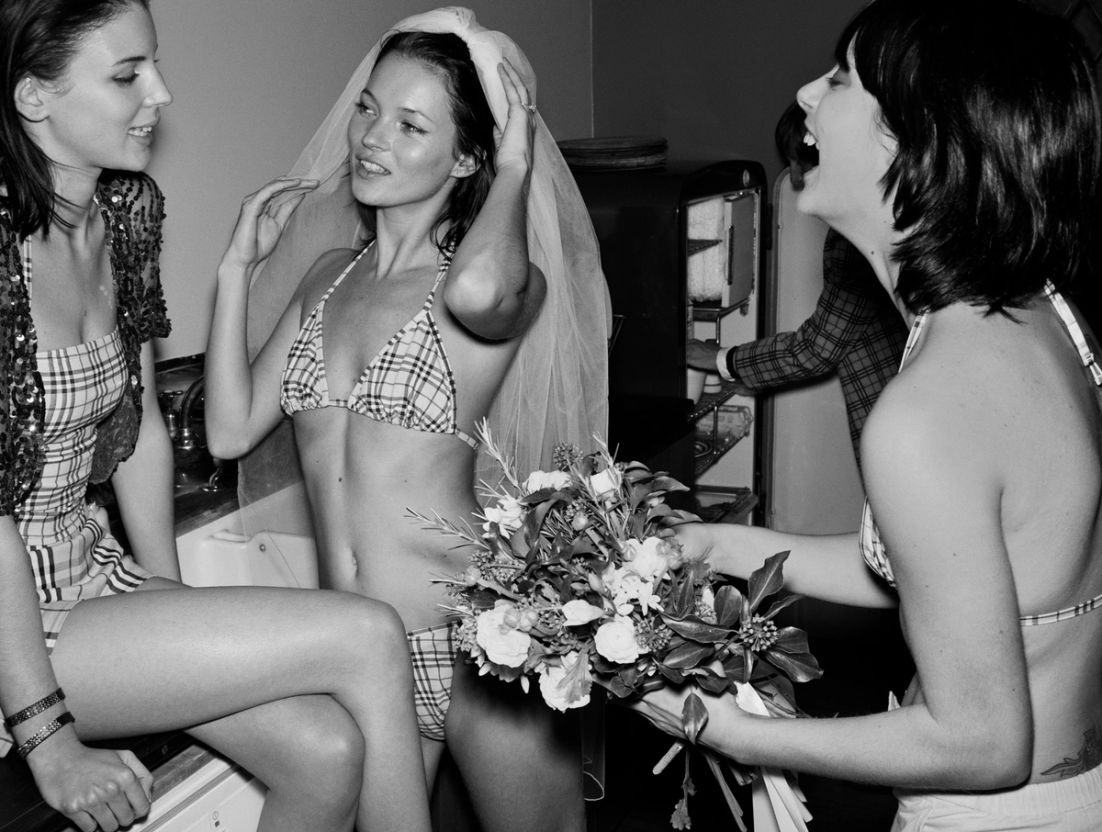
Kate Moss is wearing a wedding veil, but underneath it there is no white dress. There is a Burberry Check bikini. Liberty Ross is beside her, while Haylynn Cohen leans into the photograph with a bouquet. Behind them, someone reaches into an open refrigerator.
It is an improbable image for a British house founded in 1856 on clothing made to withstand the weather.
By Spring/Summer 2000, however, Burberry was changing. Under Chief Executive Rose Marie Bravo, the company was being repositioned for a new generation, bringing its considerable history into closer conversation with contemporary fashion. Mario Testino had entered that story before the turn of the millennium, beginning a relationship with Burberry that would ultimately last 19 years.
Testino remembers working with David Lipman and Fabien Baron as art directors in those early years, before continuing with the house through the eras of Christopher Bailey and Angela Ahrendts. Across those changes, one idea remained particularly important to him.
“We built the whole image of Burberry around London,” Testino remembers, “and the marriage of traditional royalty, like here Freddie Windsor, and Kate Moss, the new fashion royalty.”
The casting made that idea visible.
Lord Frederick Windsor brought one form of British establishment into the photographs. Moss represented another kind of status altogether, created through fashion and culture rather than inheritance. Around them, Testino remembers a cast that was “mainly British”, part of a deliberate decision to keep the image of Burberry centred on London and Britain.

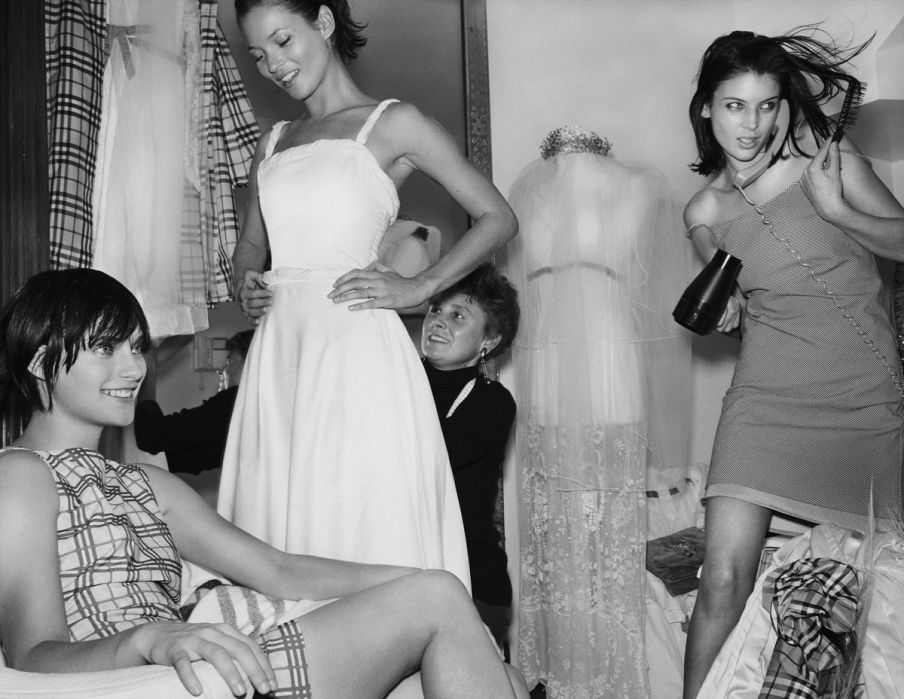
Kate Moss during the making of Burberry's Spring/Summer 2000 campaign, London, 1999. Photograph by Mario Testino.

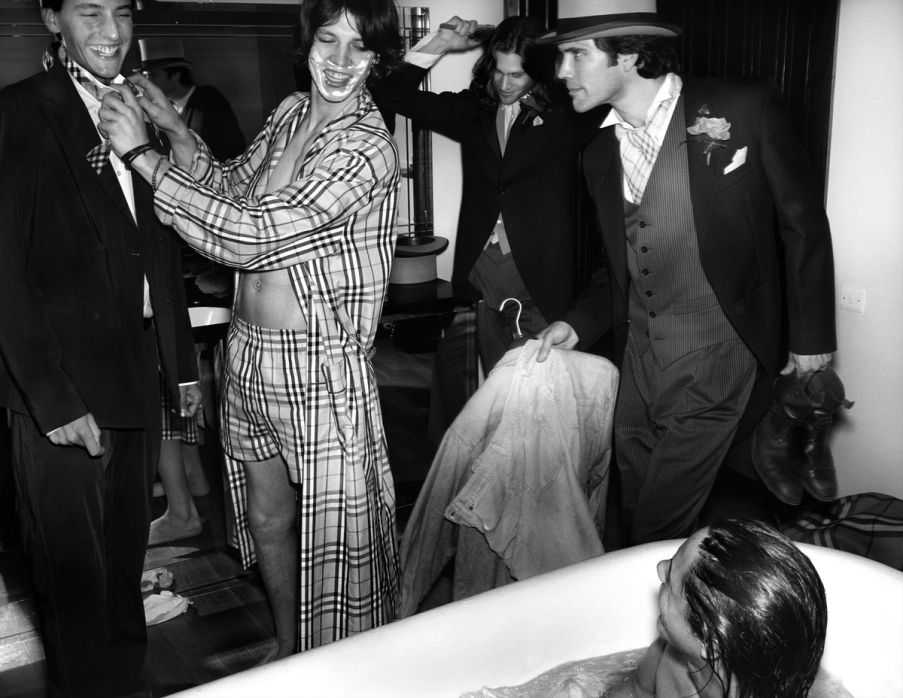
Burberry Spring/Summer 2000 campaign, London, 1999. Photograph by Mario Testino.

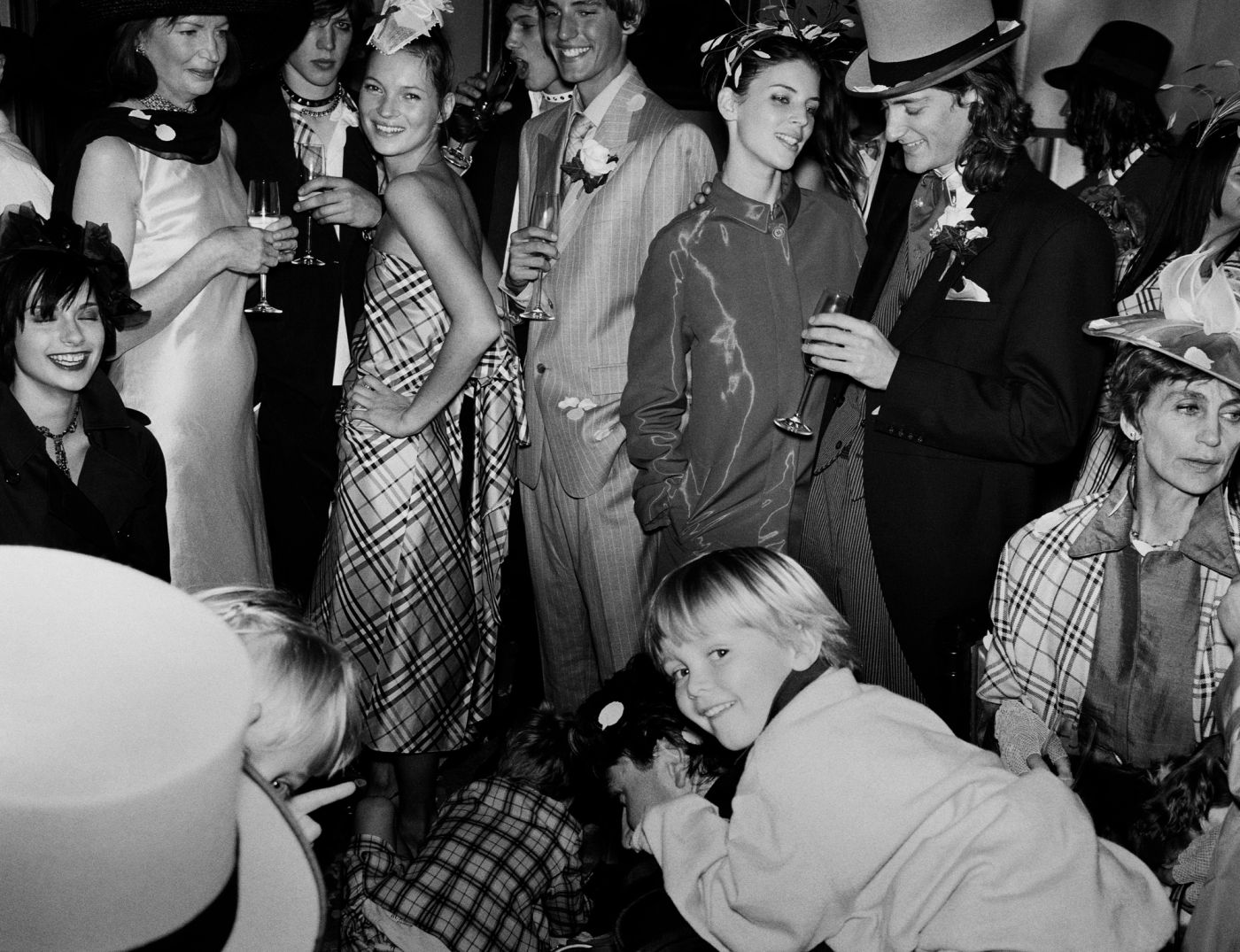
Kate Moss and the Burberry Spring/Summer 2000 campaign cast, London, 1999. Photograph by Mario Testino.
The Spring/Summer 2000 campaign pushed that proposition into the elaborate fiction of a wedding. Testino followed the celebration almost as though he were photographing the real thing: the bride getting dressed, friends crowded around her, the formal photograph beside the tiered cake, a reception packed with adults and children, men changing and fooling around, and the couple emerging through a shower of confetti. The Burberry Check moves through every stage, appearing on Moss's bikini and dress, tailoring, robes, childrenswear and accessories until one of the house's most familiar codes seems to have dressed an entire wedding party.
Contemporary reporting from 2000 confirms that the wedding was more than something later viewers projected onto the photographs. Yet Testino's own recollection points towards the more interesting marriage taking place within them: “the marriage of traditional royalty” and “Kate Moss the new fashion royalty”. The wedding supplied the story, but the casting gave it meaning.
That encounter was possible because Burberry already had such a powerful inheritance. Thomas Burberry founded the company in 1856, and its outerwear, gabardine and trench coat had long been embedded in British dress. When Bravo arrived in 1997, the challenge was not to invent an identity for the house but to make an established one compelling to a changing audience. Burberry's own history places this period at the foundations of its modern identity and records Moss and Liberty Ross in its 2000 campaign.
Testino's photographs did not resolve that challenge by disguising the past. They made it behave differently.
The check is still the check. The aristocrat remains an aristocrat. London and Britishness remain central to the idea. What changes is the world around them. In Testino's photographs, those familiar codes become social rather than ceremonial, worn and inhabited rather than held at a respectful distance.
“We were always very strict with ourselves to stay London and British centric,” Testino says. “Most of our casting was mainly British to accentuate on the concept.”
It is this attention to people that gives the campaign much of its character. Britishness is not established through a catalogue of landmarks or patriotic symbols, but through casting: Windsor, Moss, Ross and a wider group brought together inside the same visual world. The photographs make room for inherited status and newly acquired cultural status without labouring the distinction between them.

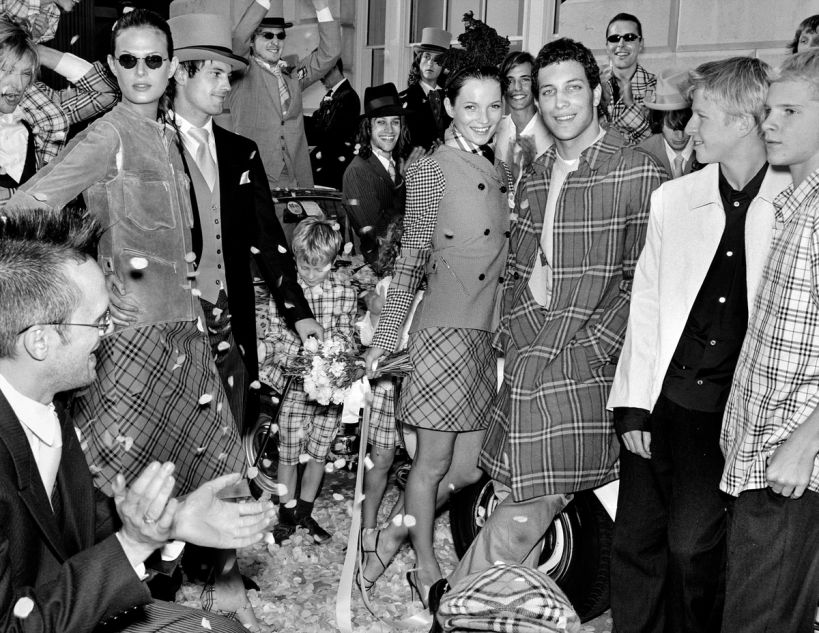
Kate Moss with the Burberry Spring/Summer 2000 campaign cast, London, 1999. Photograph by Mario Testino.
The image of Moss, Ross and Cohen has also had an unusually long afterlife. More than two decades after the campaign, Testino included it in Mario Testino. I Love You, published by TASCHEN in 2022. The book gathers his photographs of weddings and their surrounding rituals across his career, allowing an image first made for fashion advertising to be encountered within a much broader story of marriage, celebration and ceremony.
Now the campaign has entered another historical context.
In September 2026, the Victoria and Albert Museum opened The Burberry Trench: Crafting an Icon at V&A South Kensington to mark Burberry's 170th anniversary. The display traces the trench from practical outerwear and military attire to its place in fashion and what the museum describes as a contemporary British sensibility. As part of its section considering magazines and advertising, the V&A confirmed to MT that Vogue magazines would be displayed open to Testino's Spring/Summer 2000 and Winter 2003 Burberry campaigns.
The journey from magazine campaign to book to museum display says something about what happens to certain fashion photographs after the season that produced them has passed. Clothes provide one record of fashion history, but photographs preserve another: who was chosen to wear them, how they were presented and the cultural world a house wanted them to inhabit.
Look again at Moss in the veil and those layers begin to accumulate. The photograph can be read as an advertisement for Burberry Spring/Summer 2000, as part of the playful wedding narrative surrounding the campaign, as an image subsequently selected by Testino for I Love You, and now as part of a body of advertising work represented within the V&A's telling of Burberry's history.
Yet what makes the photograph memorable remains remarkably simple. Moss wears one of Britain's most recognisable fashion codes as a bikini beneath a wedding veil, surrounded by people who appear to be enjoying themselves far too much to treat any of it as precious.
Testino would continue photographing Burberry for years afterwards, but Spring/Summer 2000 captures something particular about the proposition he remembers from those years. Britain already had its royalty. Fashion was making some of its own, and for a moment, Mario Testino put them all in the same picture.