THAT’S AMORE: MARIO TESTINO, NATALIA VODIANOVA AND VENICE

Venice has a way of making the past feel unusually close. This autumn, Mario Testino is back in the city, where an exhibition of his work is on view at Patricia Low Contemporary. Among the photographs are images made across different countries, assignments and periods of his life. But Venice has appeared in Testino's photographs before.
In 2005, he arrived with Grace Coddington and Natalia Vodianova to photograph That’s Amore for the July issue of American Vogue. The premise was romance, although not quite as one might expect. “Fall sings with romance this year,” the magazine announced, “romance sparked with moody, eccentric touches.” And where better to find it than Venice, which Vogue called “the most amorous city in the world”?
What followed was a twenty-page journey through the city in which Vodianova seemed to become someone different with every turn of the page.
She moves between the Grand Canal and Piazza San Marco, through Palazzo Papadopoli and Café Florian, across sunlit terraces and into shadowy Venetian interiors. Sometimes the city is unmistakable. At other moments it is reduced to a fragment of water through a window, an old wall, the upholstery of a palazzo or the striped shirt of a child on a gondola.
Venice is everywhere, but rarely in quite the same way twice, and that gave Testino and Coddington room to play. Coddington, one of Testino's great collaborators at Vogue, styled the story as a succession of characters rather than a straightforward procession of autumn looks.

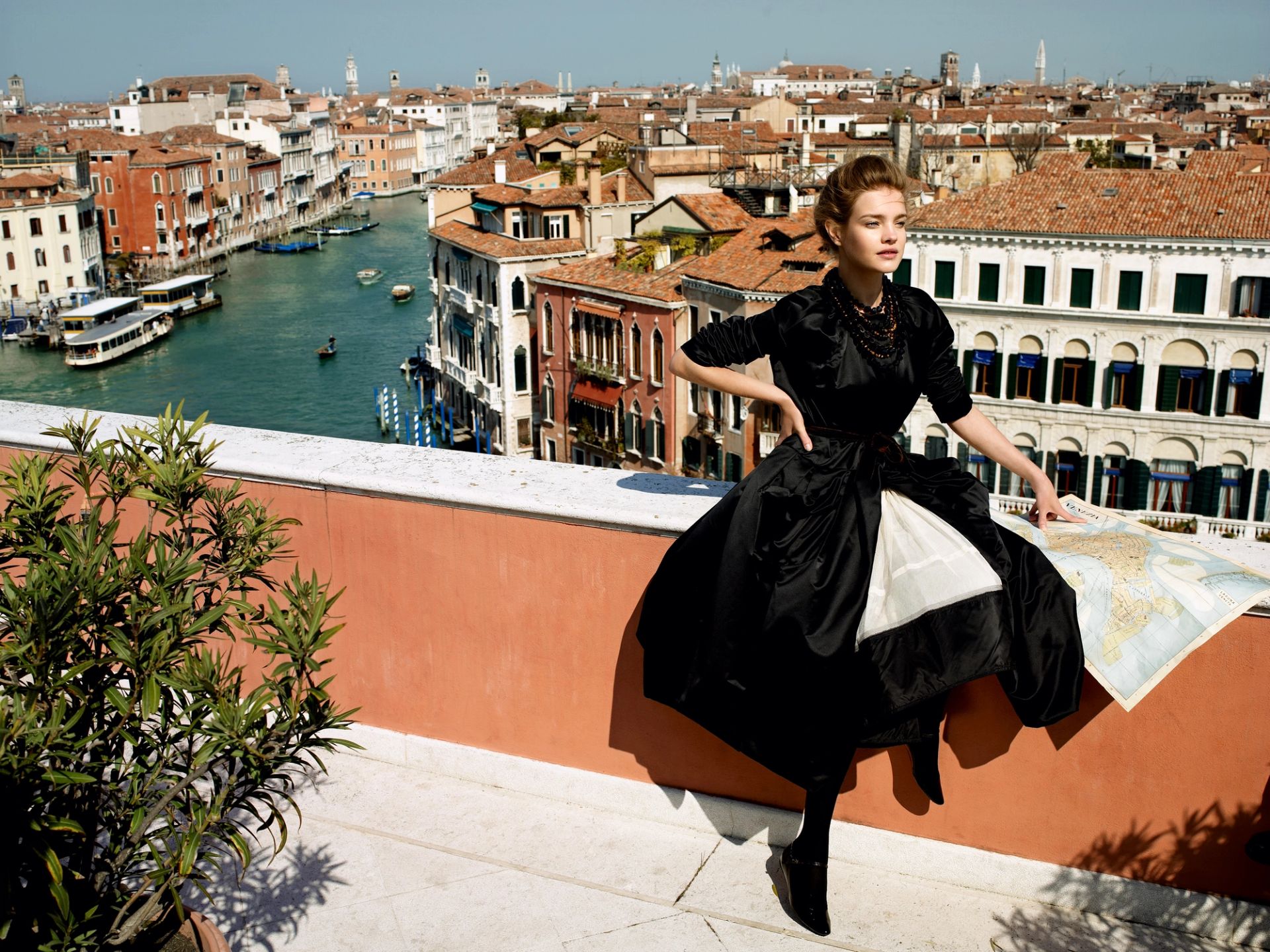
Natalia Vodianova above Venice, 2005. Photograph by Mario Testino for American Vogue, That’s Amore, styled by Grace Coddington.

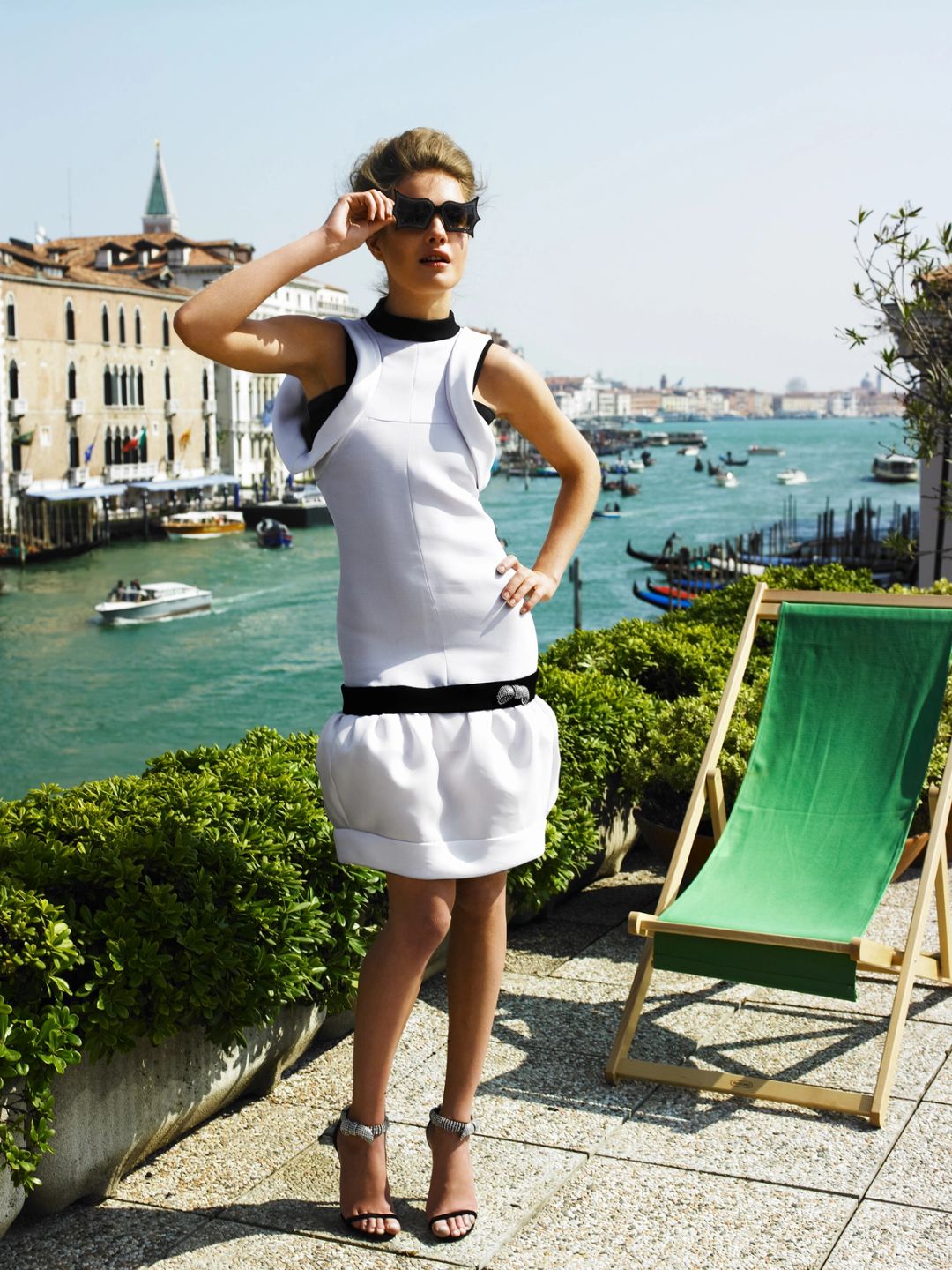
Natalia Vodianova overlooking the Grand Canal, Venice, 2005. Photograph by Mario Testino for American Vogue, That’s Amore, styled by Grace Coddington.

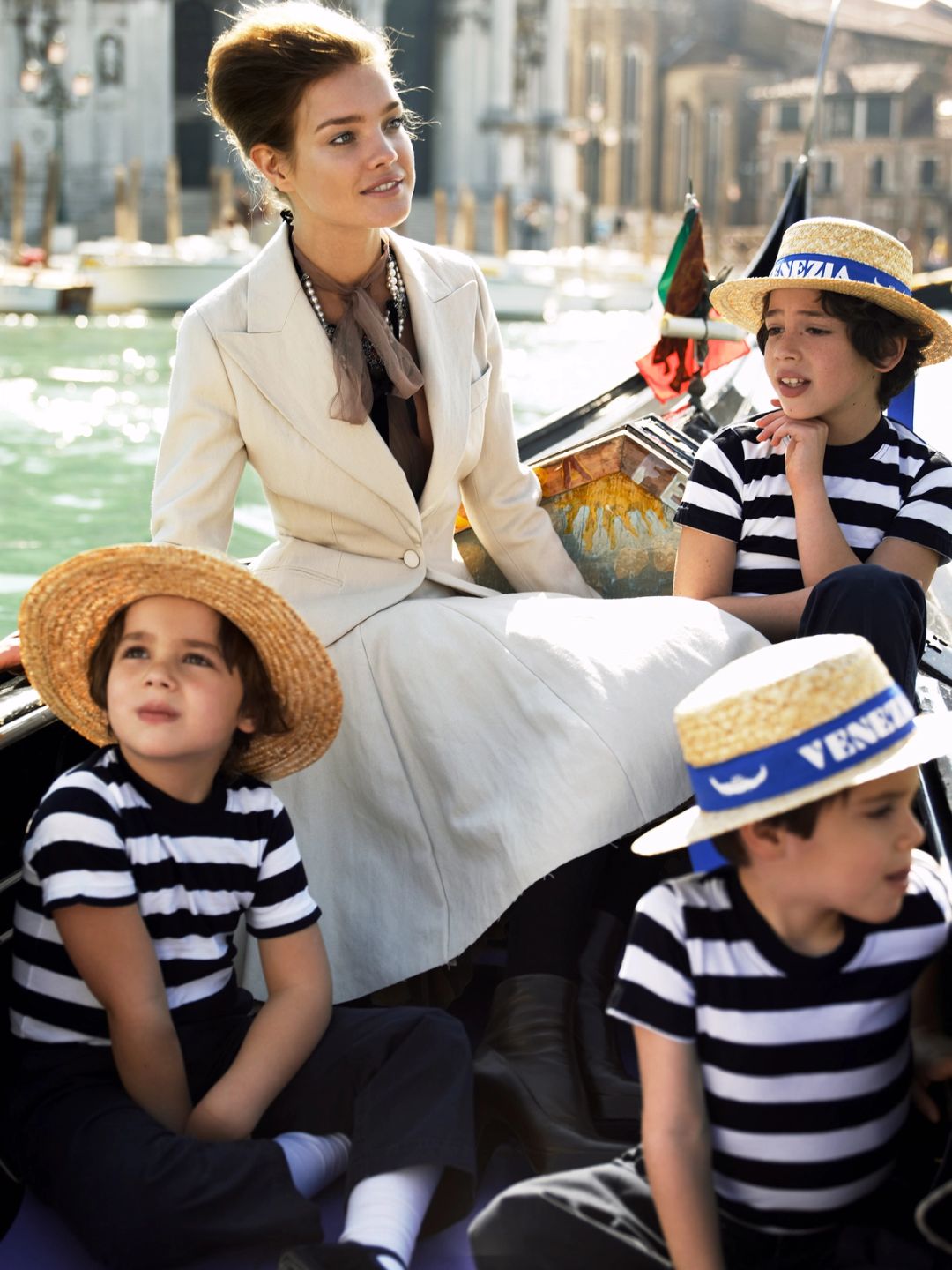
Natalia Vodianova, Venice, 2005. Photograph by Mario Testino for American Vogue, That’s Amore, styled by Grace Coddington.

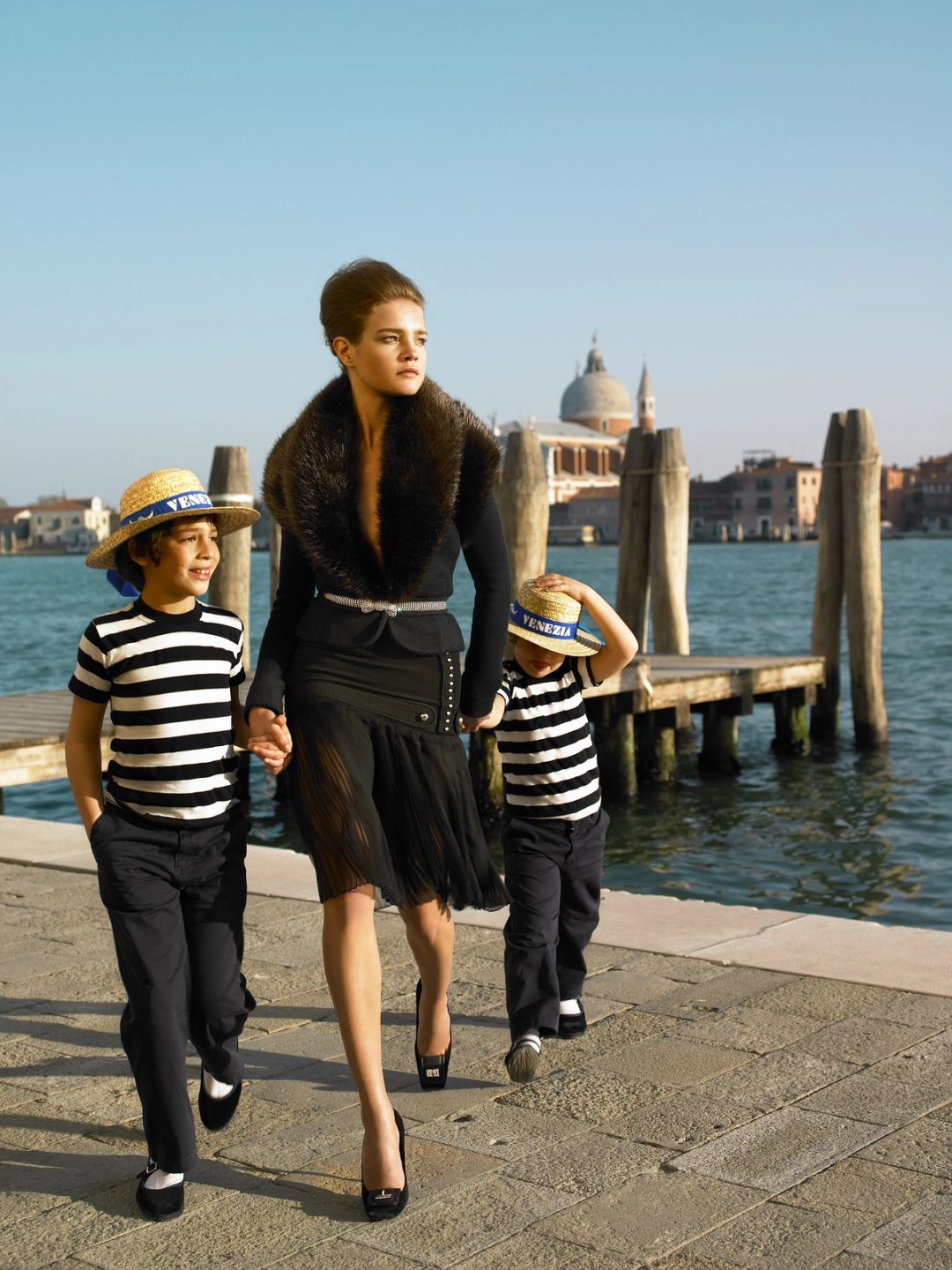
Natalia Vodianova, Venice, 2005. Photograph by Mario Testino for American Vogue, That’s Amore, styled by Grace Coddington.

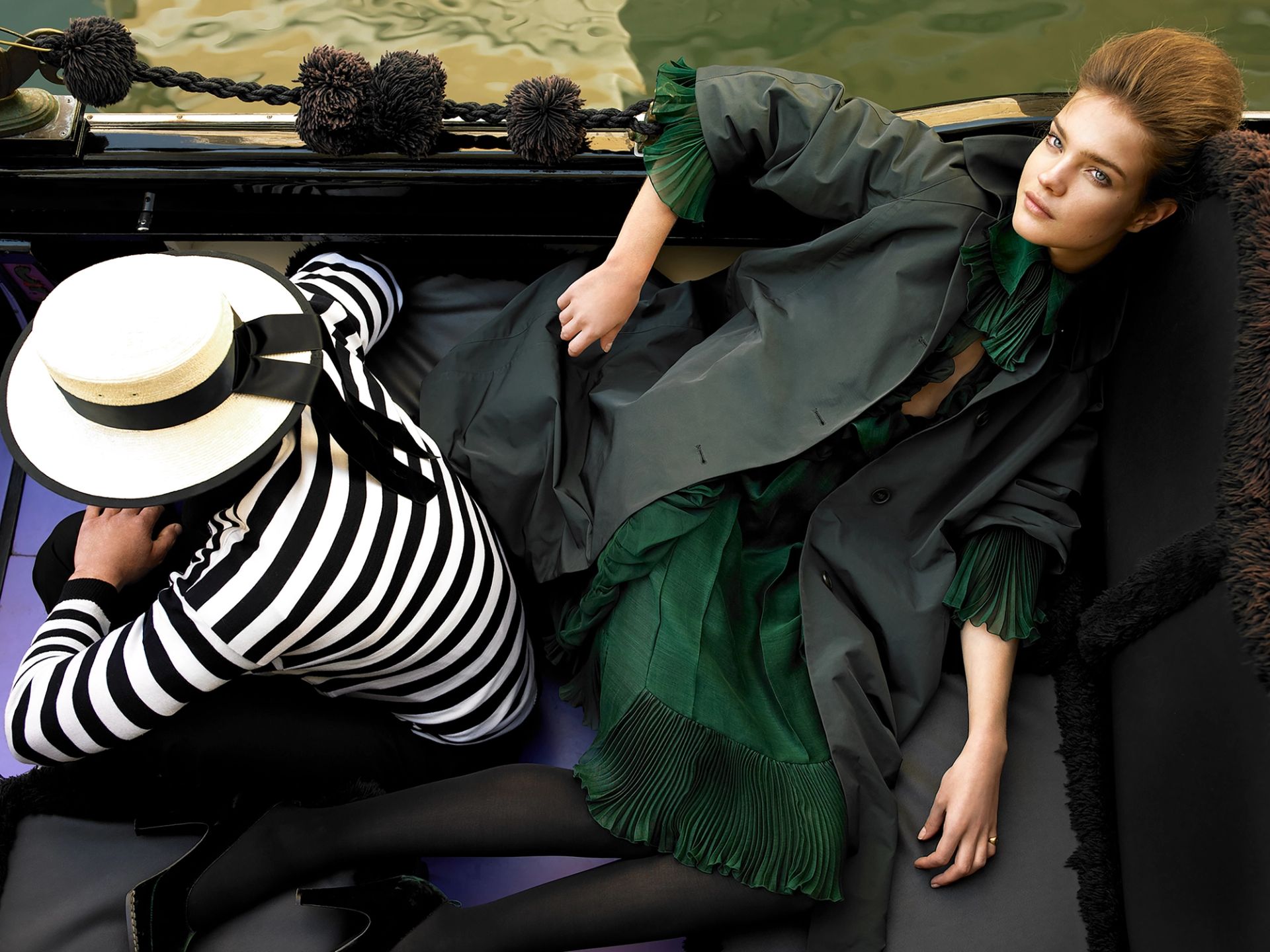
Natalia Vodianova, Venice, 2005. Photograph by Mario Testino for American Vogue, That’s Amore, styled by Grace Coddington.

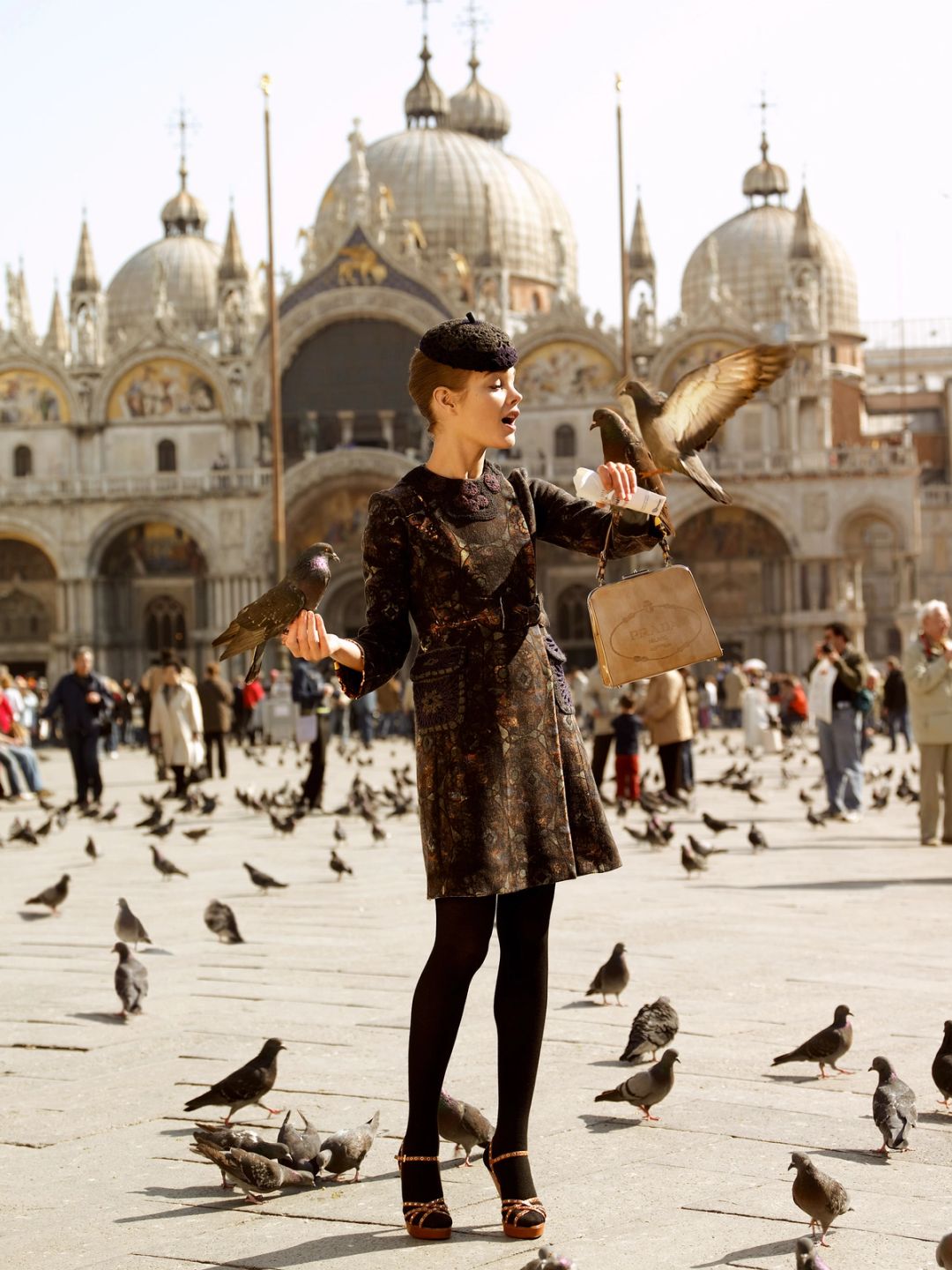
Natalia Vodianova in Piazza San Marco, Venice, 2005. Photograph by Mario Testino for American Vogue, That’s Amore, styled by Grace Coddington.

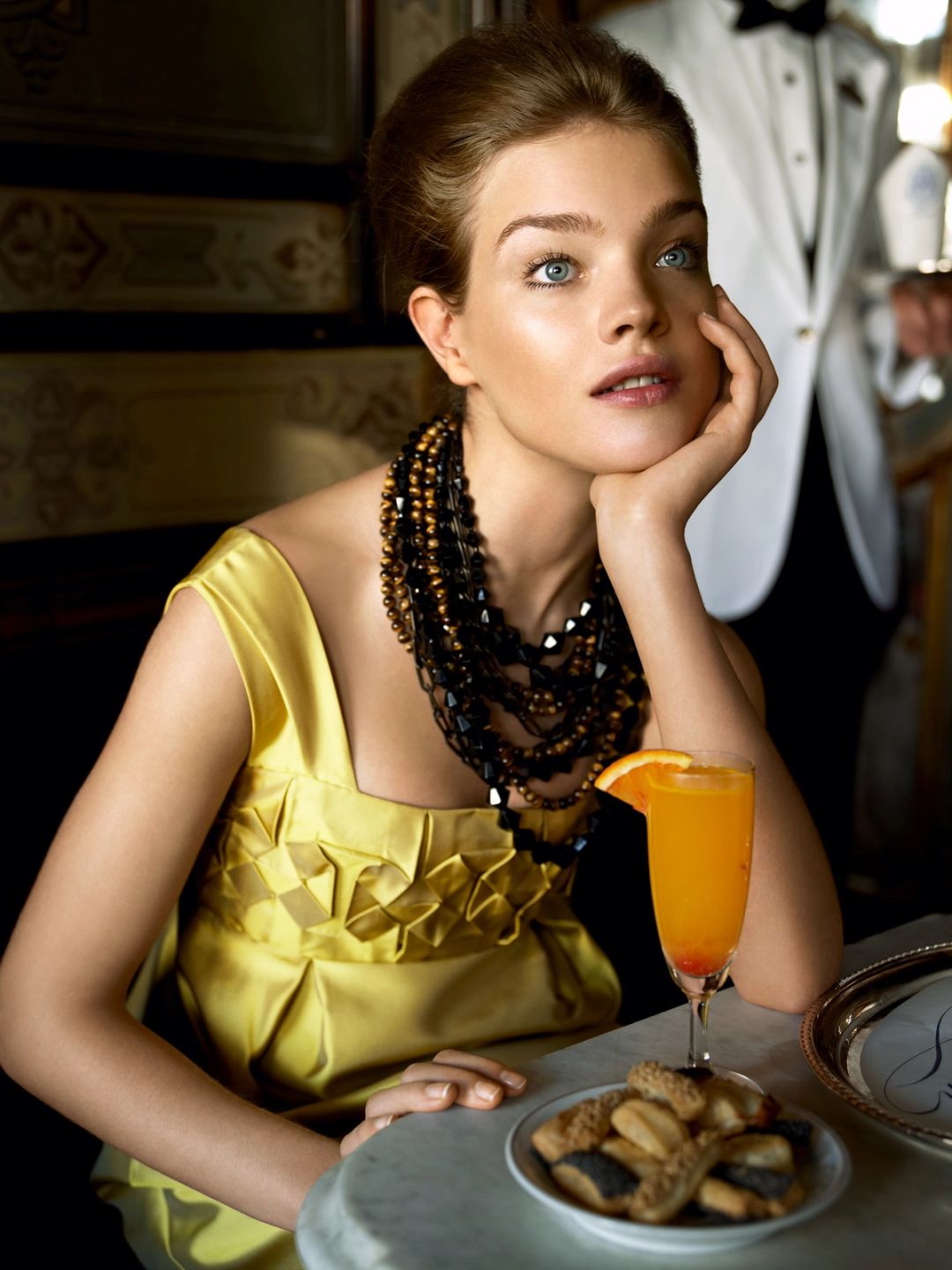
Natalia Vodianova at Café Florian, Piazza San Marco, Venice, 2005. Photograph by Mario Testino for American Vogue, That’s Amore, styled by Grace Coddington.

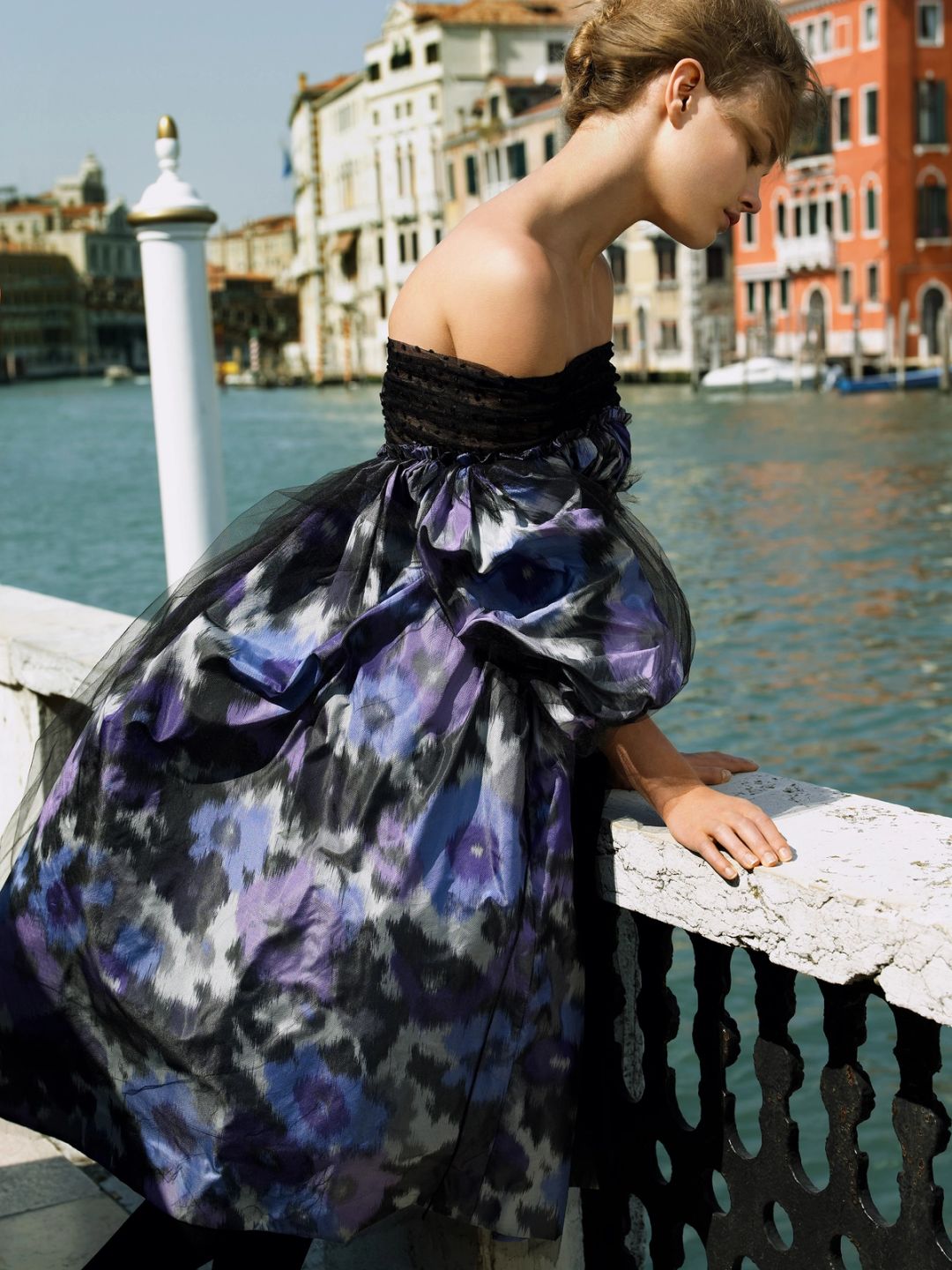
Natalia Vodianova beside the Grand Canal, Venice, 2005. Photograph by Mario Testino for American Vogue, That’s Amore, styled by Grace Coddington.
In one photograph, Vodianova appears high above the rooftops in a dramatic black Vera Wang silhouette, with Vogue explicitly invoking Peggy Guggenheim, the American collector who made Venice her home. In another, she sits among three children in striped shirts and straw hats marked Venezia, dressed in an immaculate white suit as their gondola moves through the city.
At Café Florian in Piazza San Marco, she is suddenly somewhere else again, dressed in citrus-coloured Calvin Klein, chin resting against one hand beside an orange drink. Then comes Piazza San Marco itself, where she stands in Prada among a swarm of pigeons, two birds perched on her hands while dozens more gather at her feet. Elsewhere, in the Palazzo Papadopoli, she sits beneath an enormous painting in black-and-white Dolce & Gabbana fur, sunlight cutting across the room.
Seen together, the photographs have the feeling of moving through Venice with no particular obligation to remain the same person, and Vodianova's ability to inhabit those changes becomes essential to the story.
Testino had photographed many of the world's great models by this point, and That’s Amore asks a considerable amount of its subject. The clothes change dramatically, but so does her manner. She can appear grand in one photograph and almost mischievous in the next, composed against the architecture and then absorbed into the life happening around her. Rather than holding a single character across the twenty pages, she seems willing to surrender to each new one.
And then the masks appear.

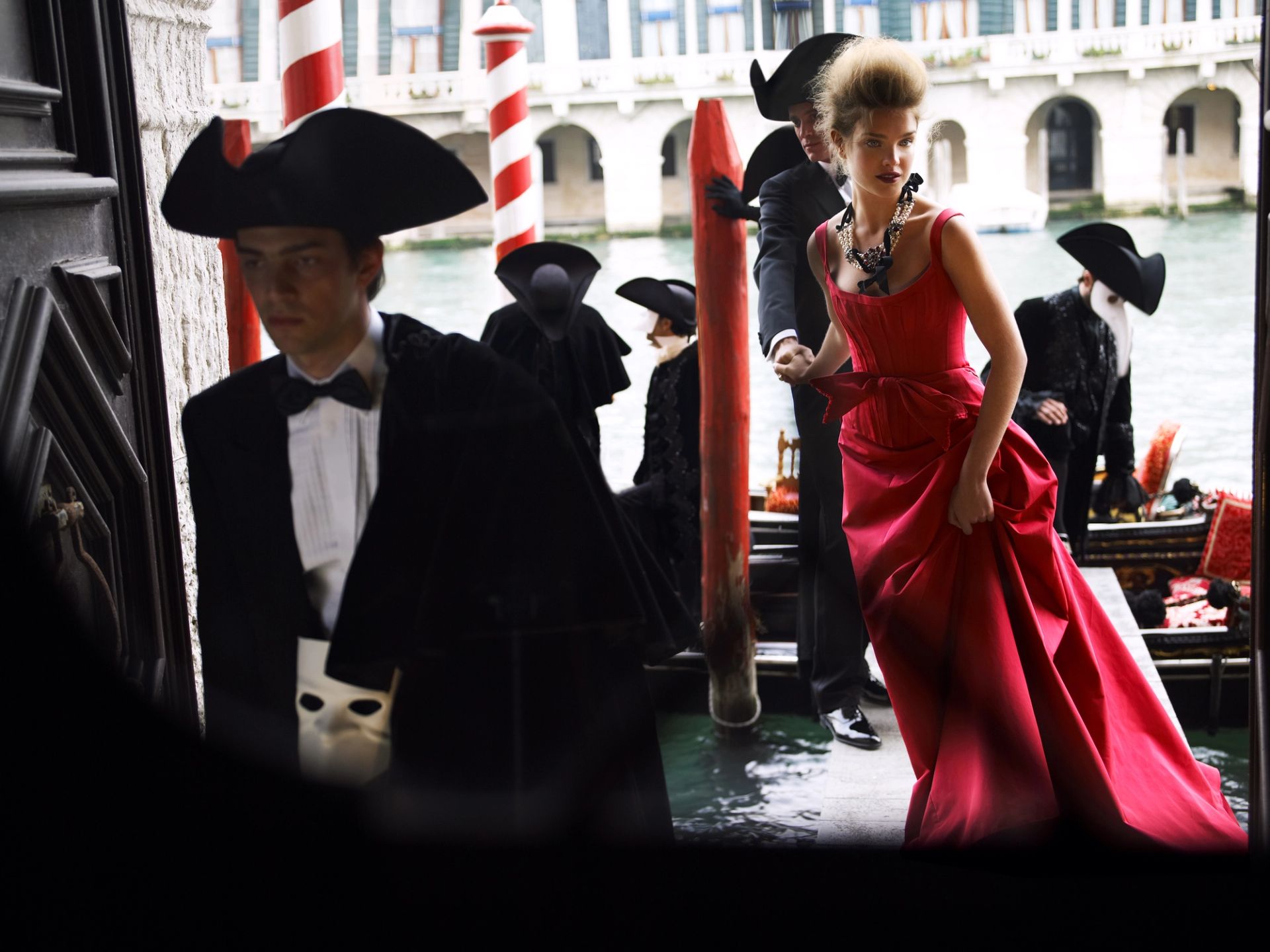
Natalia Vodianova, Venice, 2005. Photograph by Mario Testino for American Vogue, That’s Amore, styled by Grace Coddington.
Towards the end of the story, Vodianova steps from a gondola in a poppy-red Carolina Herrera gown, surrounded by men dressed in black with white masks over their faces. Vogue titled the image “Life Is a Masquerade”. The men's costumes and masks were sourced from Venezia Max Art Shop, while the sets were created in Venice by Kinmonth Monfreda Design.
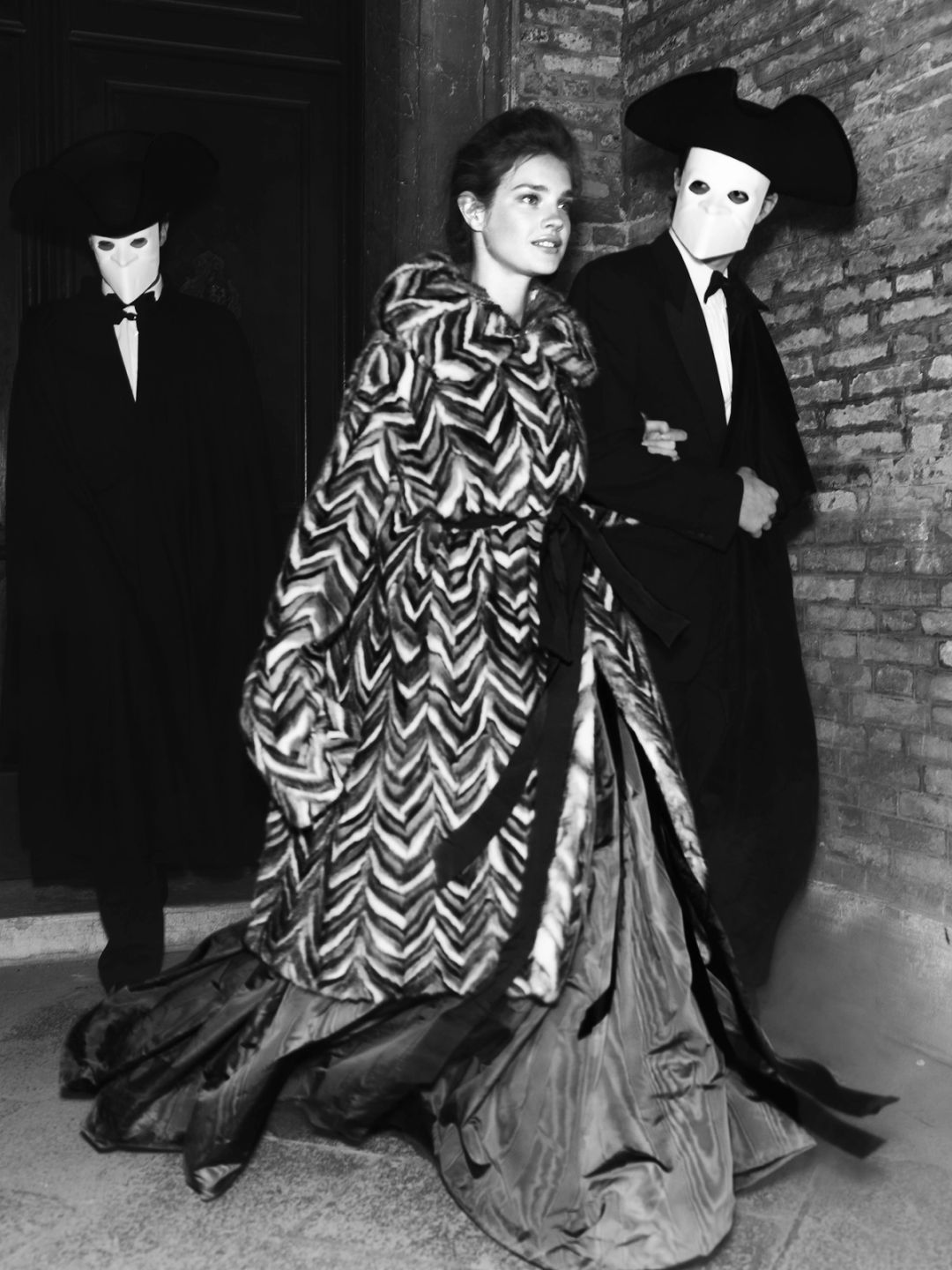
A few pages later, Testino changes the register completely. Colour disappears. Vodianova walks arm in arm with a masked man through a narrow passage, dressed in a voluminous Marc Jacobs coat and gown. Another masked figure waits in the darkness behind them. The exuberance of the earlier pictures has become something more mysterious.
It feels like the natural destination for a story that has spent twenty pages playing with identity. Venice has long understood the possibilities of dressing up, of moving between what is revealed and what is concealed, and of becoming someone else for an evening.
Coddington and Testino did not need to turn that history into a lesson. They could simply use it. Fashion, after all, offered its own form of transformation, and Vodianova could move between the two.

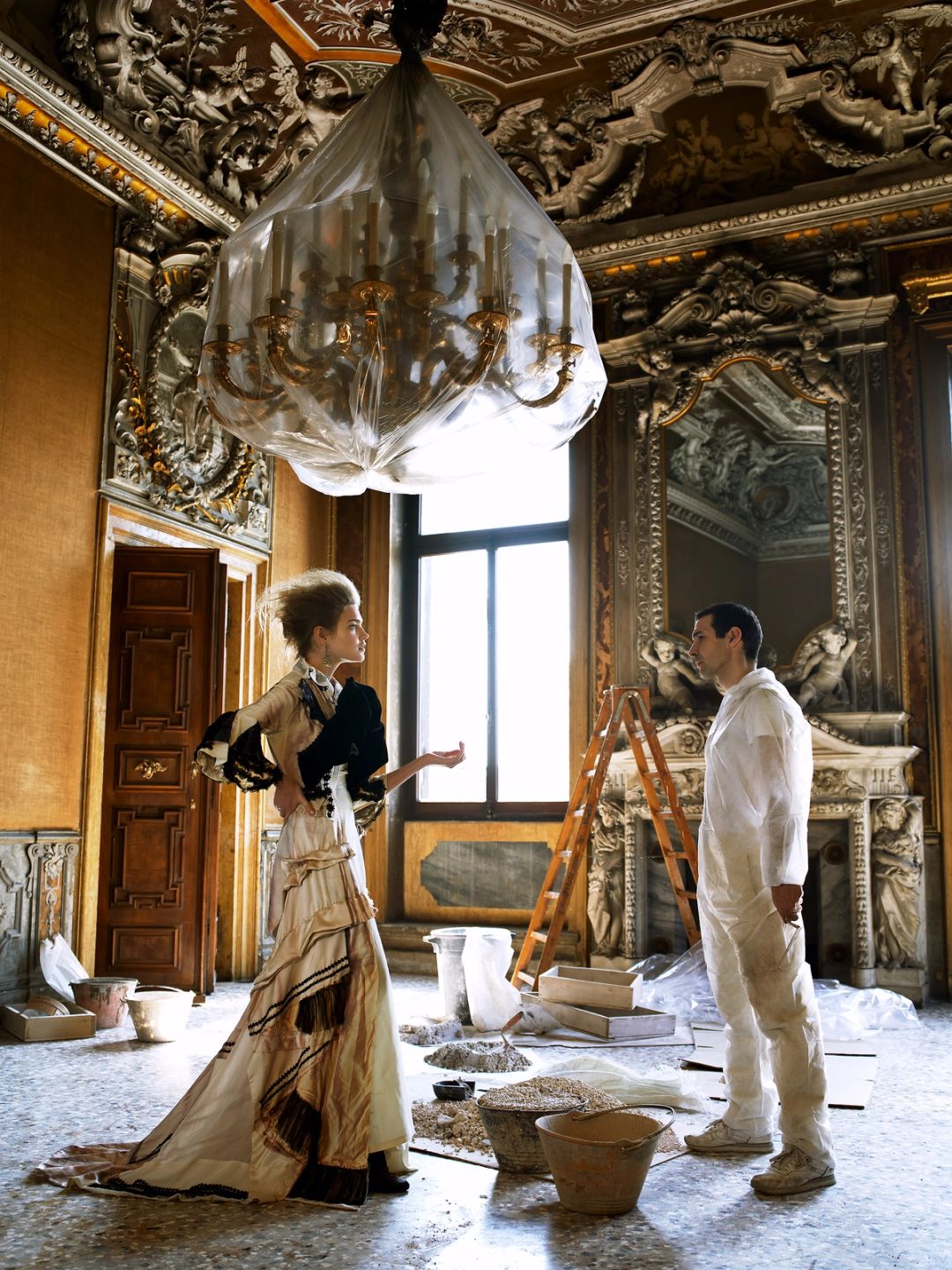
Natalia Vodianova at Palazzo Papadopoli, Venice, 2005. Photograph by Mario Testino for American Vogue, That’s Amore, styled by Grace Coddington.

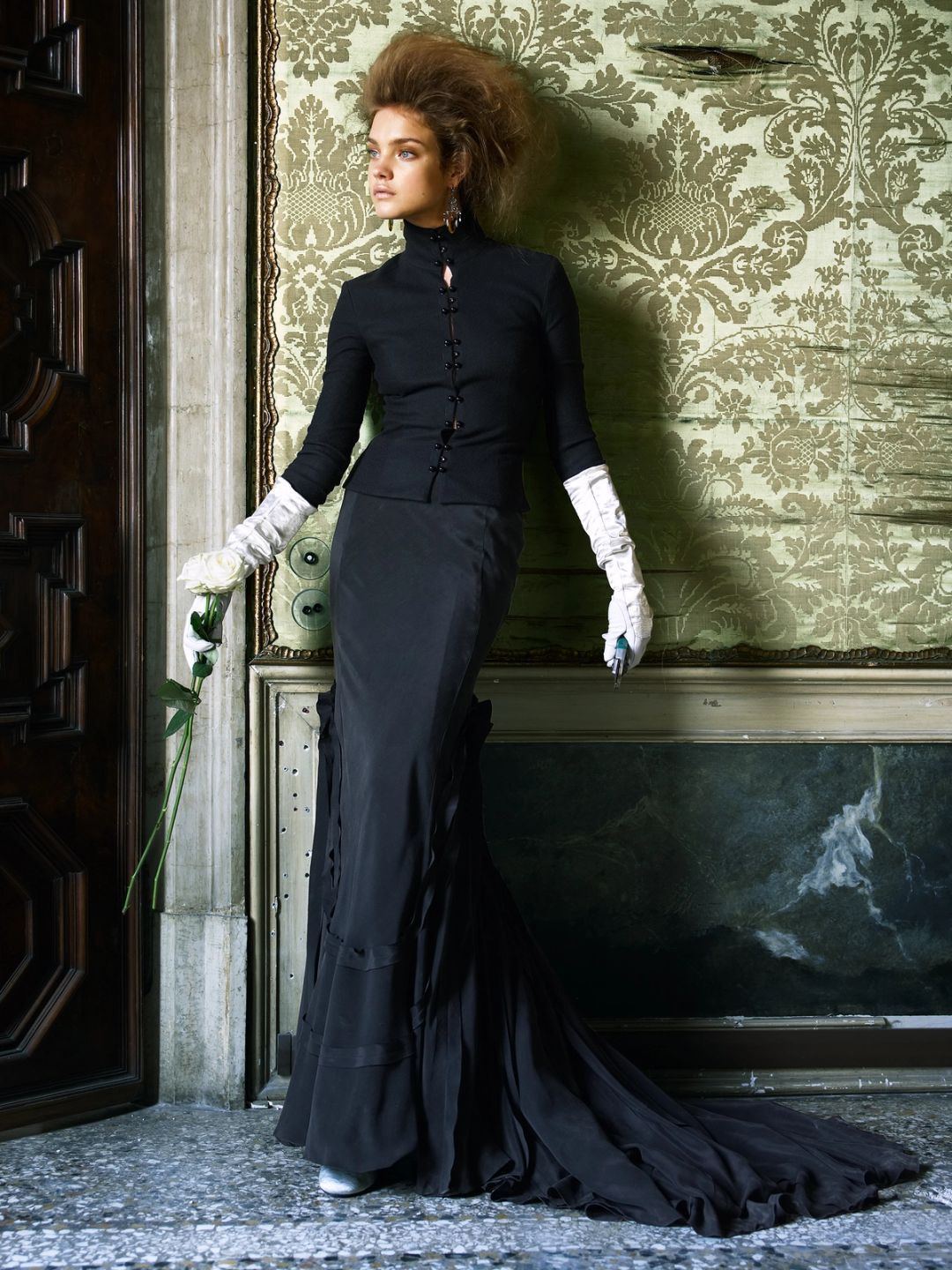
Natalia Vodianova at Palazzo Papadopoli, Venice, 2005. Photograph by Mario Testino for American Vogue, That’s Amore, styled by Grace Coddington.

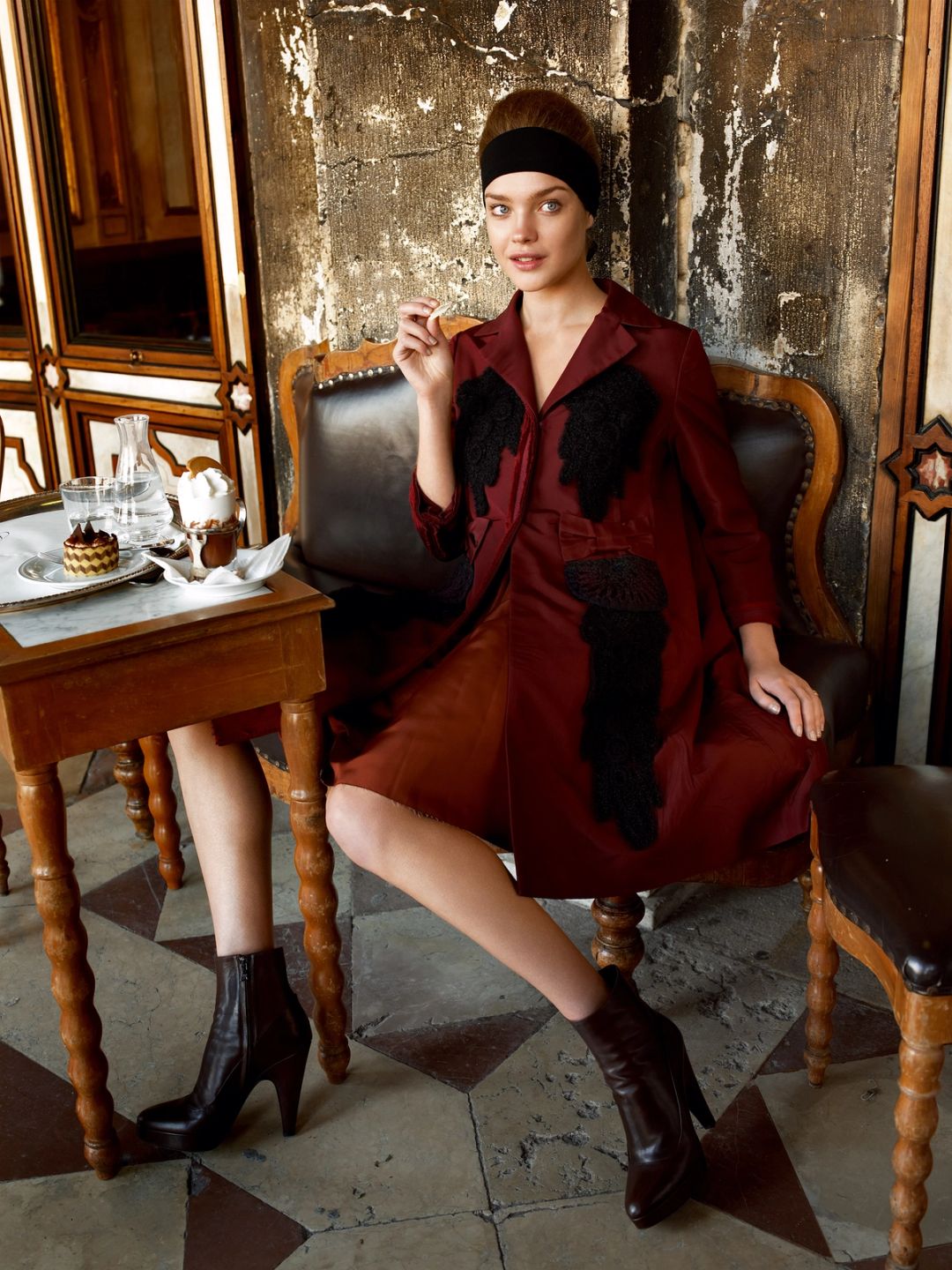
Natalia Vodianova at Palazzo Papadopoli, Venice, 2005. Photograph by Mario Testino for American Vogue, That’s Amore, styled by Grace Coddington.

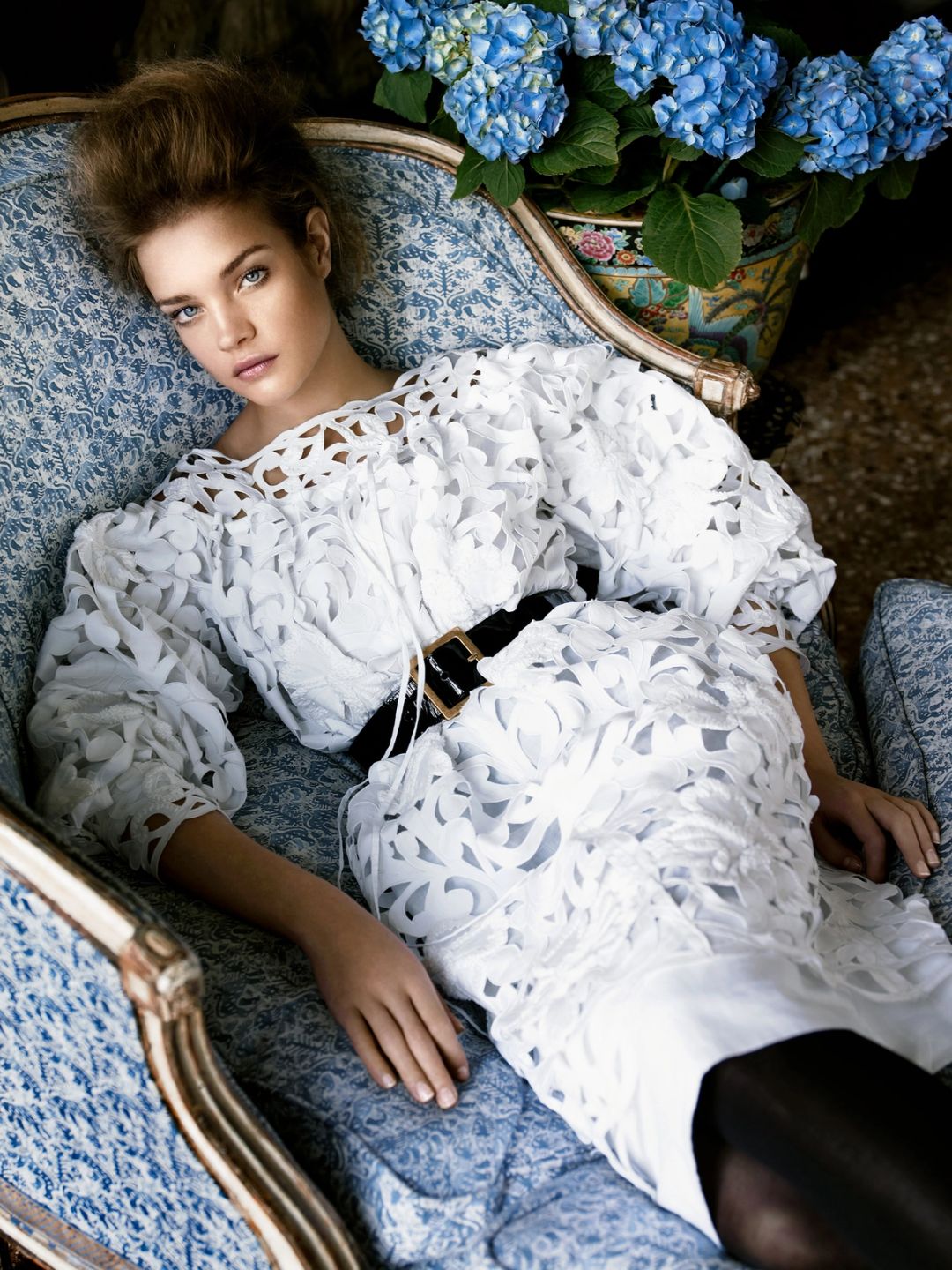
Natalia Vodianova, Venice, 2005. Photograph by Mario Testino for American Vogue, That’s Amore, styled by Grace Coddington.

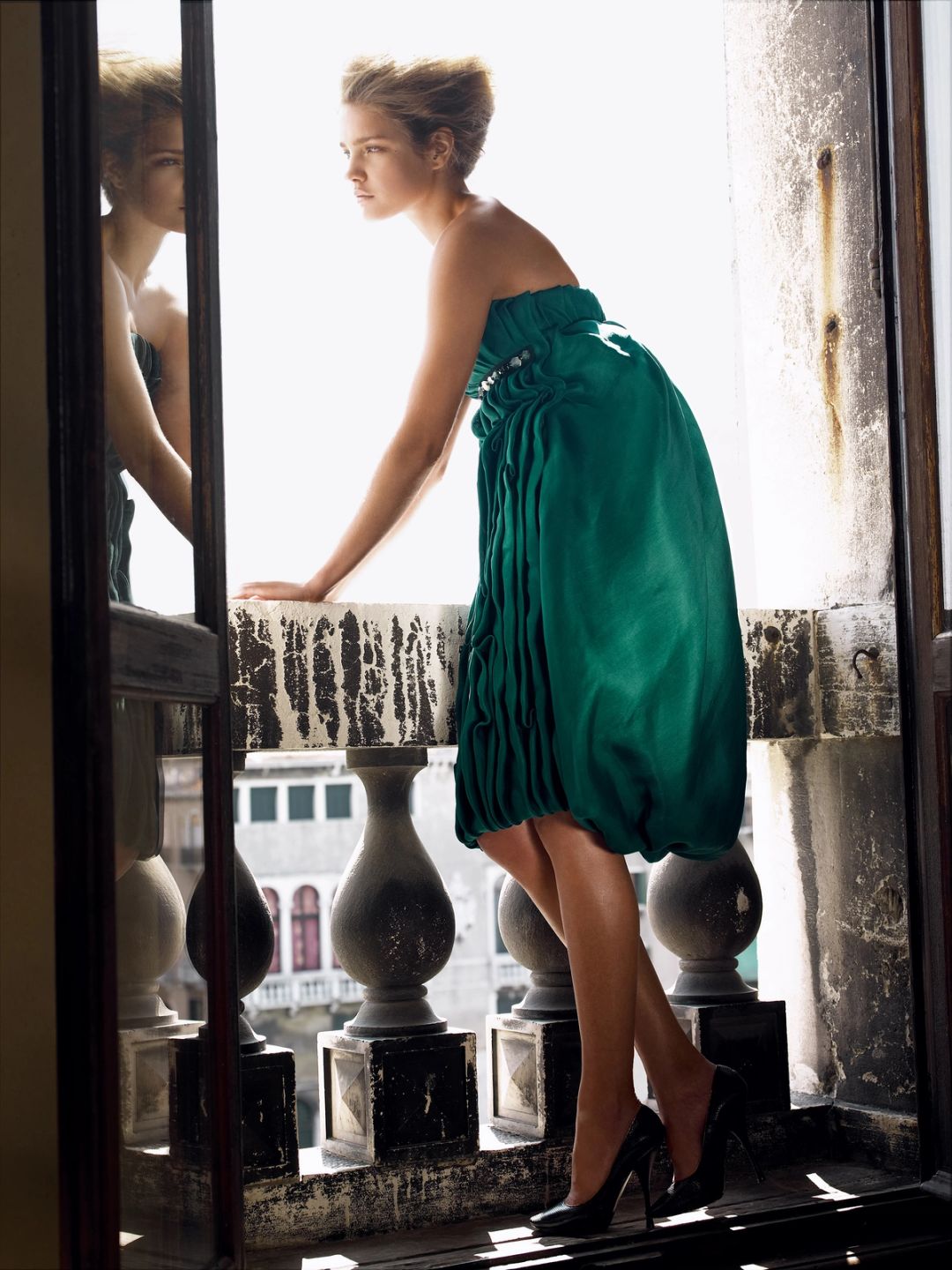
Natalia Vodianova in Venice, 2005. Photograph by Mario Testino for American Vogue, That’s Amore, styled by Grace Coddington.

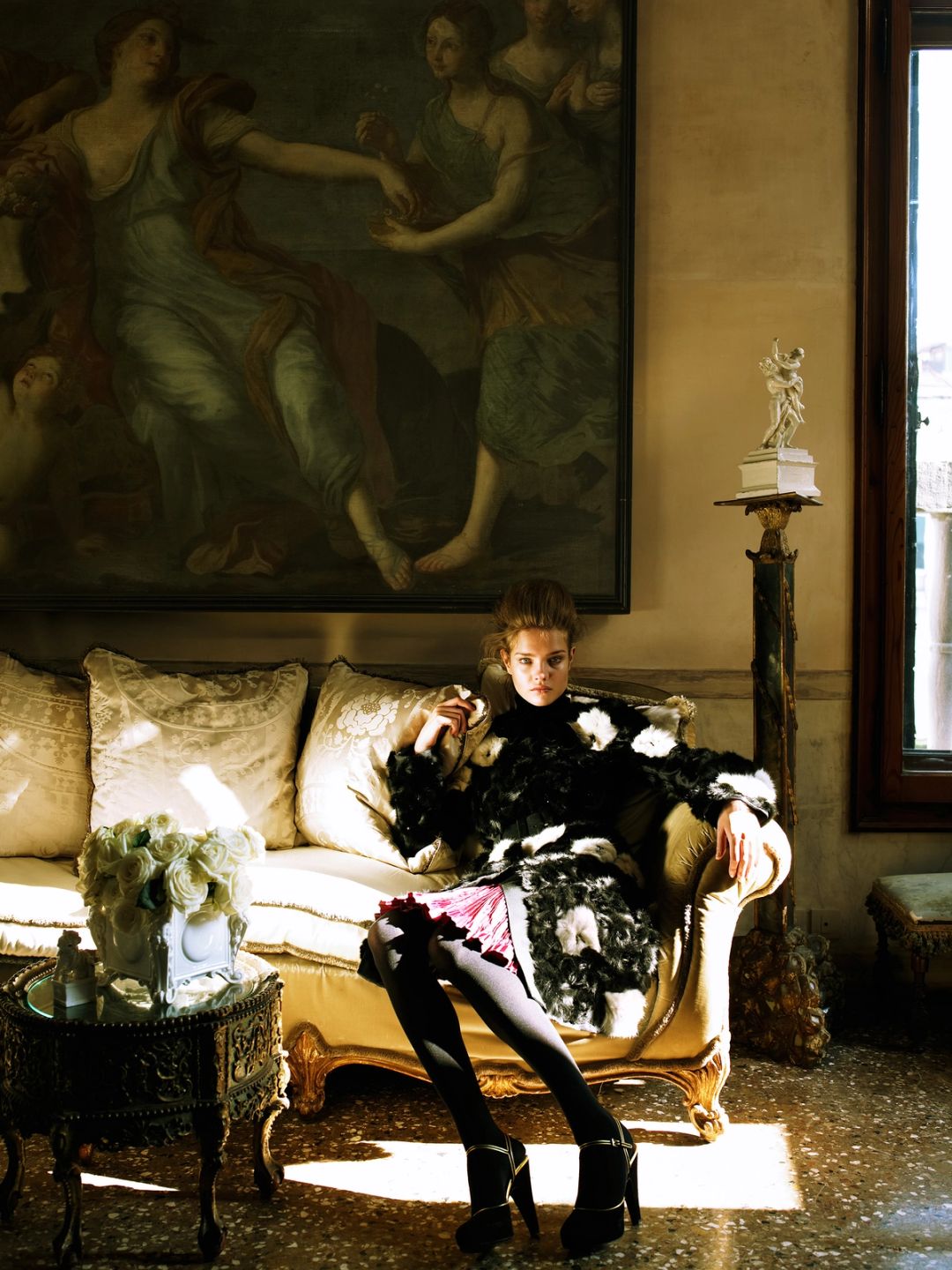
Natalia Vodianova at Palazzo Papadopoli, Venice, 2005. Photograph by Mario Testino for American Vogue, That’s Amore, styled by Grace Coddington. Published in Mario Testino. In Your Face, TASCHEN, 2012.

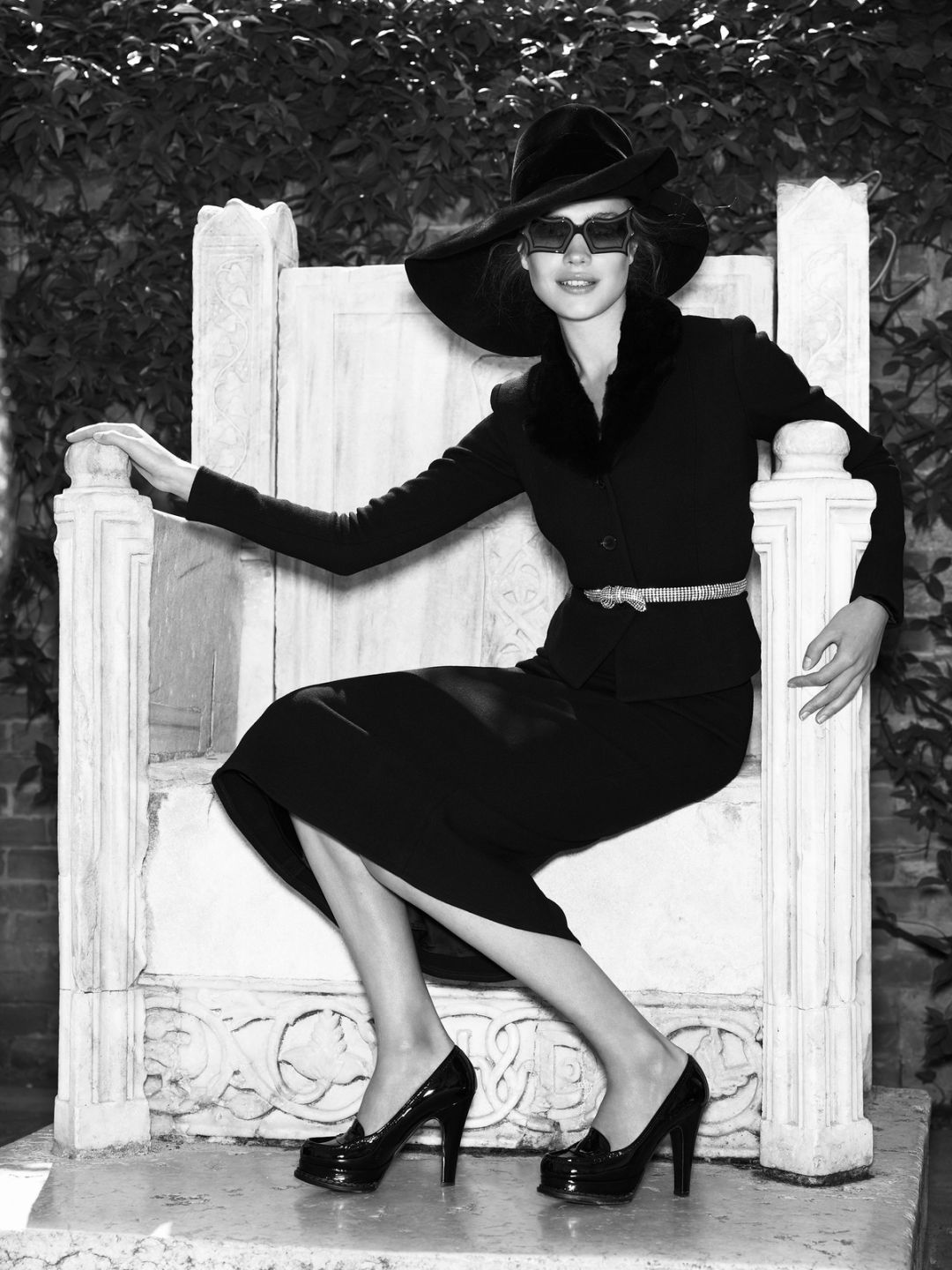
Natalia Vodianova, Venice, 2005. Photograph by Mario Testino for American Vogue, That’s Amore, styled by Grace Coddington.
The photographs might have begun as a Vogue story, but some of them did not remain there. Seven years later, Testino selected the image of Vodianova inside the Venetian palazzo for Mario Testino: In Your Face, published by TASCHEN in 2012. The project brought together fashion, portraiture and more personal photographs without insisting that those different parts of his work be separated from one another.
When In Your Face arrived at MALBA in Buenos Aires in 2014, Testino selected 122 photographs for the exhibition. More than 119,500 people visited during its three-month run. The following year, the exhibition reached the Kunstbibliothek at Berlin's Kulturforum with 125 works. Testino described the installation there in terms that feel particularly relevant to the way his photographs continue to move through different contexts: the hanging allowed “different aspects of my curiosity to have a conversation”, with one image provoking a reaction through its proximity to another.
The journey continued in 2020, when the black-and-white image of Vodianova walking with the masked men appeared in Ciao, Testino's book about Italy, published by TASCHEN. Fifteen years after it had appeared in Vogue, the photograph could now be seen within a much longer relationship between Testino and the country. What had once belonged to a fashion story about a new season also belonged to his memories of Italy.
That movement through time is part of what makes returning to an archive interesting. A photograph may begin with one purpose and gradually acquire others, leaving the magazine for a book, a museum wall or the company of photographs made years or continents apart. The picture remains the same even as everything around it changes. Now, twenty-one years after That’s Amore, Venice has returned to the story.
Twenty-one years after That’s Amore, Testino's work is again being seen in the city, this time at Patricia Low Contemporary at Palazzo Contarini Michiel. The exhibition brings photographs originally made for fashion magazines into conversation with other strands of his work, including flowers photographed in London and Tokyo, Meissen porcelain and horses encountered in Uzbekistan.
There is something wonderfully circular about encountering Testino in Venice again. In 2005, he and Coddington used the city to build a world around Natalia Vodianova. In 2026, photographs from many of the worlds he has encountered have travelled back to Venice.
And perhaps that is the pleasure of looking again at That’s Amore. Before the books, exhibitions and years that followed, there was simply a team in Venice making pictures: Mario Testino behind the camera, Grace Coddington creating characters through clothes, Natalia Vodianova becoming each of them, and a city offering more possibilities than they could fit into twenty pages.
The palazzi, pigeons, gondolas, children, masks and clothes are still there in the photographs. So is the feeling of having had a very good time making them.