THE FOUR ELEMENTS: MARIO TESTINO AND MEISSEN PORCELAIN

“There is porcelain and there is porcelain,” Mario Testino observed when speaking about photographs he made at the Meissen Porcelain Foundation in Germany in 2019.
Four extraordinary vessels had captured his attention. Earth, Water, Fire and Air, each alive with gods, goddesses, animals and fantastic creatures. Figures emerge from curling foliage, bodies twist through elaborate ornament, and mythological scenes unfold across surfaces so densely populated that the eye scarcely knows where to settle.
At Patricia Low Contemporary in Venice, where Mario's photographs are now exhibited, Jan Olesen, his longtime creative collaborator and partner, found himself looking at a material he has admired for years in an entirely different way.
“The scale at which the photographs are printed allows us to discover an extraordinary world of detail that might otherwise go unnoticed,” he observed.
In Earth, dogs and foxes appear among woodland vegetation while cherubic figures emerge from the foliage. Look closely and the composition becomes almost mischievous, its inhabitants seemingly caught in the middle of some elaborate game. There is something wonderfully improbable about so much commotion being held within porcelain.
“These pieces are not simply decorative objects. They are entire stories brought to life in three dimensions,” Jan observed. "And their origins are no less extraordinary."
In 1708, after years of experimentation in Saxony, researchers including Johann Friedrich Böttger and Ehrenfried Walther von Tschirnhaus succeeded in producing European hard-paste porcelain. Two years later, Augustus the Strong, Elector of Saxony and King of Poland, established the Meissen manufactory. The material became known as white gold, coveted by Europe's royal courts.
In 1741, Johann Joachim Kaendler and Johann Friedrich Eberlein began designing five elaborate vessels intended as a diplomatic gift for Louis XV of France. Four represented the elements, while a larger central vase bore the king's portrait. But shifting alliances during the War of the Austrian Succession brought the plans to an end. The gift never reached France.
The four vessels Mario photographed were formed around 1830 from the original designs of 1741 and 1742.
Their Rococo compositions are spectacular. Neptune presides over Water amid shells and seahorses. Diana inhabits Earth, surrounded by woodland creatures. Fire invokes Jupiter and Mars, while Air gathers birds and winged figures into an exuberant sculptural arrangement.
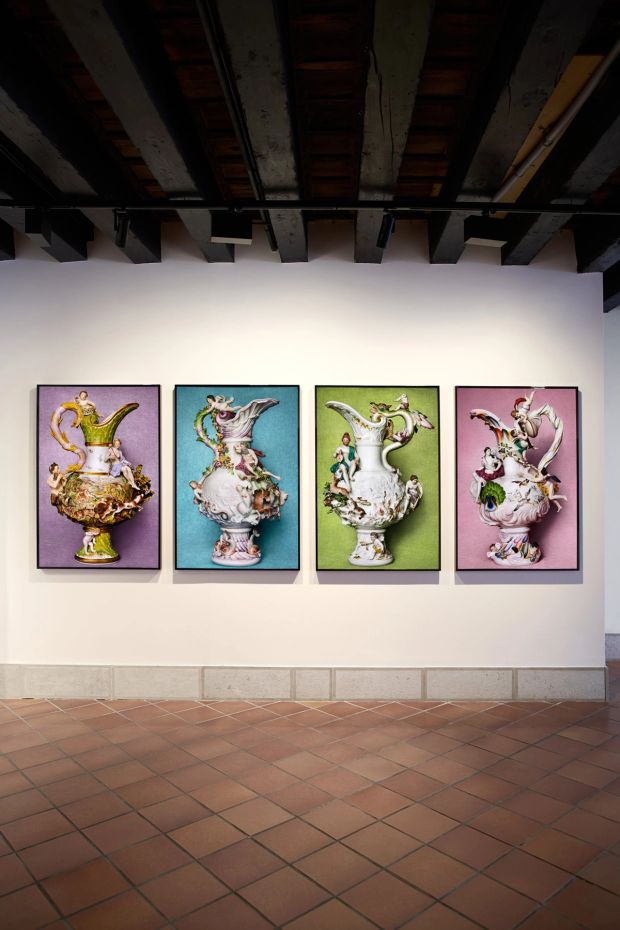
Mario photographed each against a saturated field of colour: blue for Water, lilac for Earth, green for Fire and pink for Air. Freed from the distractions of a museum setting, the intricate forms become startlingly clear, their eighteenth-century theatricality acquiring an unexpectedly contemporary presence.

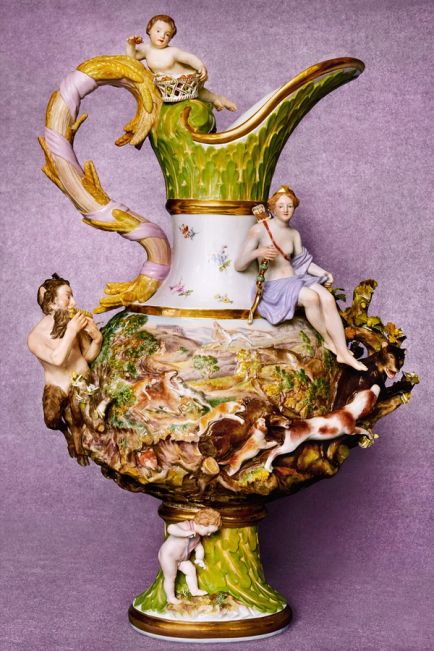
Earth (Die Erde), Meissen porcelain, photographed by Mario Testino, Germany, 2019. Model by Johann Joachim Kaendler, 1741; porcelain formed c. 1830. Meissen Porcelain Foundation.

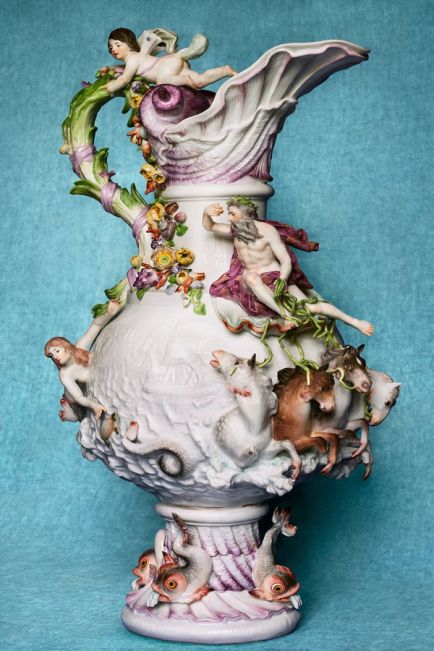
Water (Das Wasser), Meissen porcelain, photographed by Mario Testino, Germany, 2019. Model by Johann Joachim Kaendler and Johann Friedrich Eberlein, 1742; porcelain formed c. 1830. Meissen Porcelain Foundation.

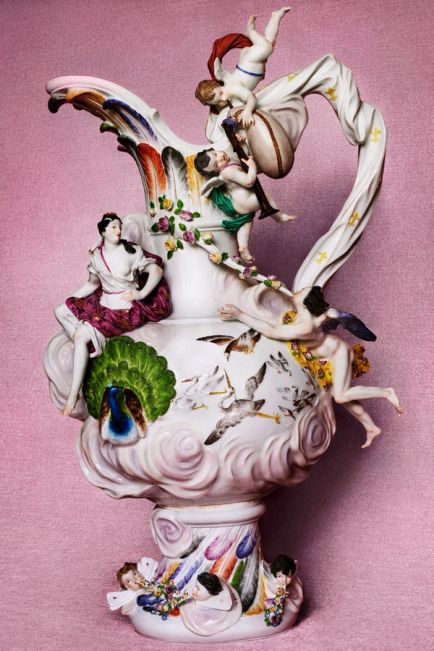
Air (Die Luft), Meissen porcelain, photographed by Mario Testino, Germany, 2019. Model by Johann Joachim Kaendler, 1741; porcelain formed c. 1830. Meissen Porcelain Foundation.

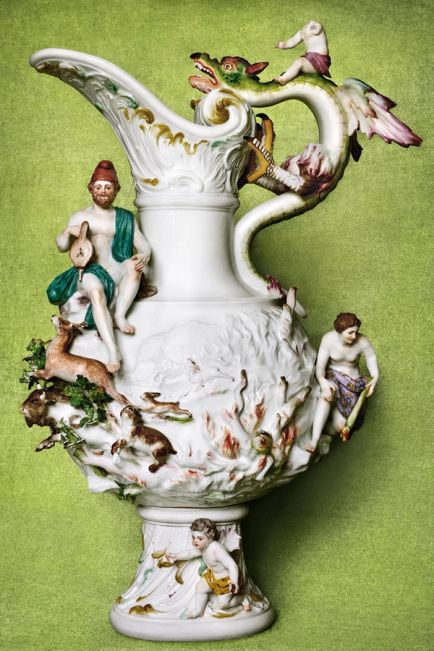
Fire (Das Feuer), Meissen porcelain, photographed by Mario Testino, Germany, 2019. Model by Johann Joachim Kaendler, 1741; porcelain formed c. 1830. Meissen Porcelain Foundation.
For Mario, the fascination went beyond ornament. After decades photographing people, he recognised in the sculptures what he called “the human presence in nature,” their gestures and interactions expressing something of the dramas of life.
Jan recalls Gianni Versace once telling Mario that he was among the few photographers who truly understood dresses. He understood their construction, proportion and movement, and how to reveal a garment's beauty through an image.
“I see something very similar in these photographs,” Jan observed.
The connection is striking. Whether photographing a dress or a porcelain sculpture, Mario brings an instinct for the relationship between form, composition and beauty.
“I've accepted that my eye is trained to look in a classic way,” Mario reflected. After years of experimentation, he came to embrace that instinct rather than resist it.
“I've never photographed porcelain before, but I was obsessed with form and composition.”
MARIO TESTINO
Mario remembers a time in the 1990s when beauty was sometimes dismissed in the art world as superficial. Yet he understood how difficult it could be to achieve.
The Meissen vessels make that difficulty tangible. Beneath their extravagant surfaces lies extraordinary discipline: intricate modelling, delicate painting and an intimate understanding of a material that leaves little room for error.
For Jan, the craftsmanship is especially moving in an age when images and objects can be created and reproduced almost instantaneously. These vessels demanded patience and knowledge passed between generations of artisans. Their survival is remarkable, not least because the slightest accident could destroy details that took immense skill to produce.
Venice provides a fitting setting for Mario's photographs. A city he has returned to since the 1980s, its palaces, decorative traditions and theatrical spirit share something of Meissen's delight in ornament and spectacle.

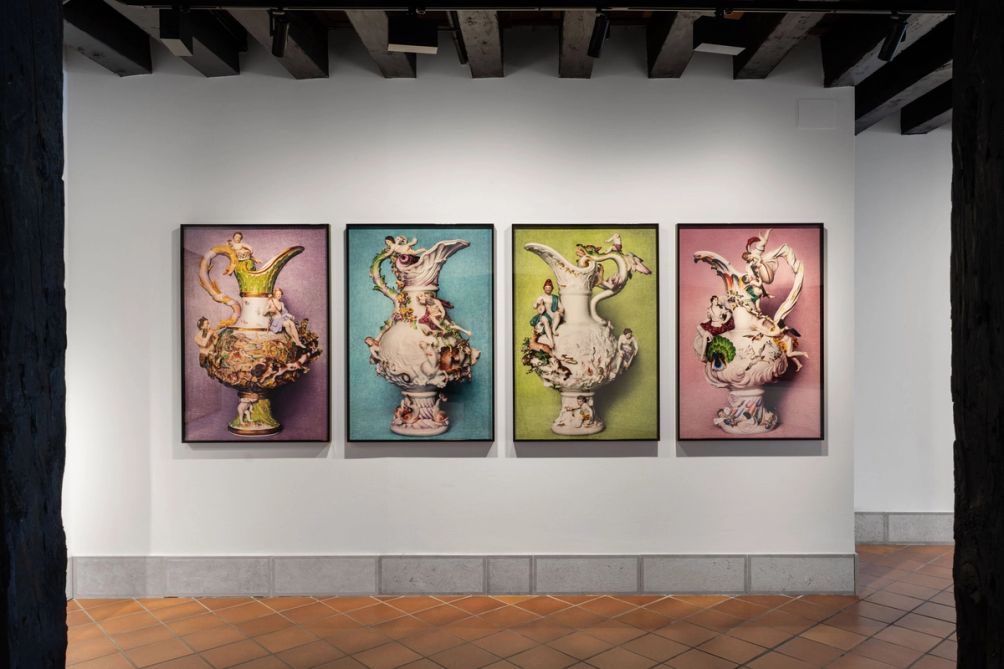
Installation view of Mario Testino's The Four Elements (2019) at Patricia Low Contemporary, Venice, 2026.

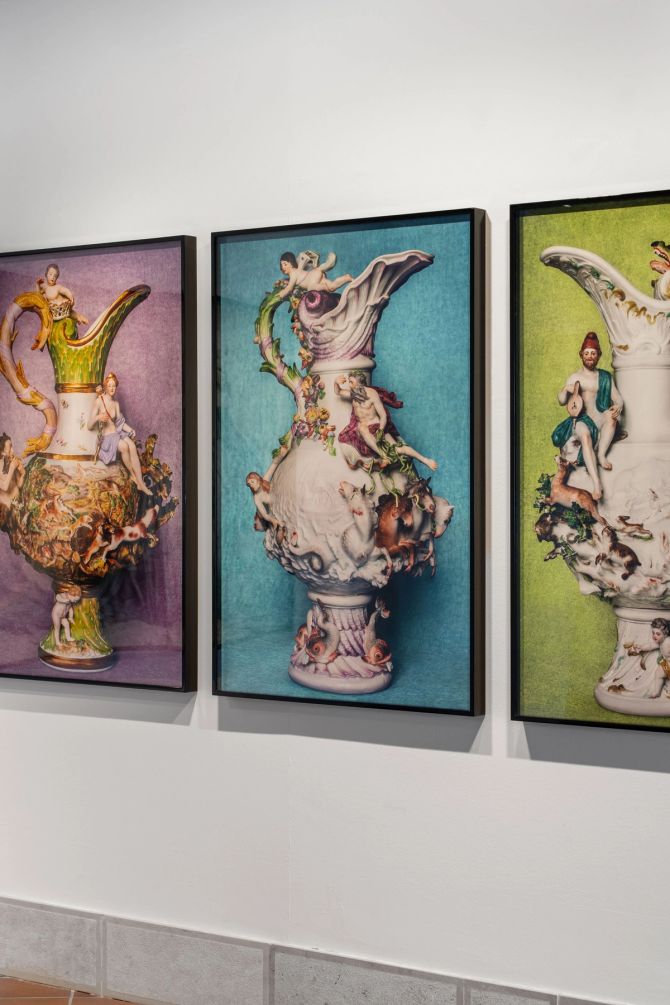
Detail of Mario Testino's The Four Elements (2019) at Patricia Low Contemporary, Venice, 2026, showing Earth, Water and part of Fire.

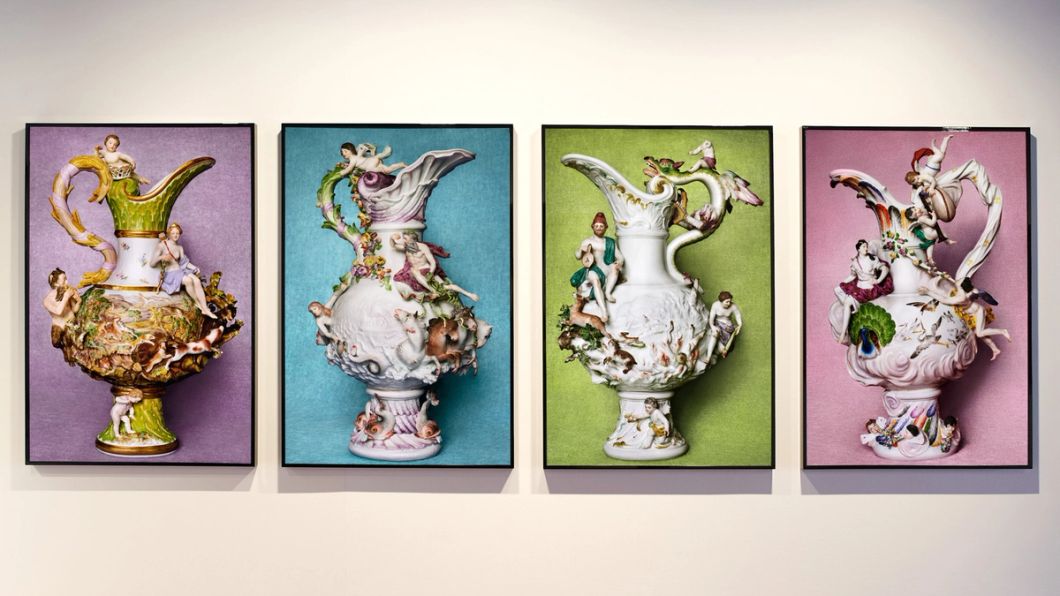
Mario Testino's The Four Elements (2019), installed at Patricia Low Contemporary, Venice, 2026. From left: Earth, Water, Fire and Air.

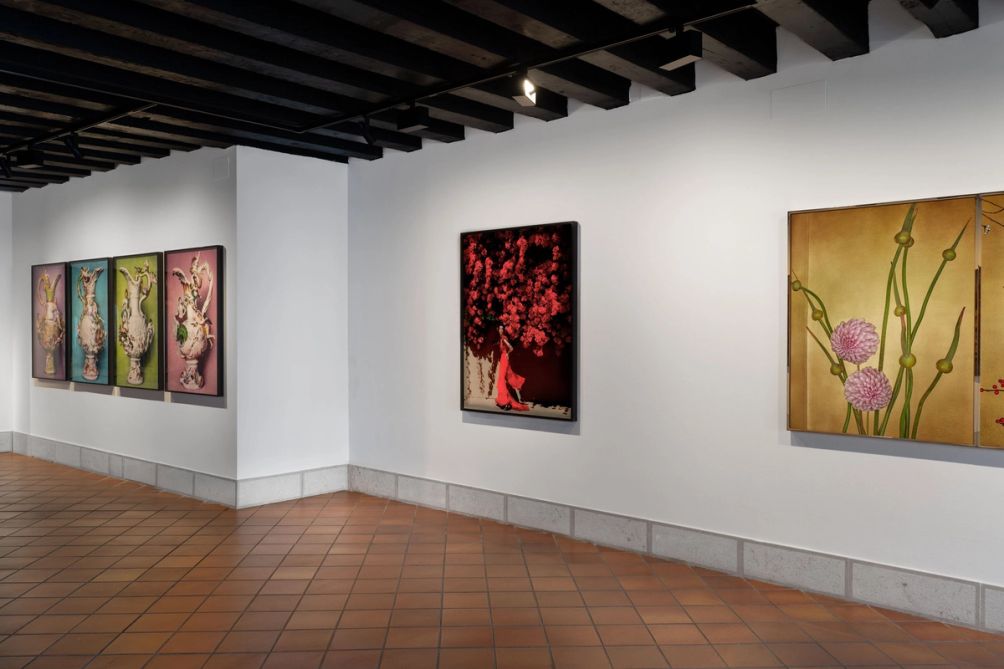
Exhibition view at Patricia Low Contemporary, Venice, 2026, showing Mario Testino's The Four Elements (2019) alongside other photographic works.
“Whilst fashion happens in a very fast speed, what I'm doing today comes from contemplation,” Mario reflected in Venice in September 2026. “It's a lot slower and a lot more contemplative.”
That change in pace has given him the freedom to pursue unexpected subjects, following his curiosity beyond the demands of fashion.
The four vessels were conceived to impress a king, but their diplomatic purpose was never fulfilled. Nearly three centuries later, they found themselves before a photographer whose fascination lay not in their royal ambitions, but in the imagination and artistry of their makers.
The vessels have not changed. Our experience of them has.