VIVA EL PERÚ: MARIO TESTINO'S HOMECOMING AND THE PHOTOGRAPHS THAT CHANGED HIS WORLD

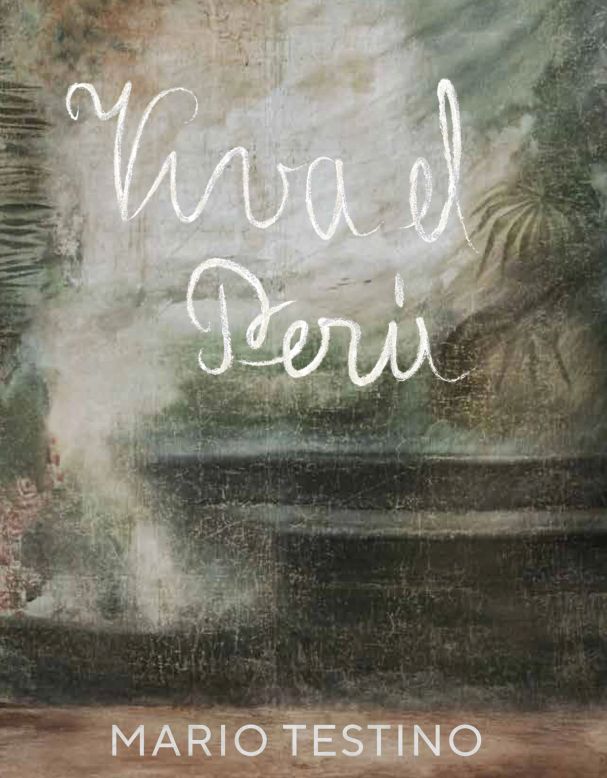
There are places we carry within us long after we have left them. Places that shape the way we see, often before we understand their influence. For Mario Testino, his native Peru has always been one of those places.
Long before his photographs appeared on magazine covers and in exhibitions around the world, his imagination was being formed by the country in which he grew up. Travelling from Lima into the Andes as a teenager, he encountered a world of kaleidoscopic colour, elaborate ceremonial dress and traditions in which clothing expressed far more than personal style. Those early impressions remained with him throughout his international career, shaping a visual language that would eventually bring him back to where it all began.
Viva el Perú, his new photography book published by Steidl, is the culmination of that return. Bringing together captivating portraits of people wearing traditional and festive Peruvian dress, the publication celebrates the extraordinary craftsmanship, cultural richness and living traditions of his homeland. Yet beyond the beauty of its images lies a deeply personal conviction: that the cultural treasures of Peru deserve to be seen, celebrated and recognised with the same admiration afforded to the world's greatest artistic achievements. It is an expression of pride in his country, a tribute to the people who sustain its traditions and a testament to the power of photography to make the world look again.
Behind this homecoming was a wish that had lived for years in the heart of his mother, Teresa. She had long wanted Peru to know the work her son had created beyond its borders. His photographs had travelled the world, yet she believed that his achievements should be recognised in the country that had shaped him. It was a mother's pride, certainly, but also something more profound: a conviction that his work belonged to Peru as much as it belonged to the world. Following a conversation with a Peruvian journalist on a flight from Berlin, he began reconnecting publicly with Peru, eventually bringing an exhibition of his portraits to the Museo de Arte de Lima.
The response surprised him. Visitors queued to see the photographs, and the experience helped strengthen a relationship with his homeland that would grow increasingly important. When Testino later established MATE, his museum in Lima's Barranco district, his mother's wishes remained close to the decision.
“For her, it was very important, and she was very nationalistic, that I am Peruvian, and that my work should have a permanent home in Peru,”
MARIO TESTINO
What began as a desire to bring his international career home would take on a greater purpose. Having spent decades showing the world his own vision, Testino would increasingly turn that vision towards the country that had inspired it, determined to celebrate the artistry and cultural wealth of Peru on an international stage.


Four women in traditional Peruvian dress. From Viva el Perú by Mario Testino, published by Steidl.

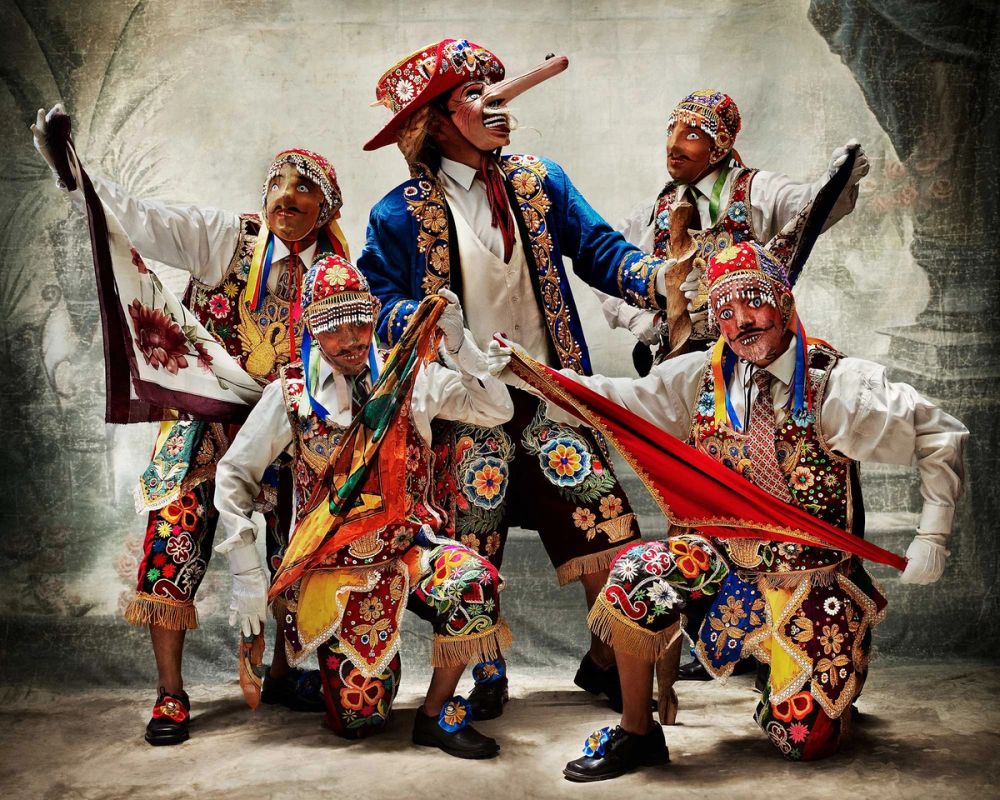
A group from the Mestiza Qoyacha dance, San Jerónimo, San Sebastián and Saylla districts, province of Cusco, Cusco, Peru, 2010. Photograph by Mario Testino.

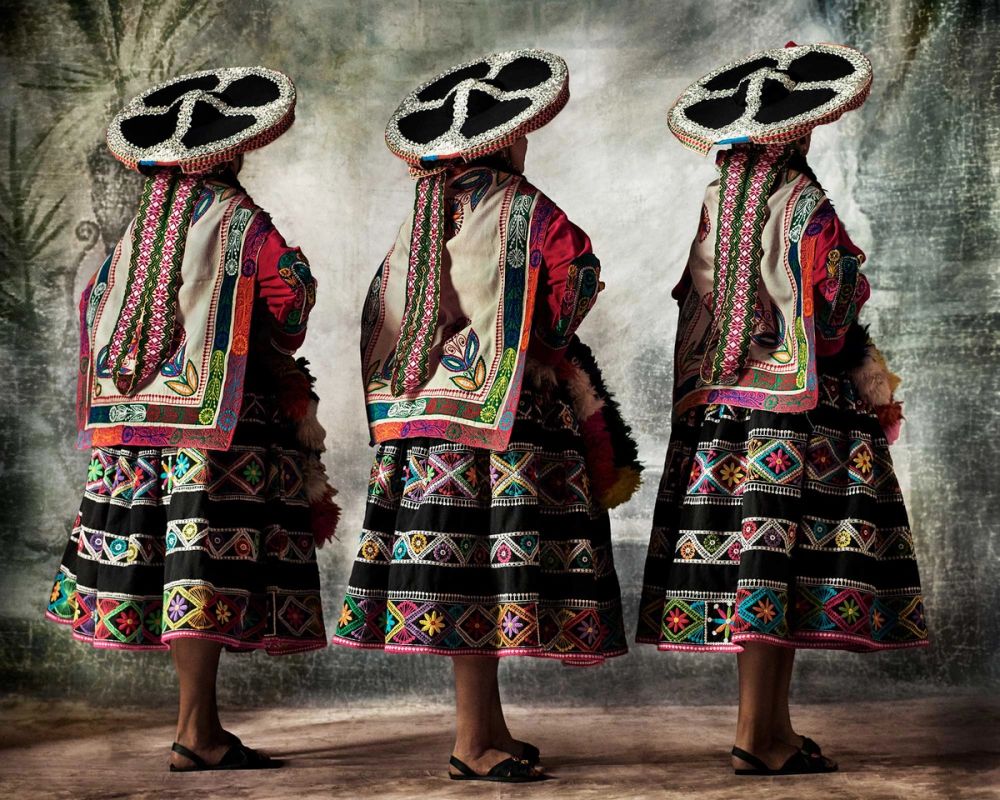
Traditional women's costume, district of Tinta, province of Canchis, Cusco, Peru, 2010. Photograph by Mario Testino.

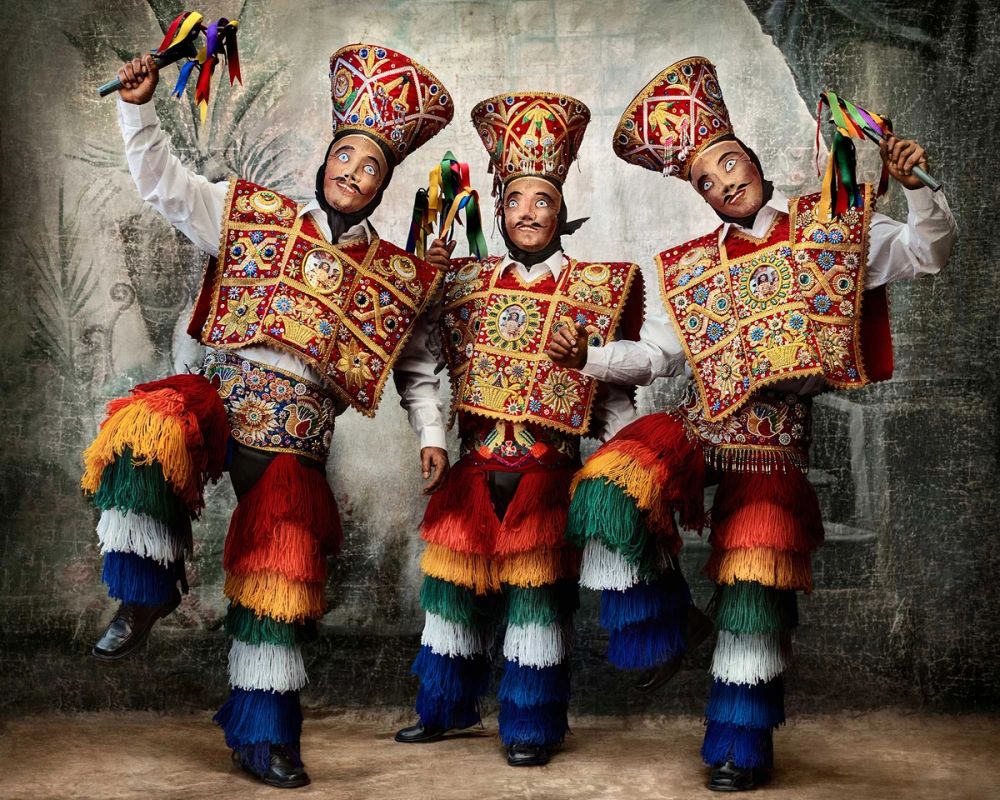
From Viva el Perú. Photograph by Mario Testino.

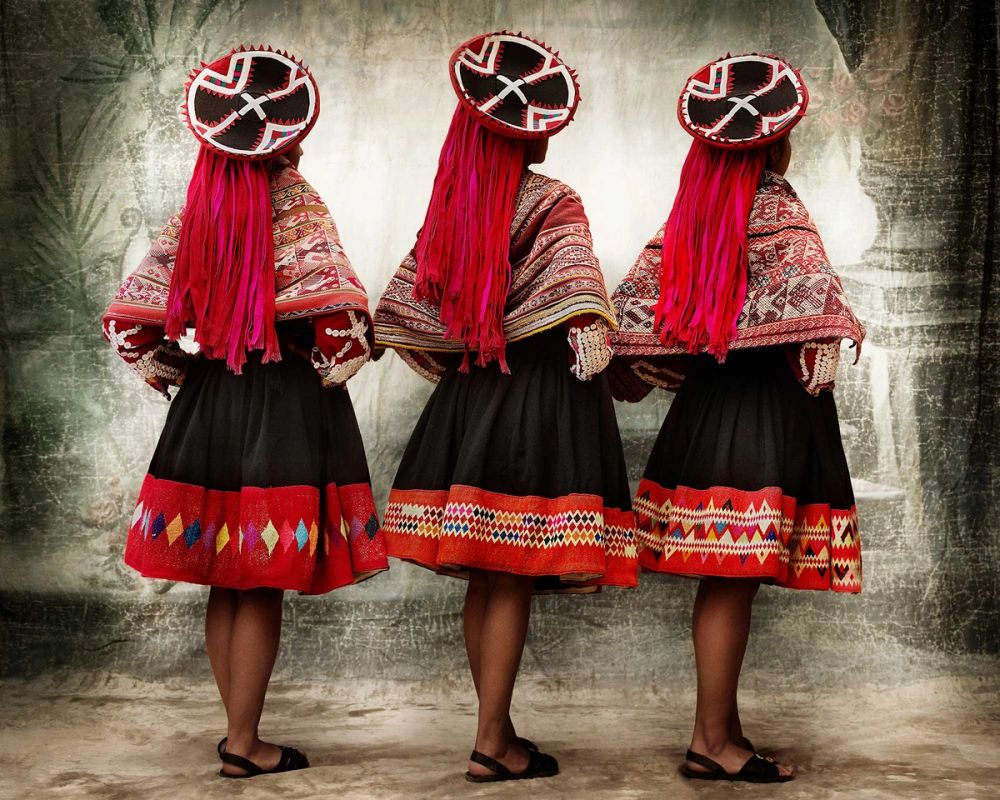
From Viva el Perú. Photograph by Mario Testino.

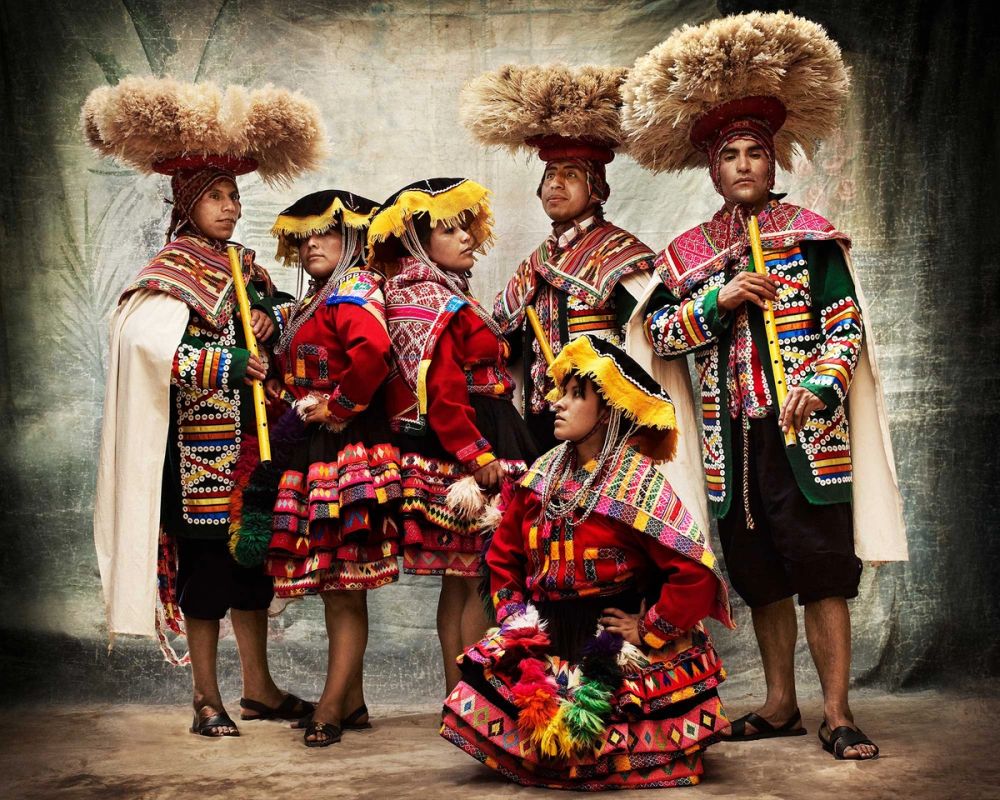
Traditional dress, district of Acopía, province of Acomayo, Cusco, Peru, 2017. Photograph by Mario Testino.
In 2007, while working on a British Vogue fashion shoot in Cusco, Testino asked his team to locate traditional costumes inspired by photographs of Andean festivities by Peruvian photographer Javier Silva Meinel. They found garments alive with colour, intricate embroidery and astonishing craftsmanship. Worn during regional celebrations, each carried the history, imagination and identity of its community.
Accustomed to photographing the finest international fashion, Testino recognised artistry that demanded equal admiration and respect. Here was extraordinary design, born not in Parisian ateliers but through generations of Peruvian knowledge and craftsmanship. Its value needed no comparison. It deserved to be celebrated on its own terms.
He began photographing the garments independently of the fashion assignment. The resulting series, Alta Moda, connected the language of high fashion with the high-altitude Peruvian Andes.
The project also drew on the legacy of Martín Chambi, the pioneering Peruvian photographer whose portraits of Andean life had long fascinated Testino. In Cusco, Chambi's family lent him an original painted studio backdrop, creating a bridge between two Peruvian photographers united by their reverence for their homeland.
What began with a handful of costumes became a decade-long undertaking. Working with anthropologist Soledad Mujica and regional cultural archives, Testino photographed traditional and ceremonial dress across Peru, encountering a diversity that astonished even him. “I was actually amazed that our country had such variety because I never knew it,” he remembers. As the collection grew, so did his sense of purpose.
“There wasn't really a document that I could see that had it all. And I started realizing that maybe one of my missions was to do that document for my country.”
MARIO TESTINO
That ambition lies at the heart of Viva el Perú. Beyond their arresting beauty, the portraits honour the artistry, histories and identities woven into Peru's traditions. Clothing becomes an expression of belonging and cultural memory, its colours, materials and construction carrying generations of Indigenous knowledge, exchange and change.
Through Testino's lens, the garments command attention without losing their connection to the people and communities that give them meaning. Research by Mujica and Fedora Martínez further illuminates their histories and cultural significance.
When Alta Moda was exhibited at MATE, its reception surprised Testino. Rather than favouring his internationally celebrated fashion and celebrity portraits, Peruvian audiences responded with recognition and pride to images of their own traditions.
He recalls a newspaper commentary questioning why someone who had spent so much of his life abroad had returned to remind Peruvians of the beauty already around them.
“We look at what we have, sometimes, without really giving it the attention that it needs,” Testino reflects. Sometimes our greatest treasures are those we have grown too accustomed to seeing. Their beauty is no less extraordinary for having always surrounded us.
The question was no longer simply how to photograph these traditions beautifully, but what it meant to give them sustained attention.

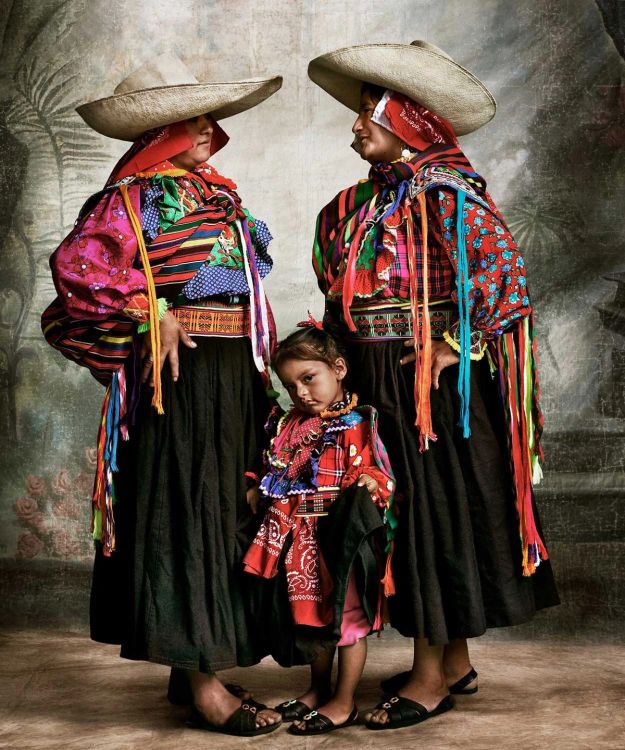
From Viva el Perú. Photograph by Mario Testino.

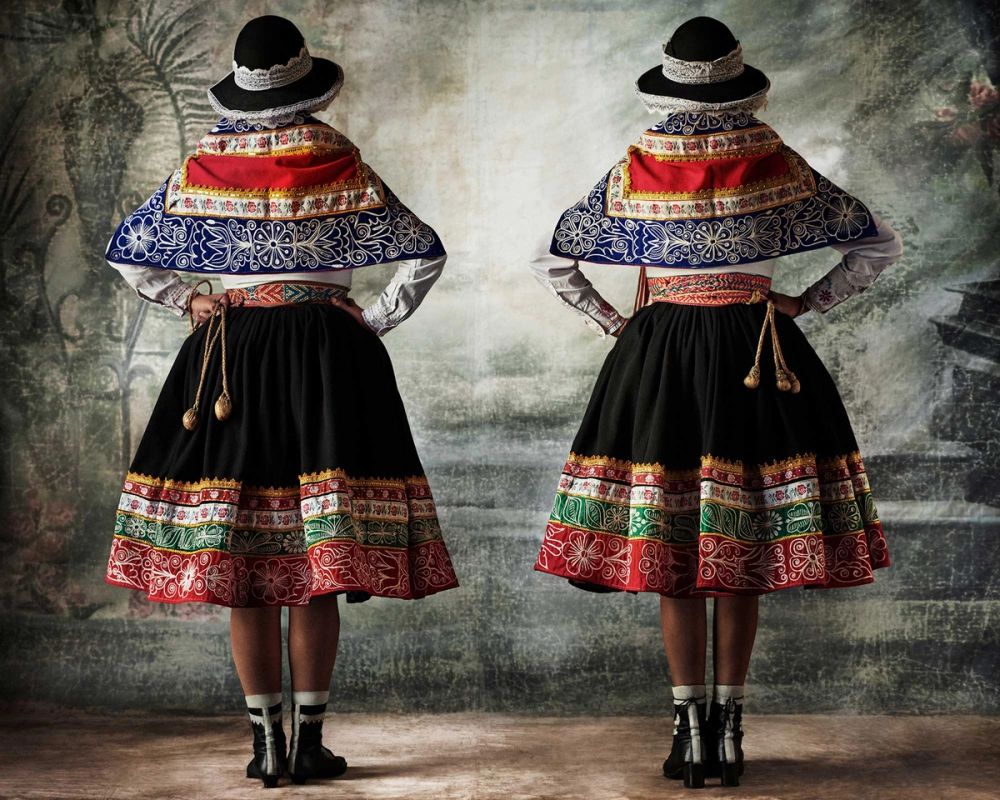
Diablo menor (lesser devil), character of the Diablada dance, district of Juli, province of Chucuito, Puno, Peru, 2018. Photograph by Mario Testino.

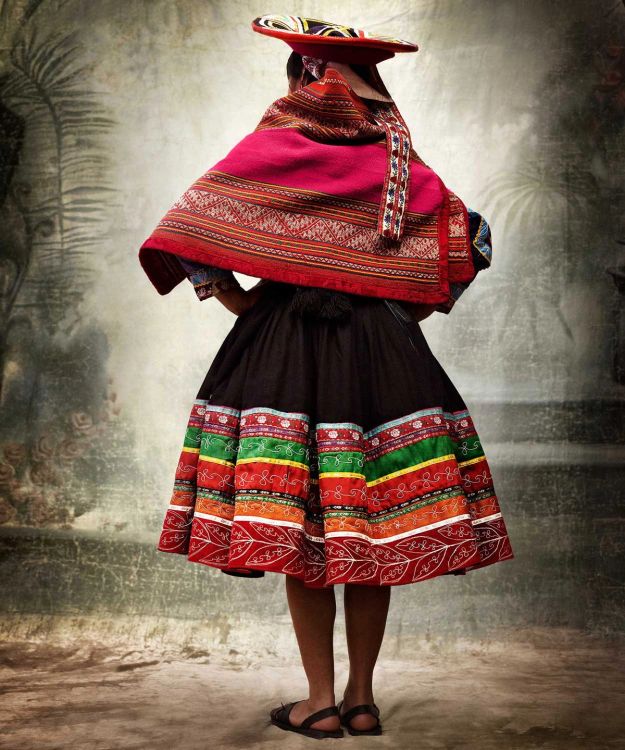
Women's costume for the Saqra de Paucartambo dance, province of Paucartambo, Cusco, Peru, 2017. Photograph by Mario Testino.

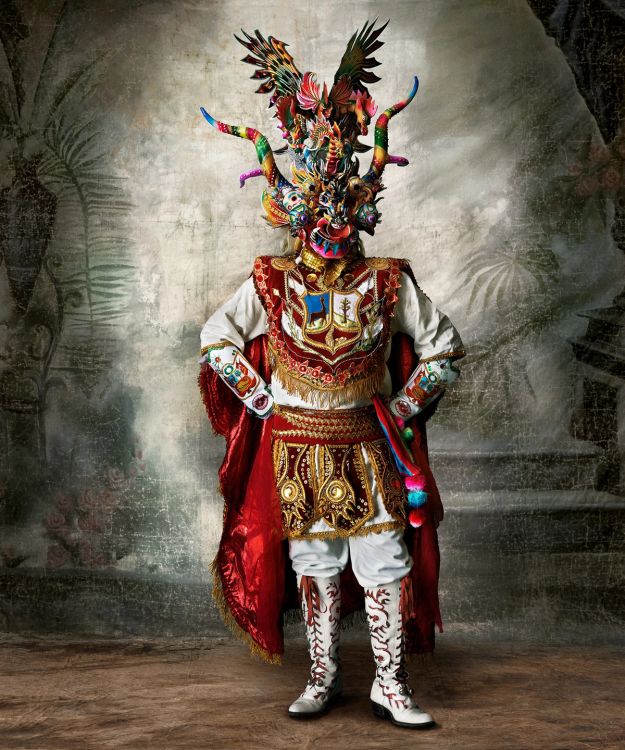
Traditional male attire of the Chopcca community, provinces of Huancavelica and Acobamba, Huancavelica, Peru, 2018. Photograph by Mario Testino.

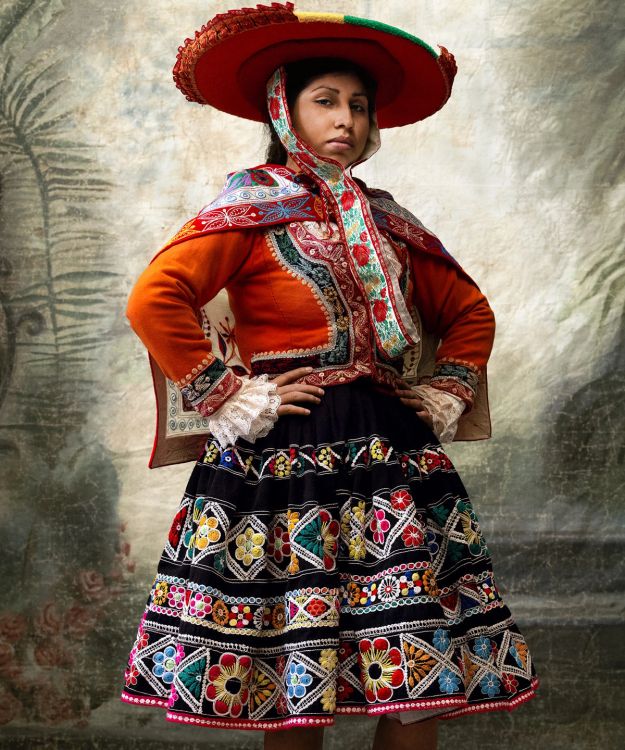
Traditional Peruvian women's dress. From Viva el Perú by Mario Testino, published by Steidl.

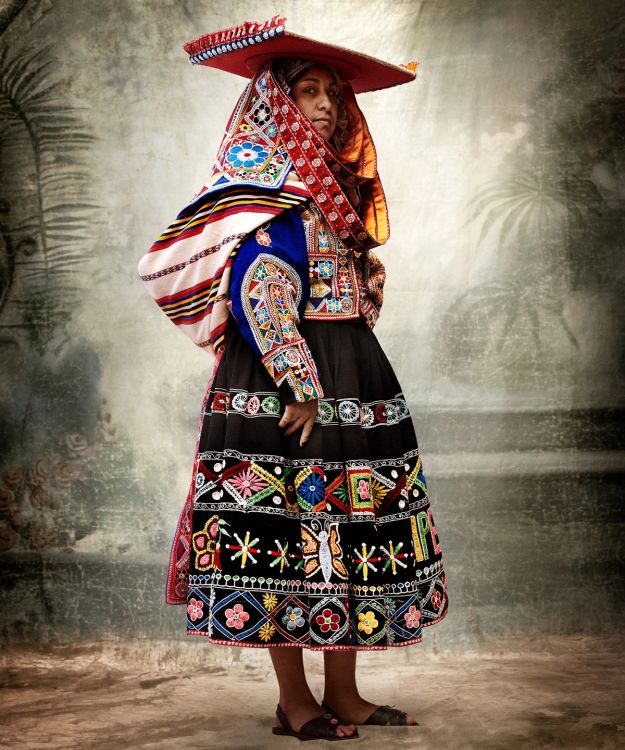
Traditional Peruvian women's dress. From Viva el Perú by Mario Testino, published by Steidl.

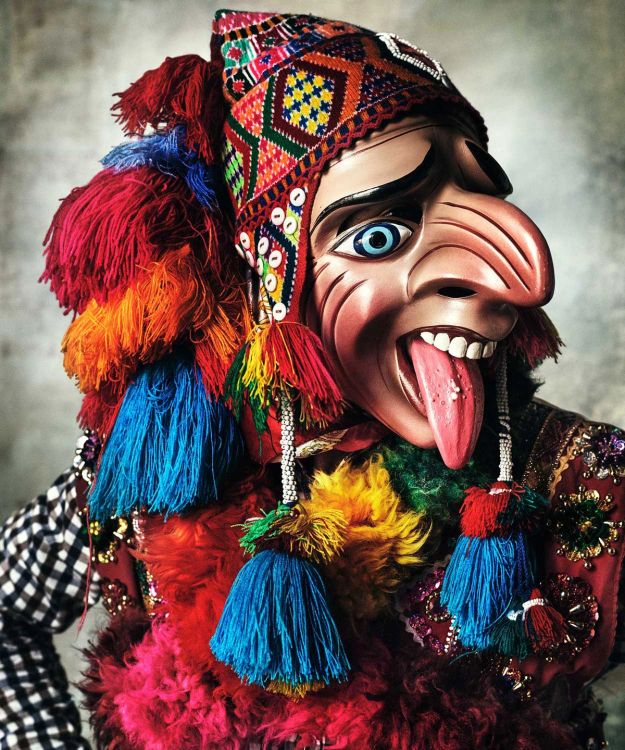
From Viva el Perú. Photograph by Mario Testino.
Years later, a conversation with longtime friend and former editor Meredith Etherington-Smith prompted Testino to reconsider the direction of his work. She encouraged him to focus on Alta Moda, a suggestion that challenged the fashion career he had spent decades building. Yet he began to see how his understanding of clothing, colour and portraiture could serve a different purpose.
“Maybe it had more, it meant more to do something like documenting the traditions that were slowly disappearing in the world that we are today,” he explains. “I thought that it made sense to start doing what I had done in Peru around the world.”
That decision gave rise to A Beautiful World, his ongoing photographic exploration of cultural traditions and identity across the globe. What began in the Peruvian Andes became a journey into the ways people express belonging, memory and pride through dress and ceremony.
Reflecting on the opportunities his career had afforded him, Testino offers a thought that captures the deeper purpose behind this work:
“If life takes you to a certain level, there must be something you can do at that level that you couldn't do before, and you mustn't miss that opportunity.”
Viva el Perú brings that journey back to its origins. Through the visual language he developed in fashion, Testino celebrates the cultural inheritance of his homeland, honouring the people and traditions whose beauty had shaped his imagination long before the world knew his name.

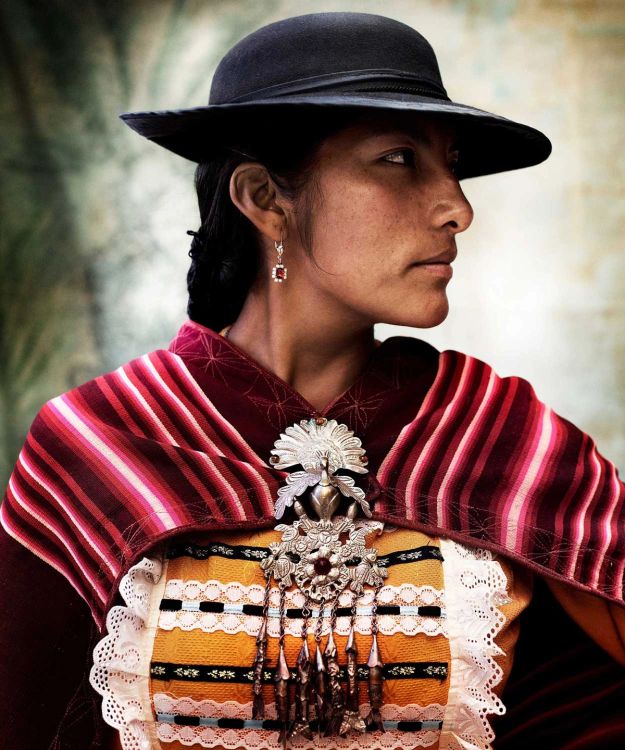
Traditional women's dress, district of Combapata, province of Canchis, Cusco, Peru, 2007. Photograph by Mario Testino.
The title itself carries a connection to Martín Chambi, inspired by words appearing in one of the earlier photographer's images. Viva el Perú is an expression of pride, but also of vitality. The traditions celebrated in these photographs are not simply remnants of another time. They continue through the people who make the garments, wear them, perform the dances and pass their knowledge to new generations.
For Testino, returning to Peru has ultimately revealed something about the journey he has taken far beyond it. The colours that first captivated him as a young person, the beauty he discovered in traditional clothing and the fascination with how people express themselves have remained central to his photography. What changed was the understanding of where those interests might lead.
Viva el Perú is a declaration of love for the country that shaped Testino's imagination, and a tribute to the people whose creativity and traditions continue to give it life. It celebrates a cultural inheritance of extraordinary beauty, seen through the eyes of a photographer determined to give it the recognition it deserves.
For Mario Testino, coming home was never simply about returning to where his story began. It was about showing the world why that beginning mattered.
Kawsachun Piruw! Viva el Perú!
Viva el Perú by Mario Testino is published by Steidl. DISCOVER THE BOOK