DARIA WERBOWY IN BLOOM: WHEN AN INDIE PRINCE MET A FASHION QUEEN

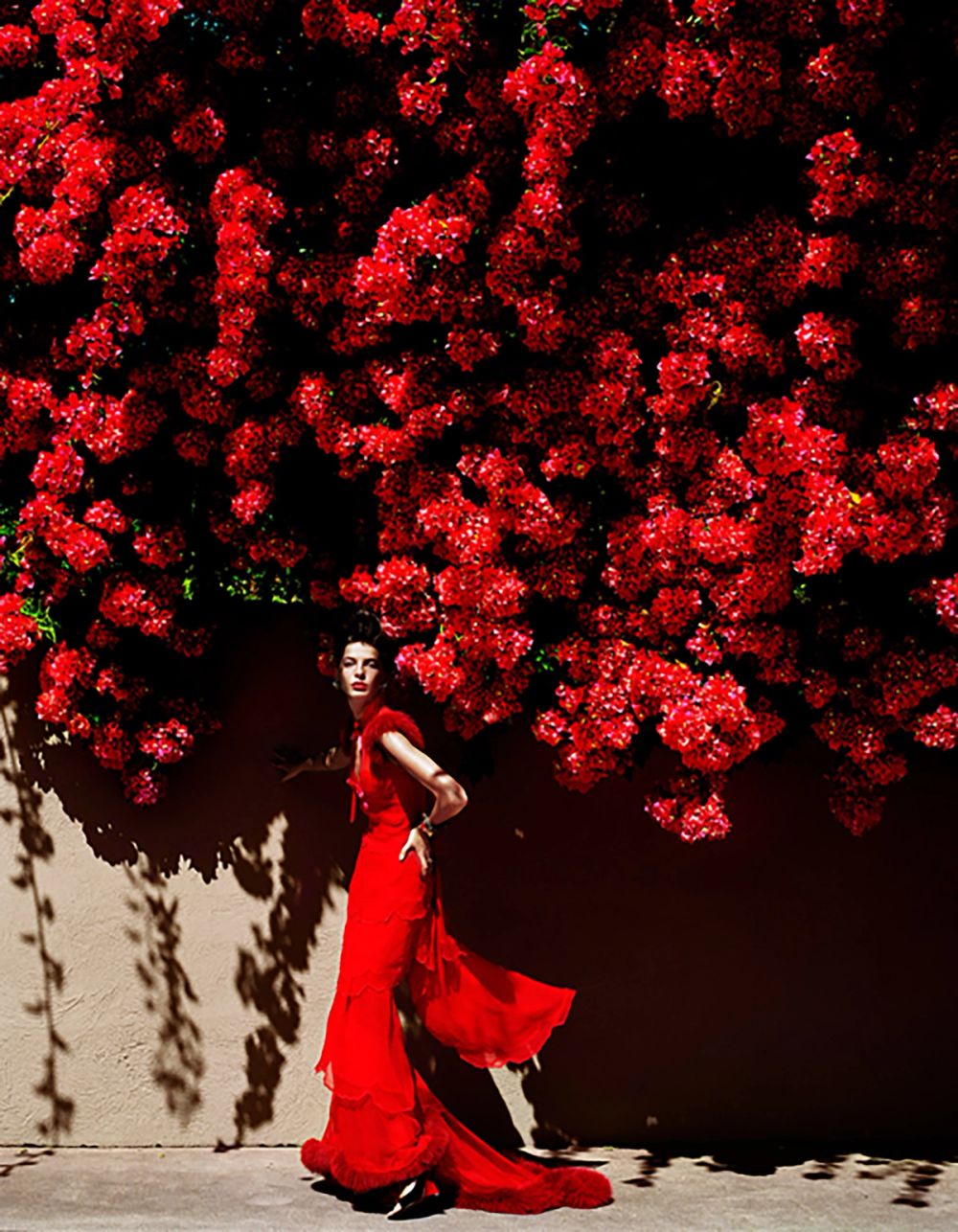
There are images that circulate so widely they begin to detach from their origin. They become shorthand: a color, a mood, a feeling remembered more than understood. Mario Testino’s photograph of Daria Werbowy in a scarlet Yves Saint Laurent Rive Gauche dress, standing beneath an explosion of bougainvillea in Los Angeles, is one of those rare artifacts.
This photo is often encountered alone, cropped, reposted, and isolated as a perfect distillation of summer, extravagance and a certain kind of fabulousness. It exists now as a kind of autonomous cultural entity, a model in red held against a wall of bloom so excessive it feels almost unreal. Across the digital corridors of The Daria Files, the long-running archive that tracks her career with forensic devotion, the image remains a hallowed entry. It is the image that fans return to as the ultimate proof of her "chameleon" power. But the photograph did not begin as a solo act. It was the daylight opening to a larger, cinematic choreography that captured a turning point in how we see fame.
In July 2004, American Vogue published It Happened One Night, a title that was a deliberate wink to the 1934 Clark Gable and Claudette Colbert classic. That film was the original blueprint for the romantic comedy, a story of two people from different worlds thrown together by chance. In Mario’s lens, that narrative was updated for a new millennium. The story, written by Sally Singer, placed Daria Werbowy and Jake Gyllenhaal together at a very particular threshold. Jake was twenty-three, the crown prince of indie cinema still vibrating with the aura of Donnie Darko, but stepping visibly into the blockbuster light. Daria, meanwhile, was becoming the defining face of her generation through a restraint that felt entirely her own. They were the Gable and Colbert of the indie-sleek era, and the magazine was their open stage.
“Daria was so special,” Mario recalls. “I loved her and worked with her a lot. Her proportions, her energy.”
That energy is what anchors the power of the story. The editorial moved through the hazy, sun-drenched topography of LA, an atmosphere built on the friction of real life and the high-stakes glamour of a Hollywood arrival. While the story culminated in the evening, it began in the brilliant, unforgiving California sun. While Jake carried the kinetic, slightly nervous energy of someone aware of being looked at—caught in a sequence of movement, sensuality, and that specific, unpolished indie-boy charm—Daria held something more resolved. She did not push against the image; she occupied it.

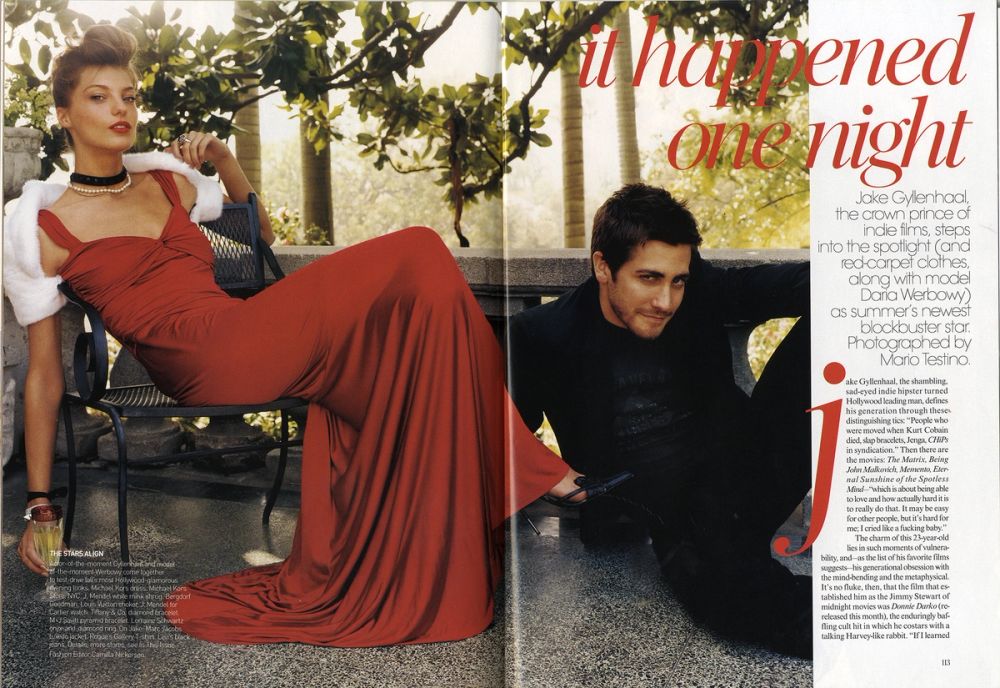
American Vogue, July 2004, p.112-113. Daria Werbowy and Jake Gyllenhaal photographed by Mario Testino.

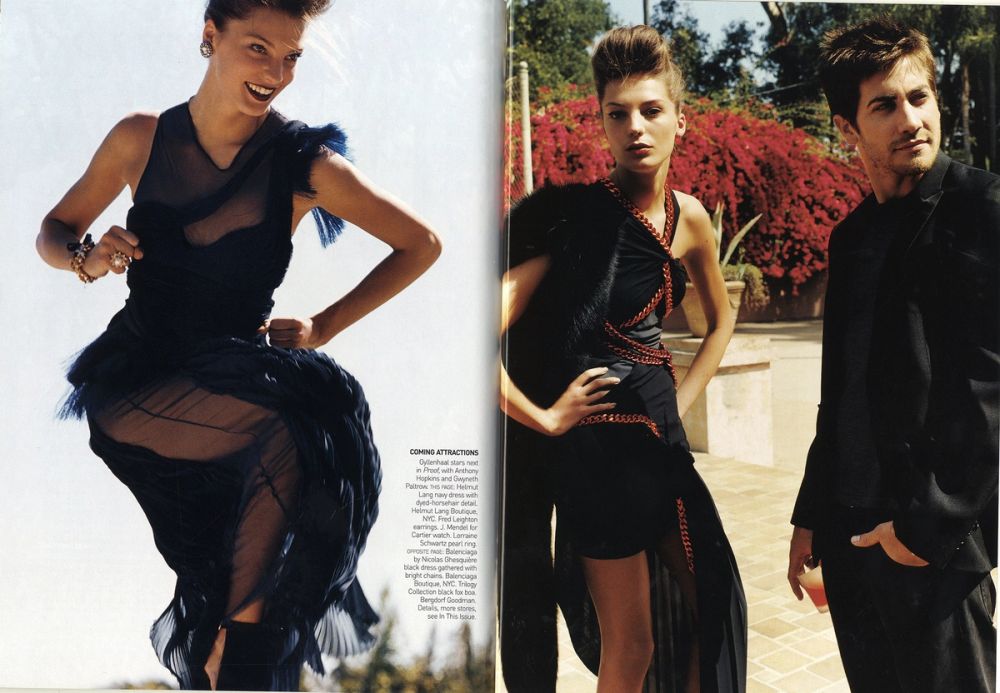
American Vogue, July 2004, p.114-115. Daria Werbowy and Jake Gyllenhaal photographed by Mario Testino.

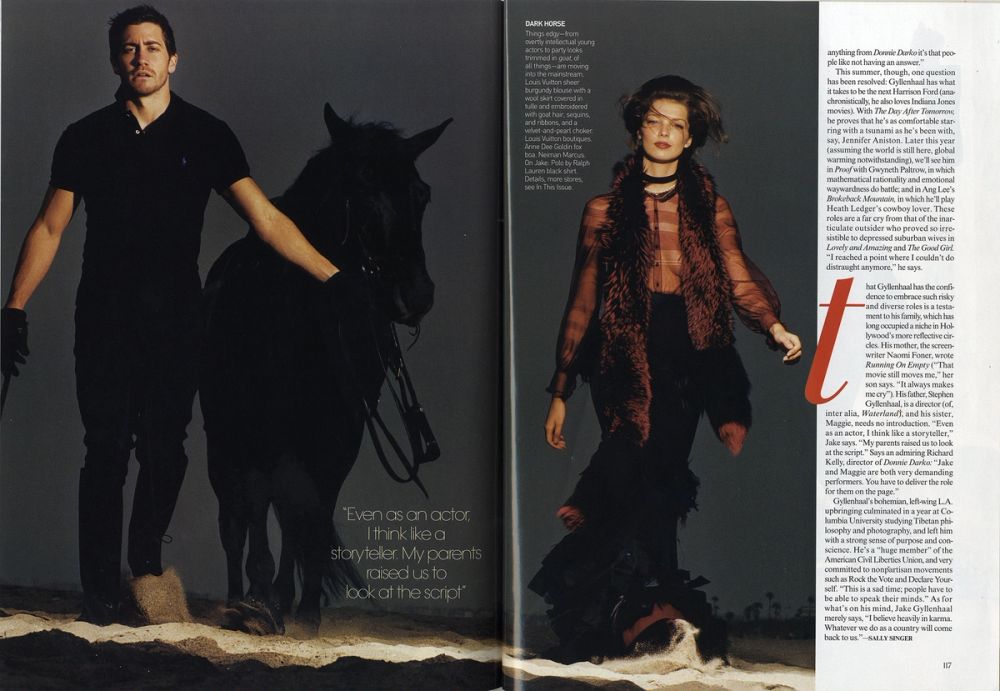
American Vogue, July 2004, p.114-115. Daria Werbowy and Jake Gyllenhaal photographed by Mario Testino.

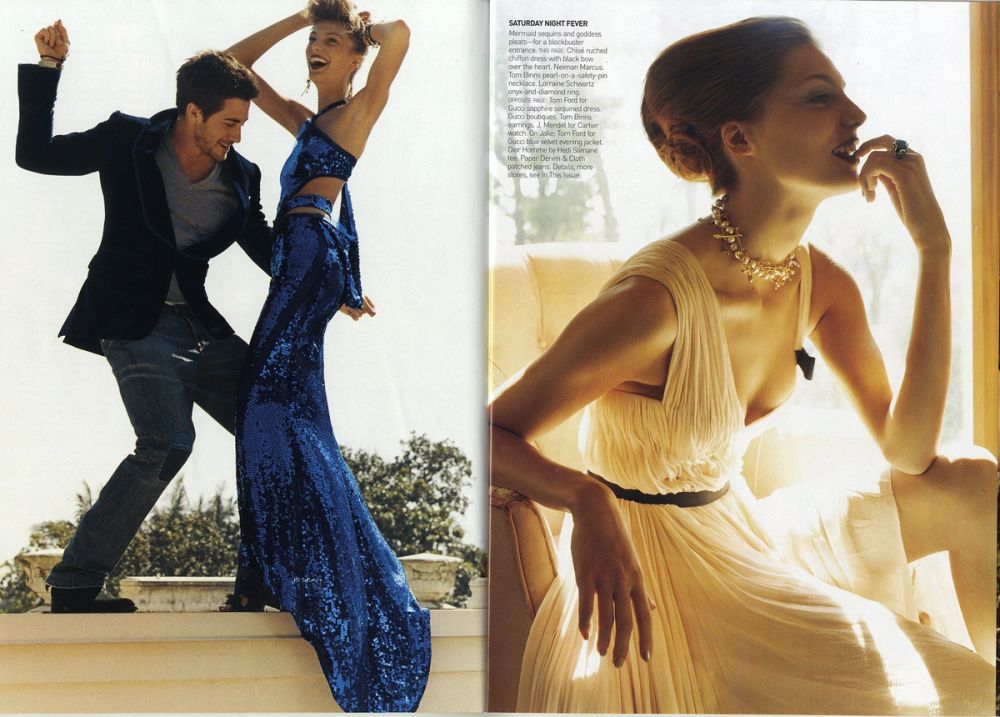
American Vogue, July 2004, p.118-119. Daria Werbowy and Jake Gyllenhaal photographed by Mario Testino.

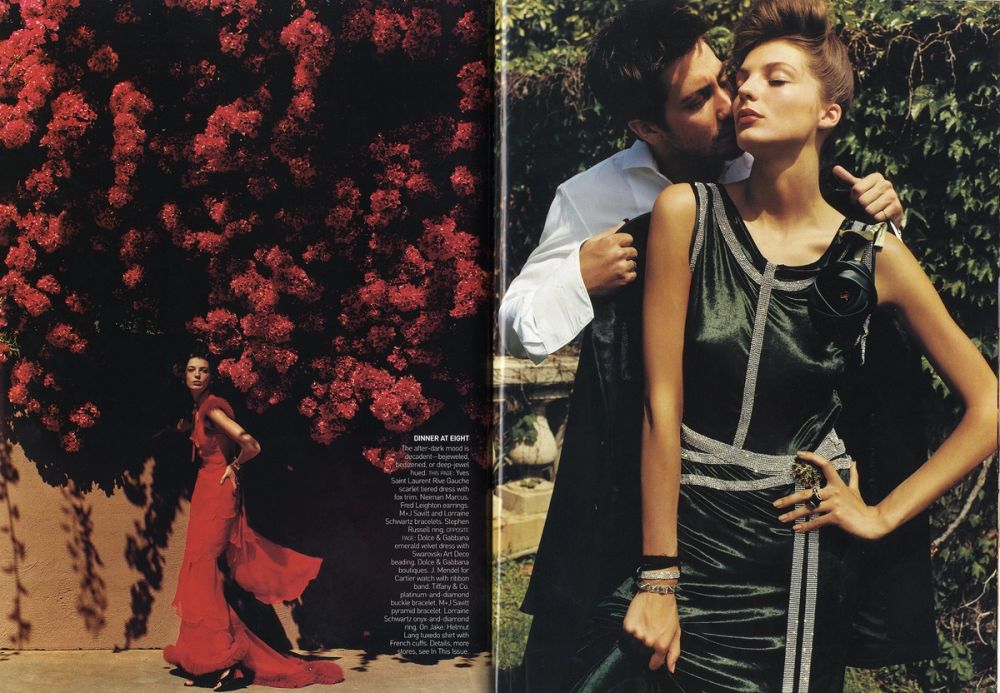
American Vogue, July 2004, p.120-121. Daria Werbowy and Jake Gyllenhaal photographed by Mario Testino.

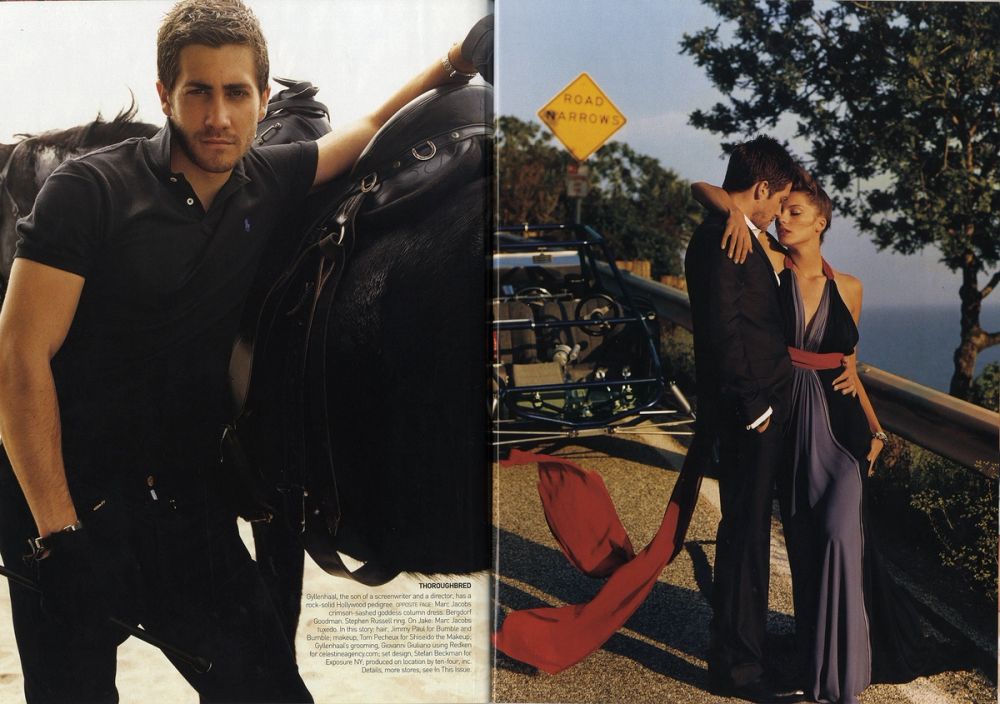
American Vogue, July 2004, p.120-121. Daria Werbowy and Jake Gyllenhaal photographed by Mario Testino.
Jake Gyllenhaal, showing up in red-carpet best alongside Daria, represented a new kind of Hollywood leading man: intellectual, a bit unsettled, yet undeniably magnetic. In the full editorial, you see them navigating the city together, a pair of star-crossed icons in transit. Yet, even within their shared scenes, it is the single frame of Daria on page 120 that began to separate itself. Positioned quietly within the rhythm of the story, the photograph of Daria in red was never intended as a climax. It was the daylight prologue, a moment of stillness before the evening’s social choreography took over. And yet, over two decades, it is the image that held the attention long after the story was told.
The reasons for this endurance are as technical as they are instinctive. The Yves Saint Laurent dress, styled by Camilla Nickerson with makeup by Tom Pecheux and hair by Jimmy Paul, carries movement without excess. It falls cleanly, allowing the body beneath it to remain legible and sovereign. Its color meets the bougainvillea not as a contrast, but as a continuation. Fabric and flower merge into a field of saturated red that feels less styled than discovered. Mario allows the environment to expand until the bougainvillea overtakes the frame entirely, spilling beyond proportion. What should have been background becomes a force of nature. Daria stands within it, her posture unexaggerated, one hand at the hip, the other caught mid-gesture. She isn't presenting herself; she is simply present.

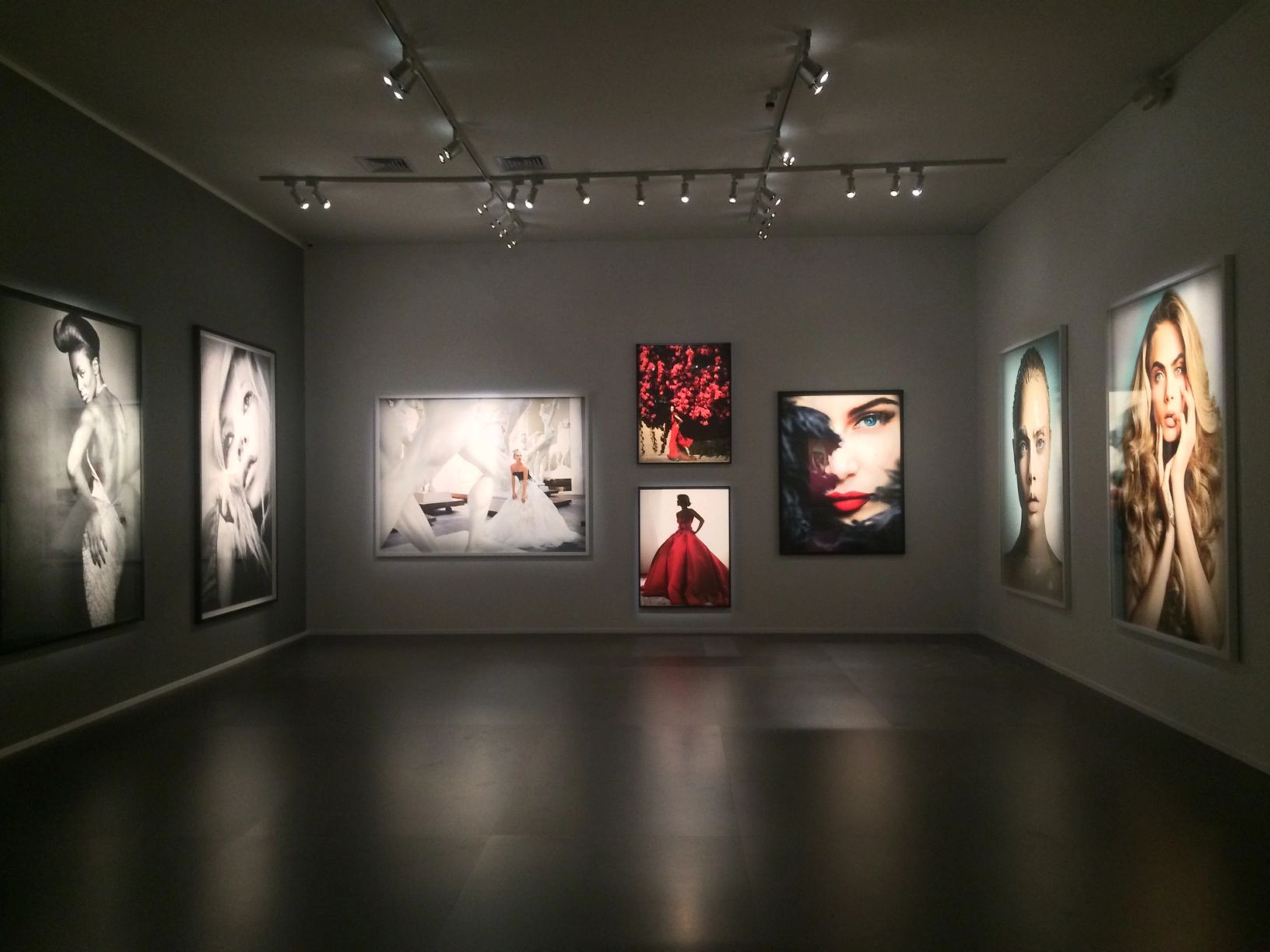
Installation view of Mario Testino’s portrait 'Daria Werbowy, Los Angeles, American Vogue, 2004' at the exhibition, HEAT, de Pury de Pury, Dubai Design District, 2016.
It is a small distinction that changes everything. It is a moment where nothing needs to be coerced into place, where fashion stops trying to dominate the frame and instead exists comfortably within the wildness of the blossoming world. This sense of alignment is perhaps why the image has traveled so far beyond the newsstand, finding a second life on the walls of the world's great museums. It was a centerpiece of the In Your Face exhibition at the Museum of Fine Arts, Boston, before traveling to the MALBA in Buenos Aires, the Museo de Arte de São Paulo, and the Kulturforum in Berlin. It has been held in the permanent gaze of the Museo Thyssen-Bornemisza in Madrid and the Erarta in Saint Petersburg, moving from the page into a broader cultural memory.
That journey is recorded in the books that have come to define Mario's archive. You find Daria in the 2012 Taschen monograph In Your Face, the 2006 Stern Fotografie portfolio, and the Todo o Nada catalog. It has appeared in special editions of Vogue Brasil and Baszari Magazine for Art Basel, and served as a focal point in the 2016 HEAT volume, where voices like Simon de Pury and Gregor Muir reflected on its heat. In each of these places, the image isn't treated as a commercial product but as an essential chapter in the evolution of the gaze. It proves that a great photograph isn't just about what is being sold, but about what is being witnessed.
It Happened One Night belongs to a system where fashion imagery still carried narrative weight, where actors and models shared space without hierarchy. Mario held both positions simultaneously, allowing proximity without forcing equivalence. More than twenty years later, the image of Daria in that red blossoming light continues to return. Not as nostalgia, but as something still unresolved: a photograph that began as part of a story and became an icon of human continuity.

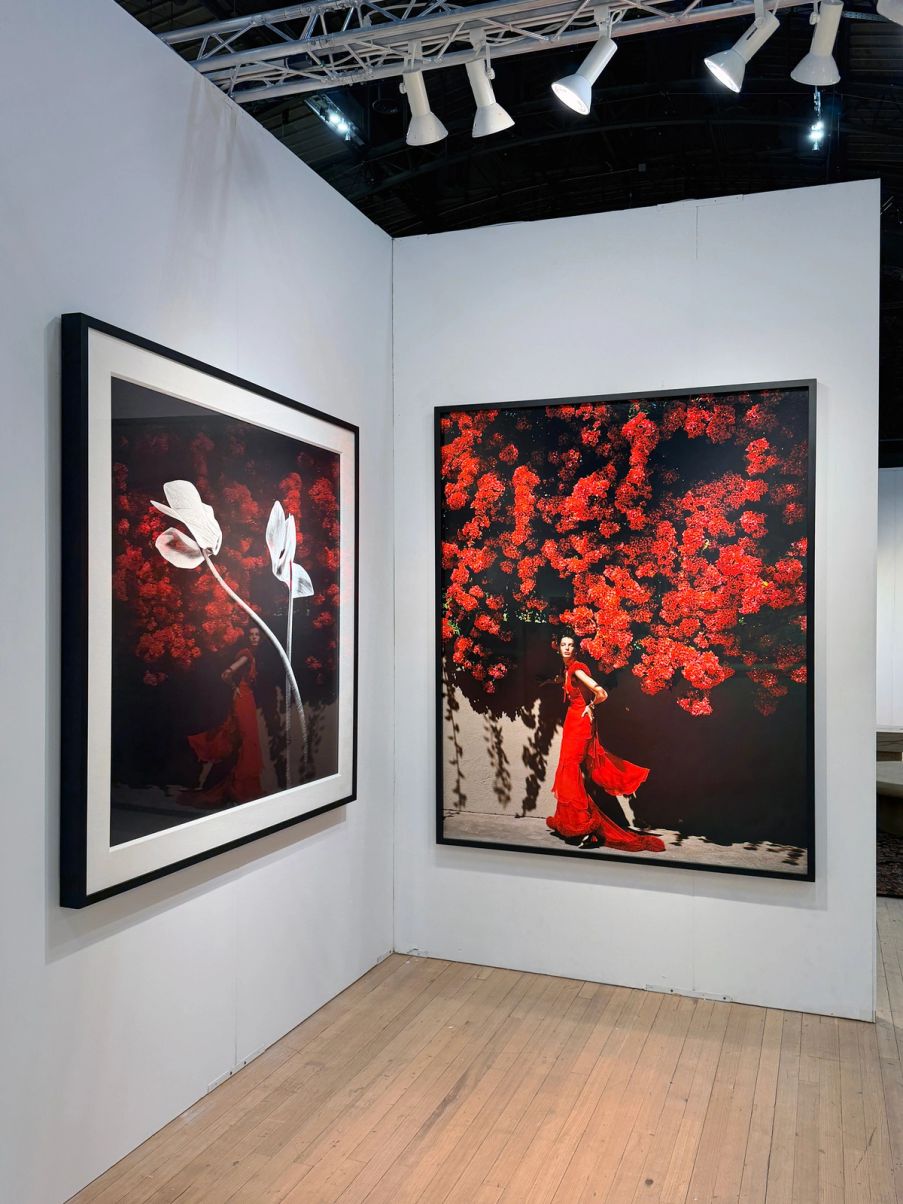
Daria Werbowy, Los Angeles, American Vogue, 2004. Digitally Produced C-Type Print. Edition of 2. Signed by the artist on print verso. Currently showcased by Holden Luntz Gallery at the AIPAD Photography Show, 2026.
This spring, the image finds a new scale at the Holden Luntz Gallery and the AIPAD Photography Show. Seen as a digitally produced C-Type print, standing over seventy inches tall in an edition of only two, the true magnitude of the vision becomes clear. At this size, the dress is no longer simply color; it becomes a line. The bougainvillea is no longer a flower; it is an environment. Signed by Mario on the verso, the work stands as a cornerstone of the collection, proving that after twenty years, it is not a reference to the past, but a visual still in bloom. Some things simply never stop blooming.
Credits: Stylist: Camilla Nickerson. Makeup: Tom Pecheux. Hair: Jimmy Paul