Mario Testino at Patricia Low Contemporary, Venice
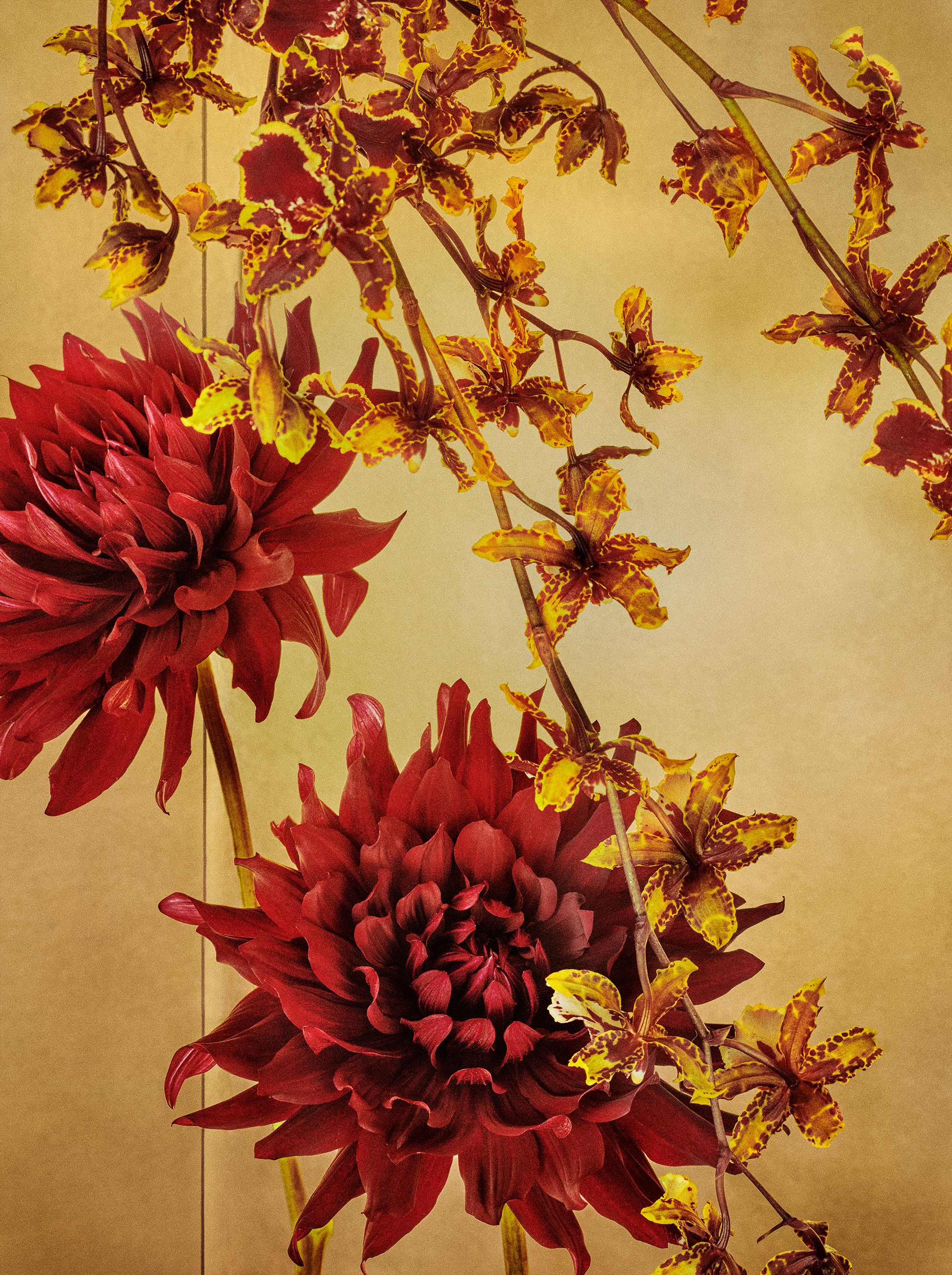
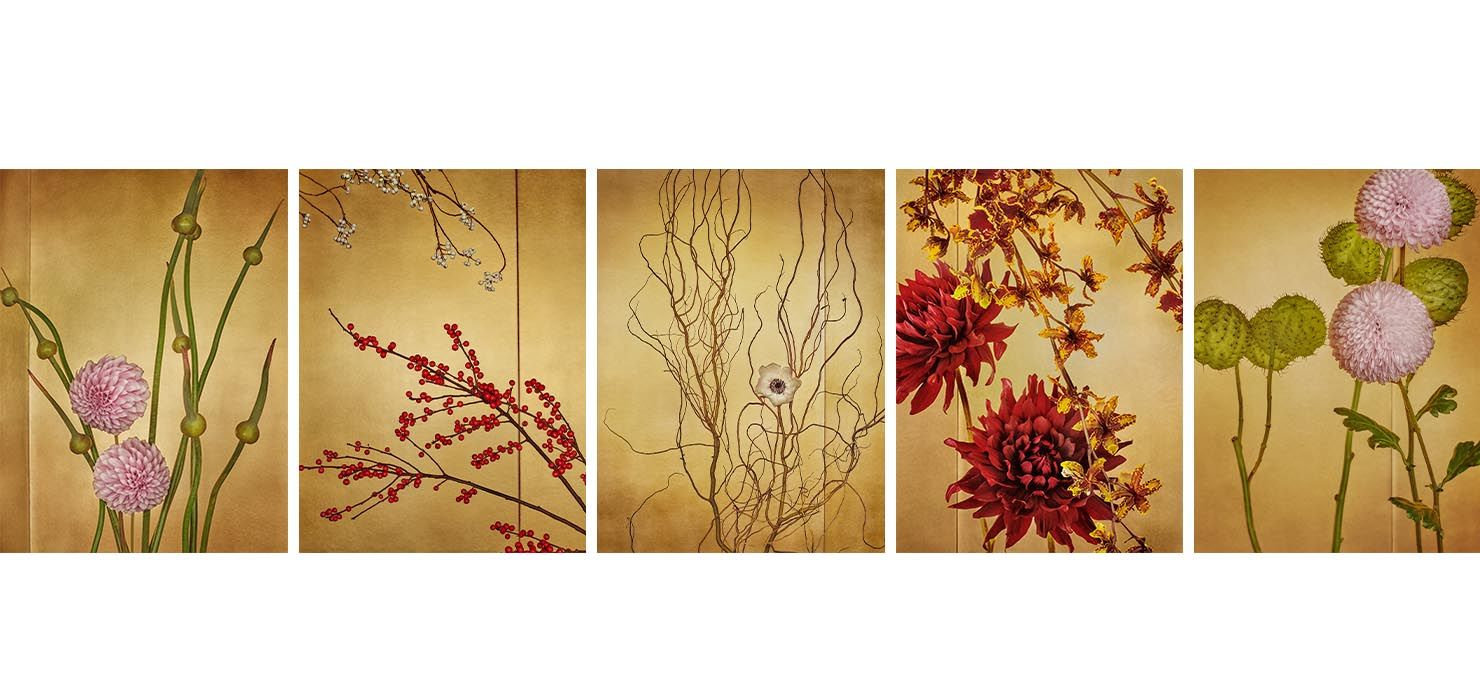
Mario Testino, Tokyo (II)

MARIO TESTINO AT PATRICIA LOW CONTEMPORARY, VENICE

Patricia Low Contemporary, Venice presents a selection of Mario Testino’s work from the past two decades, interweaving his iconic fashion portraits with recent still life and nature studies from his A Beautiful World series.

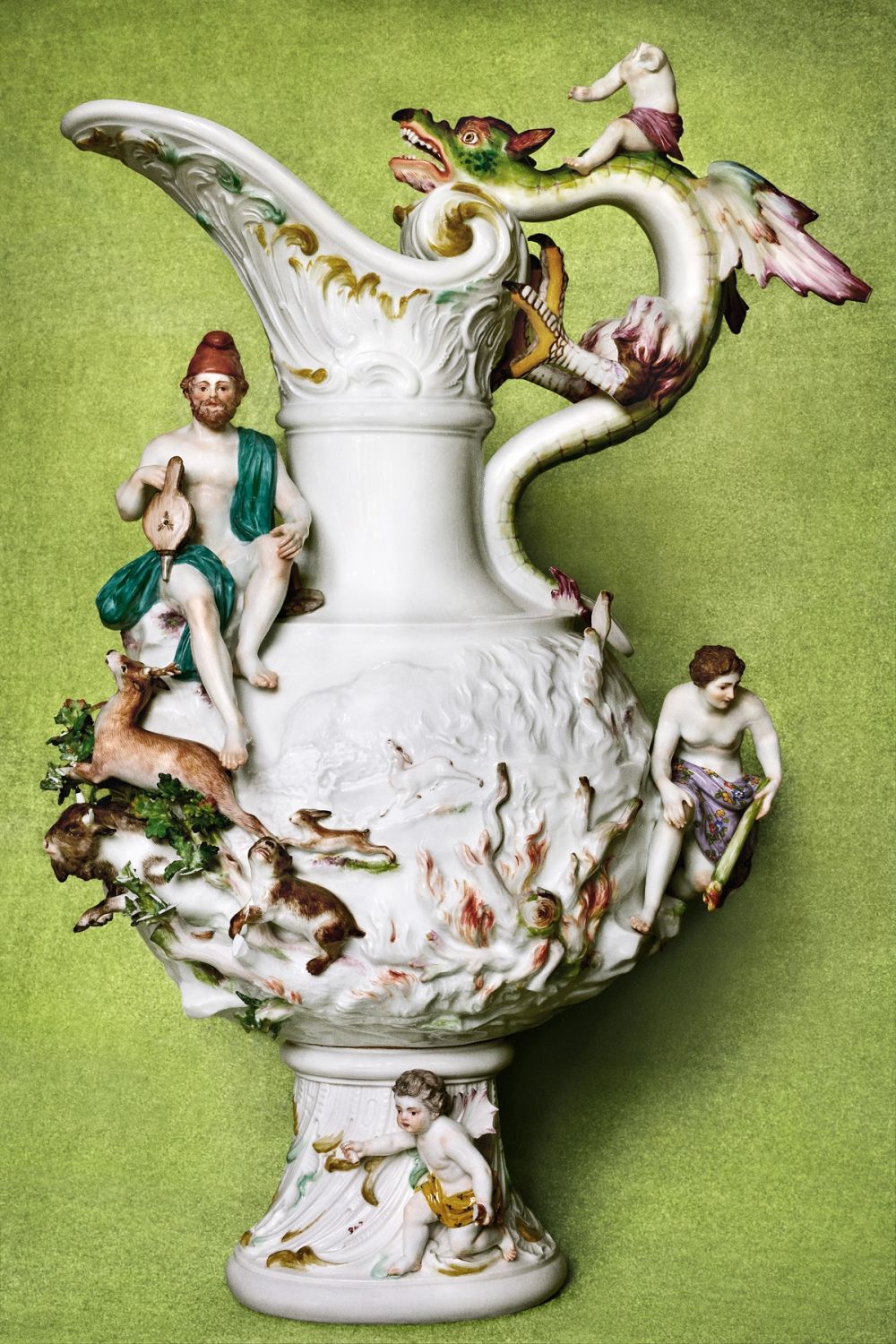
The exhibition reveals the breadth of Testino's artistic practice through photographs made across different countries, subjects and moments in his career. Celebrated editorial works including Stella Tennant, New York, American Vogue (2006), Daria Werbowy, Los Angeles, American Vogue (2004) and Vittoria Ceretti, Jaipur, Vogue Paris (2017) are presented alongside the five-part floral works London (2019) and Tokyo (II) (2018–2019), Horses (II), Urtasaray, Uzbekistan (2023), and four still lifes centred on historic Meissen porcelain.

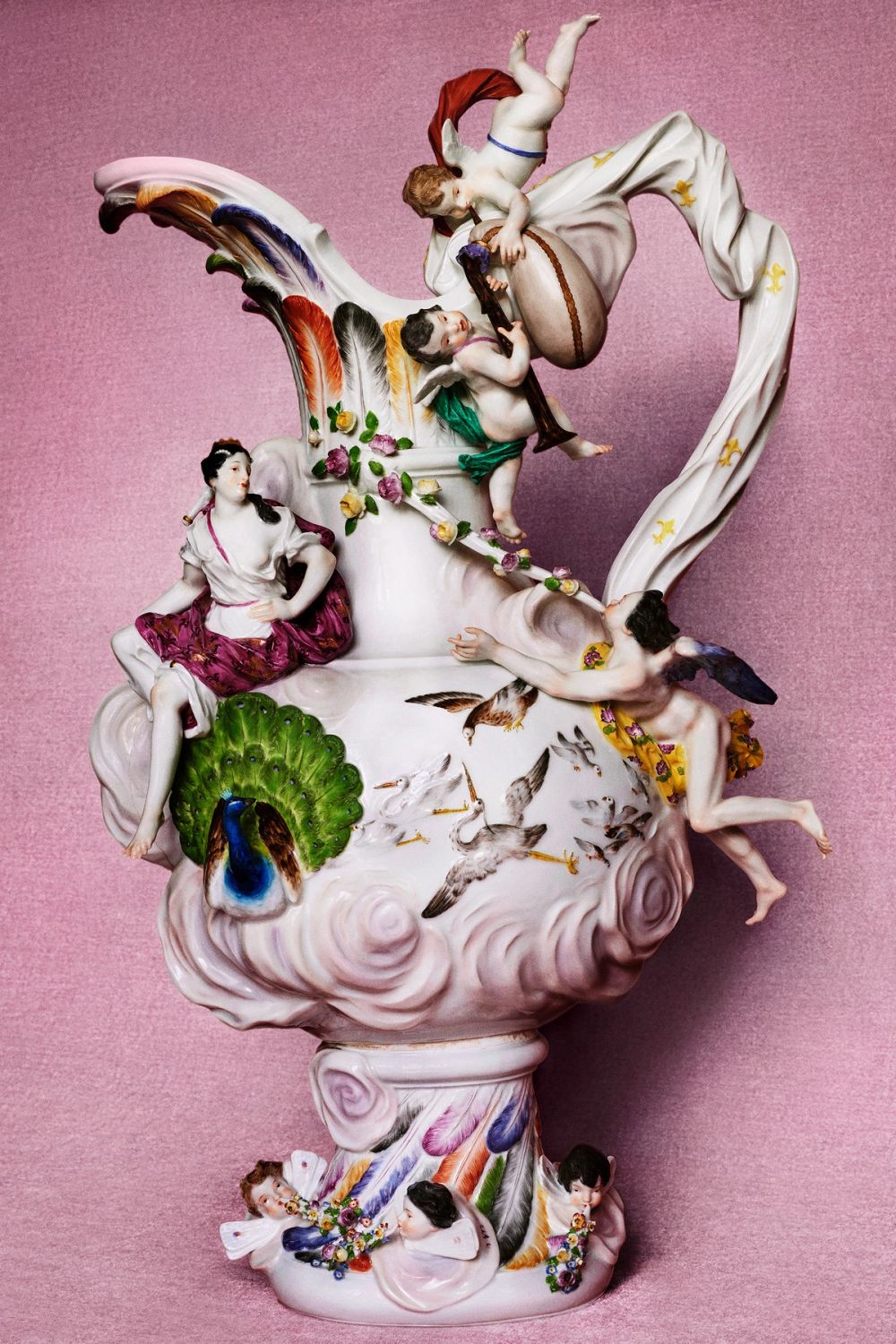
Historic Meissen porcelain representing air, with sculpted figures, birds and a peacock, photographed by Mario Testino against a pink background. The highly ornate white Meissen porcelain ewer features numerous colorful cherubs, figures, birds, flowers, and feathers, set against a pink background.

Mario Testino, Die Luft, Meissen, 2019

Historic Meissen porcelain representing air, with sculpted figures, birds and a peacock, photographed by Mario Testino against a pink background. The ornate white Meissen porcelain ewer with a dragon handle, sculpted human figures, animals, and flames, on a green background.

Mario Testino, Die Luft, Meissen, 2019
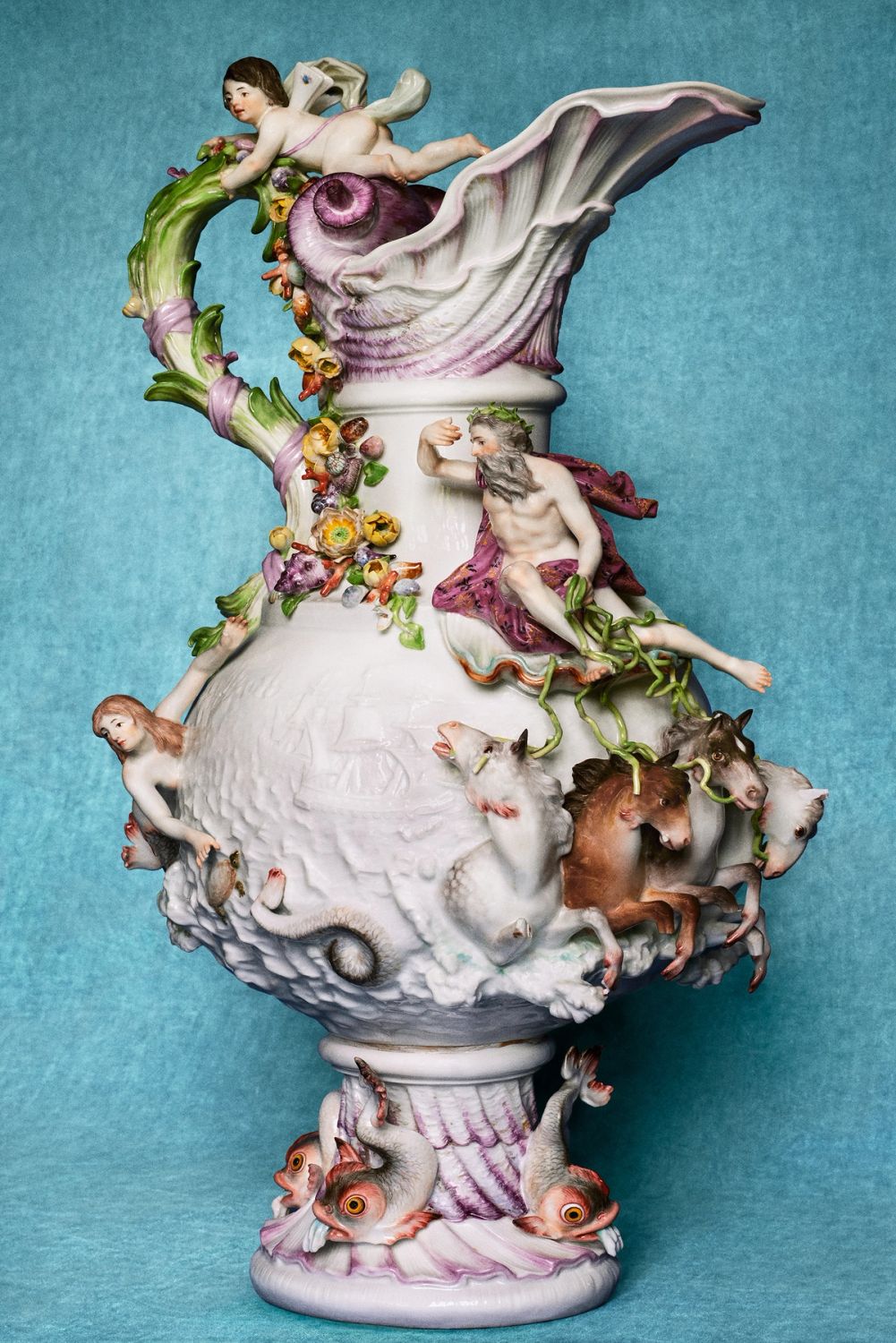
Historic Meissen porcelain representing water, with sculpted figures, sea creatures and an elaborate shell form, photographed by Mario Testino against a turquoise background. The ornate Meissen porcelain ewer is adorned with colorful figures of a cherub, Neptune, horses, and sea creatures

Mario Testino, Das Wasser, Meissen, 2019

Historic Meissen porcelain representing earth, with sculpted figures and a detailed hunting scene, photographed by Mario Testino against a lilac background. The highly ornate Meissen porcelain ewer features mythological figures like a cherub, a satyr, and Diana, alongside a dynamic hunting scene with dogs and deer.

Mario Testino, Die Erde, Meissen, 2019

Historic Meissen porcelain representing air, with sculpted figures, birds and a peacock, photographed by Mario Testino against a pink background. The highly ornate white Meissen porcelain ewer features numerous colorful cherubs, figures, birds, flowers, and feathers, set against a pink background.

Mario Testino, Die Luft, Meissen, 2019

Historic Meissen porcelain representing air, with sculpted figures, birds and a peacock, photographed by Mario Testino against a pink background. The ornate white Meissen porcelain ewer with a dragon handle, sculpted human figures, animals, and flames, on a green background.

Mario Testino, Die Luft, Meissen, 2019

Historic Meissen porcelain representing water, with sculpted figures, sea creatures and an elaborate shell form, photographed by Mario Testino against a turquoise background. The ornate Meissen porcelain ewer is adorned with colorful figures of a cherub, Neptune, horses, and sea creatures

Mario Testino, Das Wasser, Meissen, 2019
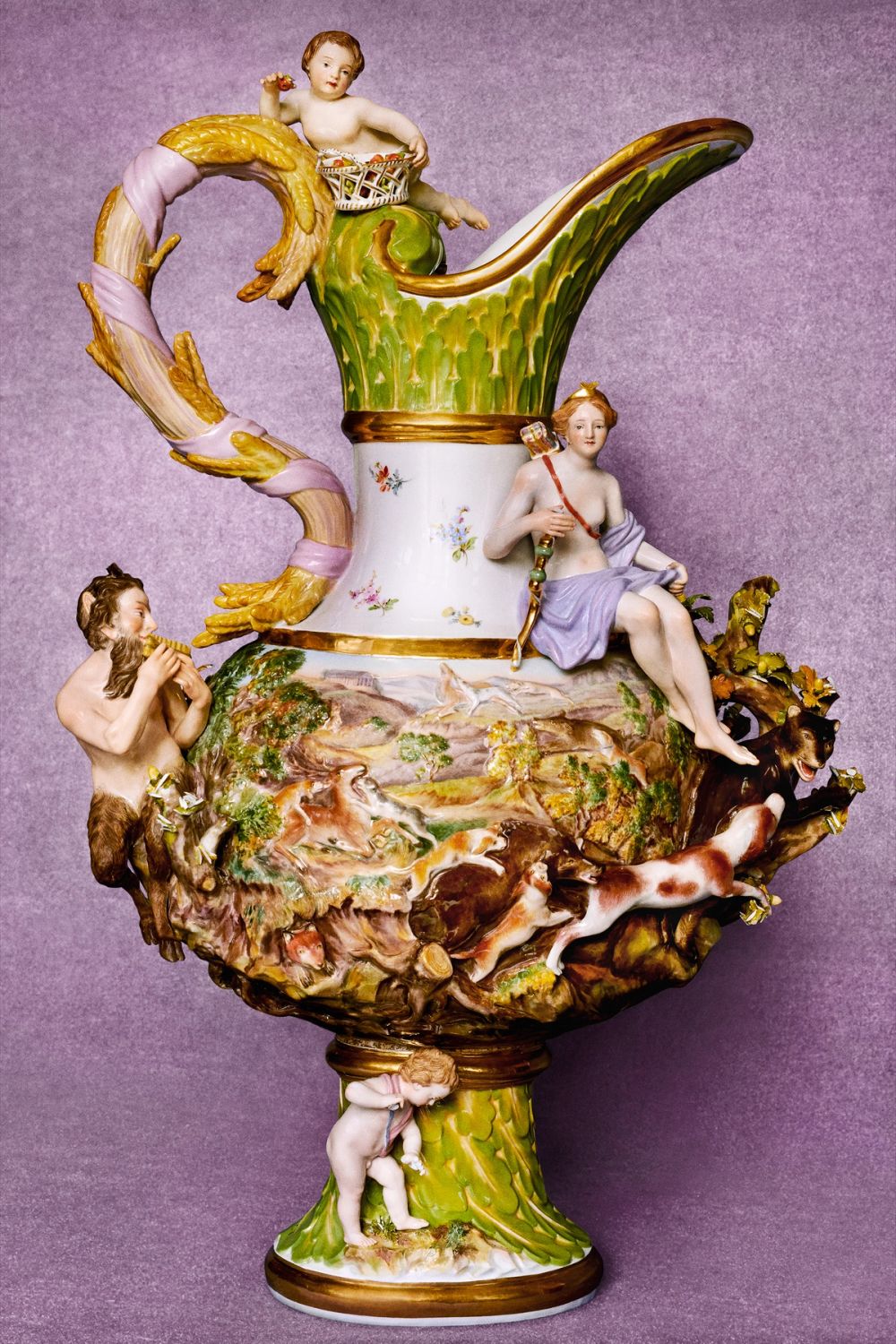
Historic Meissen porcelain representing earth, with sculpted figures and a detailed hunting scene, photographed by Mario Testino against a lilac background. The highly ornate Meissen porcelain ewer features mythological figures like a cherub, a satyr, and Diana, alongside a dynamic hunting scene with dogs and deer.

Mario Testino, Die Erde, Meissen, 2019

Art history provides a thread between these distinct works. The theatricality of Rococo resonates through Stella Tennant in John Galliano's 1998 couture gown and the opulence of Testino's Meissen series: Die Luft, Das Feuer, Das Wasser and Die Erde, representing the four classical elements. Elsewhere, Horses (II) and Vittoria Ceretti evoke the symmetry, proportion and physical presence associated with Classical ideals.

Nature creates another connection. In London and Tokyo (II), flowers become monumental photographic compositions. The works draw on the visual traditions of Ukiyo-e, or “pictures of the floating world”, and Japanese decorative screens, bringing historical references into a contemporary photographic language shaped by Testino's distinctive approach to colour, composition and form.

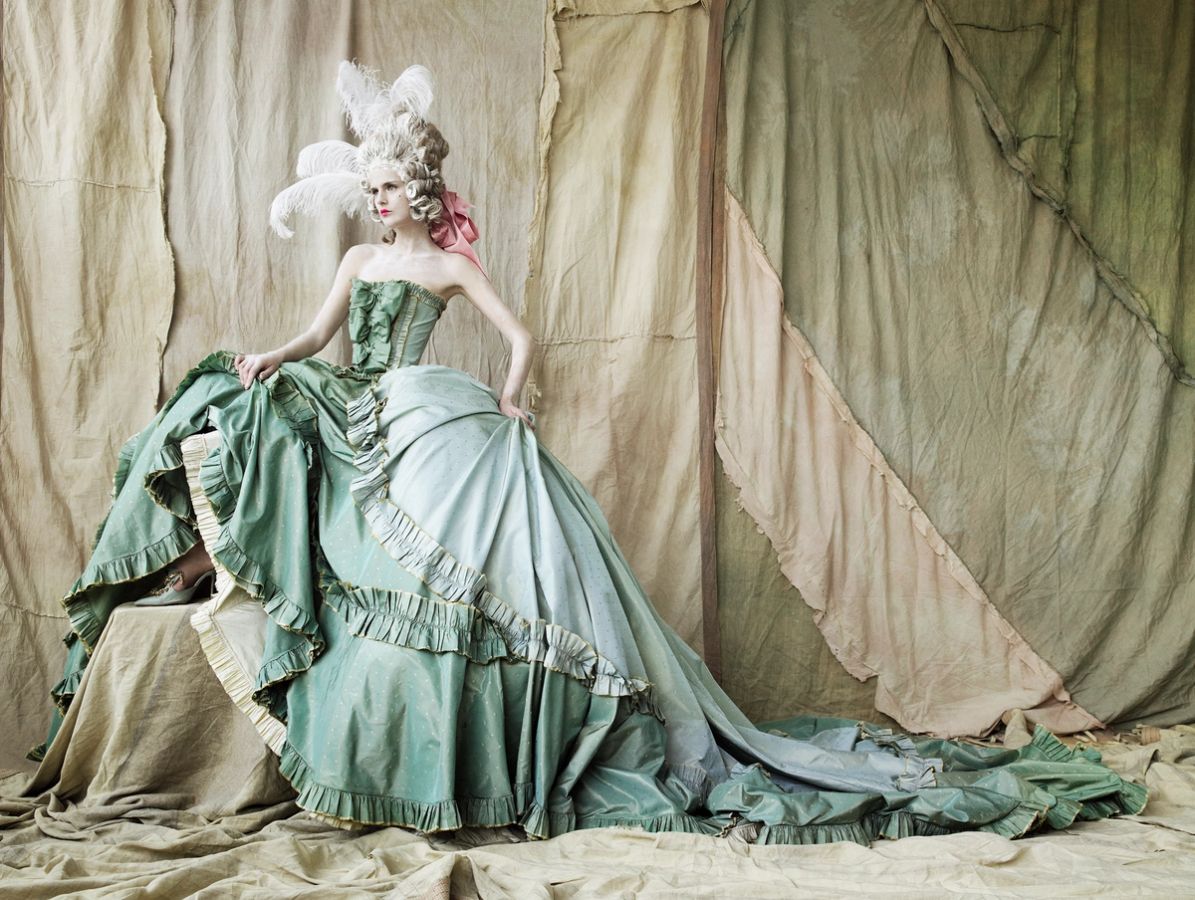
Stella Tennant wearing an elaborate pale green John Galliano green rococo couture gown, photographed by Mario Testino in New York for American Vogue in 2006.

Mario Testino, Stella Tennant, New York, American Vogue, 2006

Vittoria Ceretti dressed in flowing coral fabric with a translucent veil, photographed by Mario Testino in Jaipur for Vogue Paris in 2017.

Mario Testino, Vittoria Ceretti, Jaipur, Vogue Paris, 2017

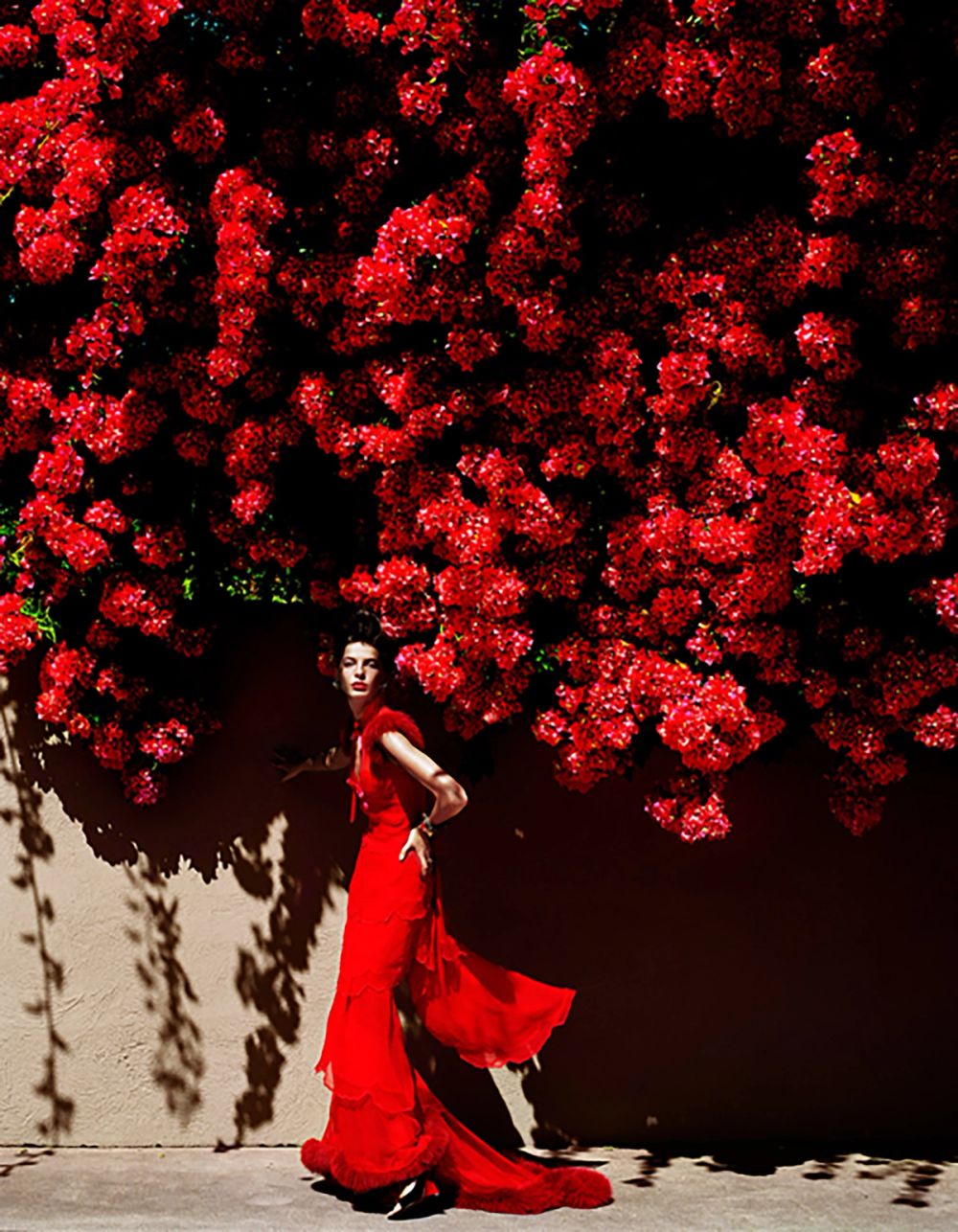
Daria Werbowy in a red Yves Saint Laurent gown poses against a wall under dense vivid red flowers and dramatic shadows, photographed by Mario Testino in Los Angeles for American Vogue in 2004.

Mario Testino, Daria Werbowy, Los Angeles, American Vogue, 2004

Stella Tennant wearing an elaborate pale green John Galliano green rococo couture gown, photographed by Mario Testino in New York for American Vogue in 2006.

Mario Testino, Stella Tennant, New York, American Vogue, 2006
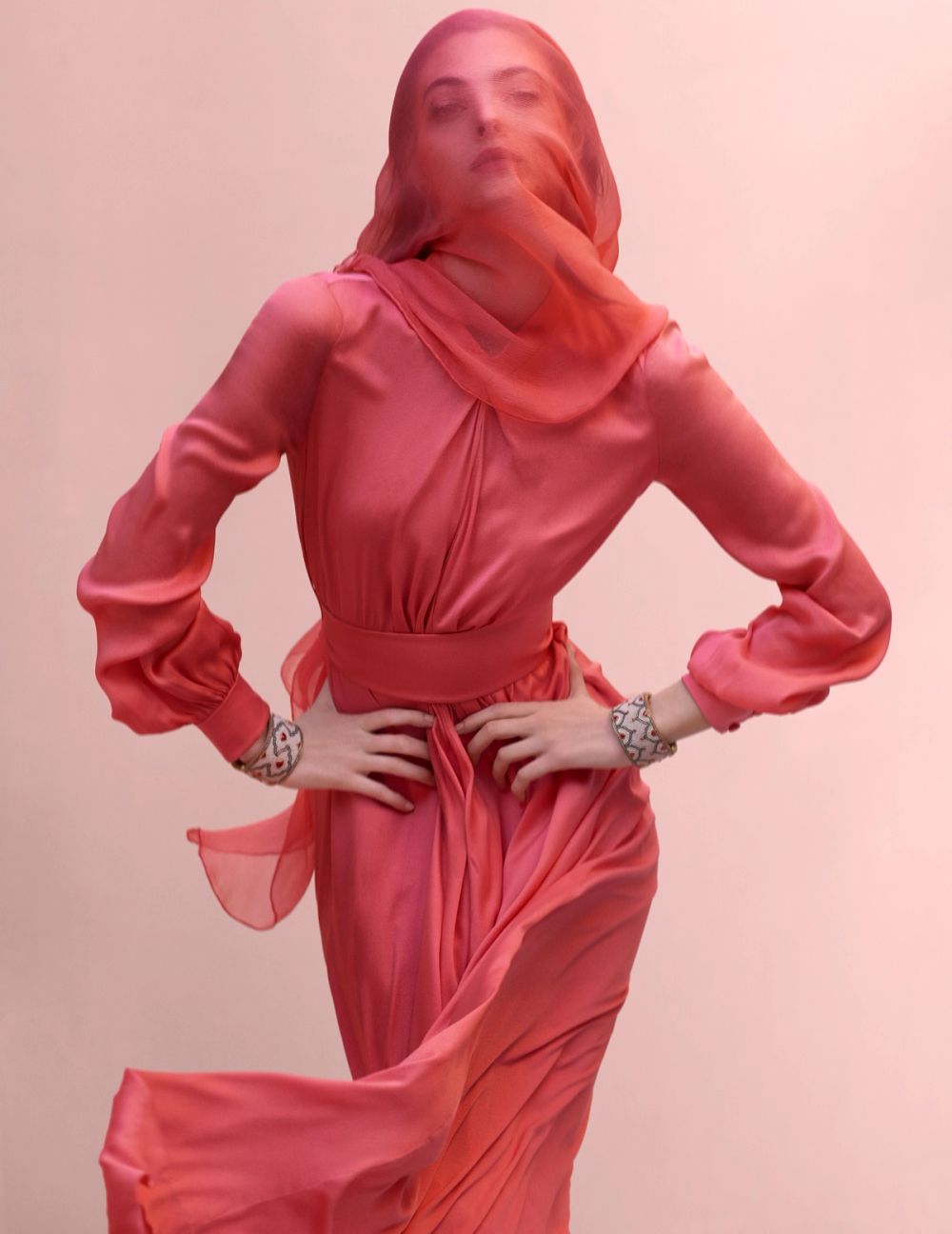
Vittoria Ceretti dressed in flowing coral fabric with a translucent veil, photographed by Mario Testino in Jaipur for Vogue Paris in 2017.

Mario Testino, Vittoria Ceretti, Jaipur, Vogue Paris, 2017

Daria Werbowy in a red Yves Saint Laurent gown poses against a wall under dense vivid red flowers and dramatic shadows, photographed by Mario Testino in Los Angeles for American Vogue in 2004.

Mario Testino, Daria Werbowy, Los Angeles, American Vogue, 2004

Across fashion, still life, portraiture and nature, the exhibition shows a photographic practice that has continually moved between disciplines while returning to enduring questions of beauty and representation. Works originally created for magazines sit alongside independent artistic projects, allowing photographs made years and continents apart to be encountered as part of a broader visual language.

Photography also offers Testino a way of holding onto what is fleeting. Flowers, fashion, crafted objects and moments of physical presence are preserved beyond their original time and context. Seen together in Venice, these works reveal both the range of his practice and the consistency of an eye shaped by beauty, curiosity and the possibilities of the photographic image.

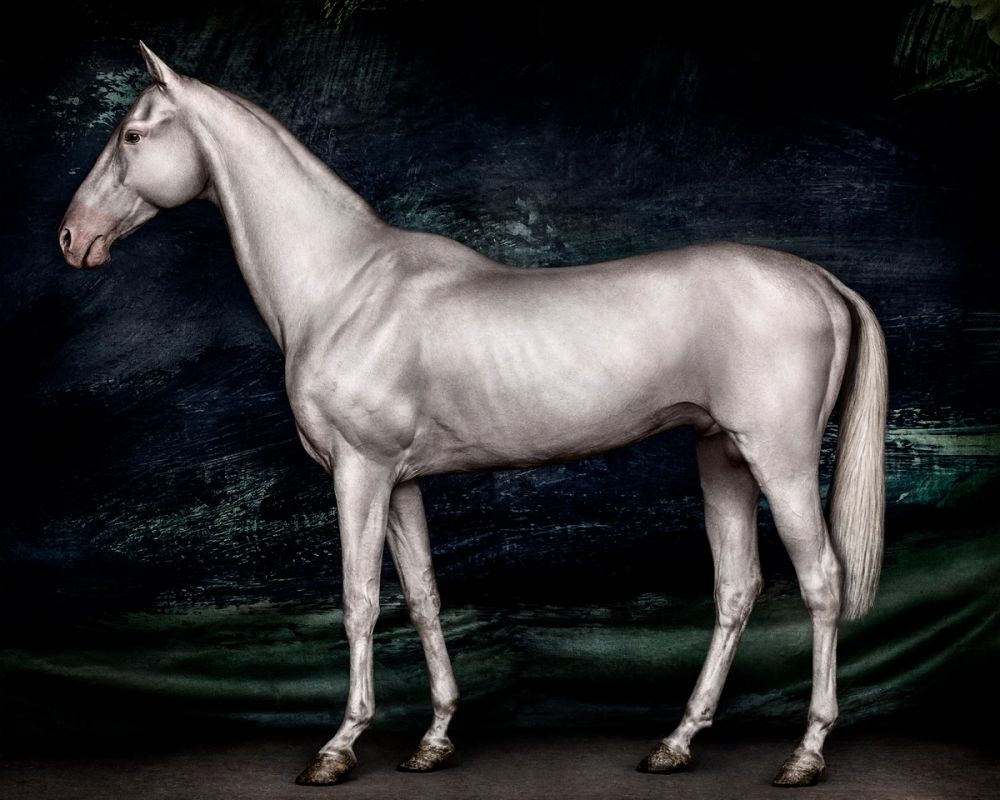
Mario Testino, Horses (II), Urtasaray, Uzbekistan, 2023

RELATED CONTENT
JOIN OUR MAILING lIST

By signing up to receive emails, you agree to the terms of our Website Privacy Policy.